BIRD Health Act of 2025
Summary
What This Bill Does
The BIRD Health Act builds a health-technology program on the existing United States-Israel Binational Industrial Research and Development Foundation model. Congressional findings note that the BIRD Foundation has approved more than 1,000 projects, invested more than $500 million, generated more than $10 billion in sales, and recently had about 30 percent of approved projects related to health, biotechnology, life sciences, medical devices, diagnostics, and telemedicine. HHS must enter into a cooperative agreement to establish the BIRD Health Program, coordinated with Commerce and the BIRD Foundation. The program must be administered by the BIRD Foundation and jointly governed by HHS and Israel's Ministry of Health. It supports joint U.S.-Israeli research and development, commercialization, and deployment of medical devices, diagnostics, pharmaceuticals, biological products, genomics, personalized medicine, telemedicine, digital health, AI diagnostics, infectious-disease prevention, vaccine development, and epidemiological research. The bill authorizes $10 million per year for fiscal years 2026 through 2032, requires HHS to report within 180 days on the program framework, requires proposal acceptance within one year after framework establishment, requires annual reports, and requires a comprehensive review every three years.
Who Benefits and How
BIRD Foundation administrators benefit from a new health-specific program built on their existing bilateral R&D model. U.S. health technology companies benefit from funding opportunities for joint commercialization with Israeli partners. Israeli health technology companies benefit from access to U.S. collaborations, HHS governance, and commercialization support. Patients needing health innovations benefit if funded projects speed deployment of diagnostics, devices, biologics, digital health tools, vaccines, or AI-driven technologies.
Who Bears the Burden and How
HHS must negotiate the cooperative agreement, oversee the program, report within 180 days, submit annual reports, and conduct three-year reviews. The Department of Commerce must coordinate with HHS and the BIRD Foundation on implementation. The Israeli Ministry of Health must participate in governance, focus-area selection, and project selection. Federal taxpayers fund $10 million annually for fiscal years 2026 through 2032 if appropriated.
Key Provisions
- Establishes a BIRD Health Program through an HHS cooperative agreement coordinated with Commerce and the BIRD Foundation.
- Provides joint governance by HHS and the Israeli Ministry of Health for focus areas and project selection.
- Authorizes $10 million annually for fiscal years 2026 through 2032.
- Requires a 180-day framework report, proposal acceptance within one year after framework establishment, annual reports, and three-year comprehensive reviews.
- Covers health technologies including medical devices, pharmaceuticals, digital health, AI diagnostics, and biologics.
Evidence Chain:
This summary is generated from the full bill text using AI analysis. Expand "Detailed Analysis" below for identified beneficiaries/burden bearers with clause-level evidence links.
At a Glance
What This Bill Does
Authorizes a BIRD Health Program for United States-Israel health technology research and commercialization, administered through the BIRD Foundation with HHS, Commerce, and Israeli Ministry of Health governance and $10 million annually for fiscal years 2026 through 2032.
Key Policy Areas
Health Technology, Israel, Research and Development
Primary Purpose
Authorizes a BIRD Health Program for United States-Israel health technology research and commercialization, administered through the BIRD Foundation with HHS, Commerce, and Israeli Ministry of Health governance and $10 million annually for fiscal years 2026 through 2032.
Policy Domains
Resolution provisions
Identified Gains
- BIRD Foundation administrators
- U.S. health technology companies
- Israeli health technology companies
- Patients needing health innovations
Identified Costs
- Department of Health and Human Services
- Department of Commerce
- Israeli Ministry of Health
- Federal taxpayers
Sponsors


Legislative Progress
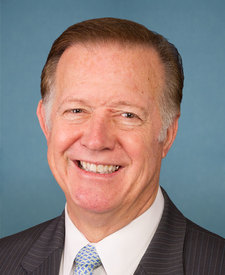
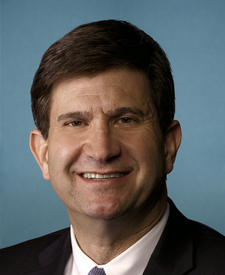
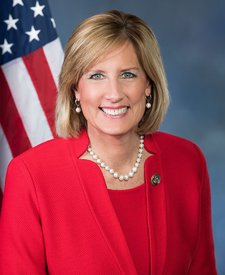
In CommitteeMr. Weber of Texas (for himself, Mr. Pappas, and Ms. …
Referred to the House Committee on Energy and Commerce.
Introduced in House
Stakeholder Effects
cui bono?How this legislation distributes effects. Mention counts reflect frequency, not effect magnitude.
Israeli health technology companies, U.S. health technology companies
Department of Commerce, Department of Health and Human Services
Bill Structure & Actor Mappings
Who is "The Secretary" in each section?
We use a combination of our own taxonomy and classification in addition to large language models to assess meaning and potential beneficiaries. High confidence means strong textual evidence. Always verify with the original bill text.
Learn more about our methodology