Stop COYOTES Act
Summary
What This Bill Does
The Stop COYOTES Act combines criminal penalties with border-related information sharing. It creates 18 U.S.C. section 2251B, imposing up to 10 years of additional consecutive imprisonment when a person commits specified felony offenses involving a minor within 1,000 feet of schools, school-sponsored activities, playgrounds, public housing facilities, colleges, or universities, or within 100 feet of youth centers, public parks, public playgrounds, public swimming pools, or video arcade facilities. It increases fines for Controlled Substances Act fentanyl offenses by adding fentanyl-specific amounts, including $15 million, $75 million, $30 million, $112.5 million, $7.5 million, $37.5 million, $12 million, and $75 million depending on offender and quantity category. It also requires DHS to ensure ICE and CBP share collected information with each other, with state law enforcement in land-border states, and with local law enforcement within 100 miles of a land border. DHS must report to Congress every 180 days on unlawful southern-border entries, trafficking and sex trafficking involving people smuggled from Mexico, alien smuggling, kidnapping for smuggling or trafficking, abuse by traffickers or smugglers, smuggling of controlled substances and firearms, and gang or transnational-criminal-organization involvement.
Who Benefits and How
Children near schools and youth facilities benefit from enhanced penalties for specified felony offenses involving minors. Border law enforcement agencies benefit from required information sharing by ICE and CBP. Communities near land borders benefit if trafficking, smuggling, and fentanyl information is shared more consistently. Federal prosecutors benefit from added consecutive sentencing and higher fentanyl fine tools.
Who Bears the Burden and How
Defendants convicted of covered child-exploitation felonies near protected locations face up to 10 additional consecutive years in prison. Fentanyl traffickers face higher maximum fines under the Controlled Substances Act. DHS, ICE, and CBP must share information with each other and with state or local law enforcement and report every 180 days to Congress. Federal courts and prisons may bear workload and incarceration costs from enhanced penalties.
Key Provisions
- Creates a new section 2251B with up to 10 additional consecutive years for covered minor-involved felonies near schools, playgrounds, public housing, colleges, youth centers, parks, pools, or video arcades.
- Increases Controlled Substances Act fines for fentanyl offenses across several offender and quantity categories.
- Requires ICE and CBP to share information with each other and with land-border state law enforcement agencies.
- Requires information sharing with local law enforcement agencies within 100 miles of a land border.
- Requires DHS congressional reports every 180 days on unlawful entries, trafficking, smuggling, kidnapping, abuse, controlled substances, firearms, gangs, and transnational criminal organizations.
Evidence Chain:
This summary is generated from the full bill text using AI analysis. Expand "Detailed Analysis" below for identified beneficiaries/burden bearers with clause-level evidence links.
At a Glance
What This Bill Does
Adds consecutive prison terms for specified child-exploitation felonies near schools or youth facilities, increases fentanyl fines under the Controlled Substances Act, and requires DHS information sharing and 180-day reports on trafficking, smuggling, border entries, gangs, and transnational criminal organizations.
Key Policy Areas
Criminal Law, Border Security, Fentanyl
Primary Purpose
Adds consecutive prison terms for specified child-exploitation felonies near schools or youth facilities, increases fentanyl fines under the Controlled Substances Act, and requires DHS information sharing and 180-day reports on trafficking, smuggling, border entries, gangs, and transnational criminal organizations.
Policy Domains
Resolution provisions
Identified Gains
- Children near schools
- Border law enforcement agencies
- Communities near land borders
- Federal prosecutors
Identified Costs
- Defendants convicted of covered felonies
- Fentanyl traffickers
- Department of Homeland Security
- Immigration and Customs Enforcement
- Customs and Border Protection
- Federal courts
Sponsors
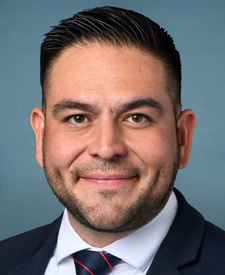
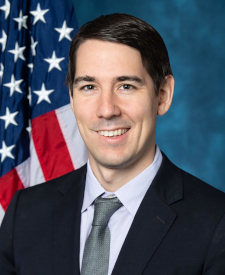

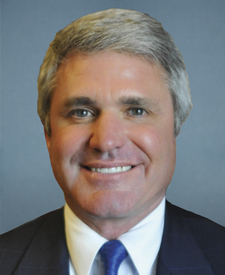
Legislative Progress
In CommitteeReferred to the Subcommittee on Border Security and Enforcement.
Mr. Vasquez (for himself and Mr. McCaul) introduced the following …
Referred to the Committee on the Judiciary, and in addition …
Introduced in House
Stakeholder Effects
cui bono?How this legislation distributes effects. Mention counts reflect frequency, not effect magnitude.
Customs and Border Protection, Department of Homeland Security, Immigration and Customs Enforcement
Border law enforcement agencies, Federal prosecutors
Defendants convicted of covered felonies
Bill Structure & Actor Mappings
Who is "The Secretary" in each section?
We use a combination of our own taxonomy and classification in addition to large language models to assess meaning and potential beneficiaries. High confidence means strong textual evidence. Always verify with the original bill text.
Learn more about our methodology