To amend the Catawba Indian Tribe of South Carolina Land Claims Settlement Act of 1993.
Summary
What This Bill Does
This bill changes one sentence in the Catawba Indian Tribe of South Carolina settlement statute. Current law says that no individual may be enrolled as a tribal member unless the person is a lineal descendant of someone on the final base membership roll and has continued to maintain political relations with the Tribe. The bill strikes that federal restriction.
The practical effect is to loosen a federal statutory constraint on future Catawba membership decisions. The bill does not itself enroll anyone, create a new federal benefit, or rewrite the Tribe's internal enrollment rules. It removes a federal floor that limited who could qualify for membership, giving Catawba enrollment authorities more room to apply tribal law and governance choices.
Who Benefits and How
Catawba Indian Tribe enrollment authorities benefit because the federal settlement statute would no longer hard-code the lineal-descendant and political-relations test. People seeking Catawba tribal membership who are affected by that federal restriction benefit because one statutory barrier to eligibility would be removed. Tribal legal counsel benefits from a cleaner statute that leaves more membership policy to tribal governing documents. Catawba families with disputed or nontraditional enrollment histories may benefit if tribal rules allow consideration of claims that current federal language blocks.
Who Bears the Burden and How
Catawba enrollment administrators must handle any added applications, appeals, or rule updates caused by the looser federal language. Existing Catawba tribal members who favor the prior federal membership limit may bear governance risk if the eligible membership pool expands. Interior tribal-affairs legal staff may need to update reference materials and respond to questions about the amended settlement act. Courts or administrative reviewers could face disputes over how the removed restriction interacts with tribal enrollment law.
Key Provisions
- Amends the Catawba Indian Tribe of South Carolina settlement act membership provision.
- Removes the requirement that future enrolled members be lineal descendants of people on the final base membership roll.
- Removes the requirement that future enrolled members have continued political relations with the Tribe.
- Provides more room for Catawba tribal enrollment rules to control future membership questions.
Evidence Chain:
This summary is generated from the full bill text using AI analysis. Expand "Detailed Analysis" below for identified beneficiaries/burden bearers with clause-level evidence links.
At a Glance
What This Bill Does
Amends the Catawba Indian Tribe of South Carolina settlement law by removing the federal membership restriction that required enrollment applicants to be lineal descendants of the final base membership roll and to maintain political relations with the Tribe.
Key Policy Areas
Tribal Affairs, Membership Governance, Federal Indian Law
Primary Purpose
Amends the Catawba Indian Tribe of South Carolina settlement law by removing the federal membership restriction that required enrollment applicants to be lineal descendants of the final base membership roll and to maintain political relations with the Tribe.
Policy Domains
House resolution provisions
Identified Gains
- Catawba Indian Tribe enrollment authorities
- People seeking Catawba tribal membership
- Tribal legal counsel
- Catawba families with disputed enrollment histories
Identified Costs
- Catawba enrollment administrators
- Existing Catawba tribal members
- Interior tribal-affairs legal staff
- Courts reviewing enrollment disputes
Sponsors
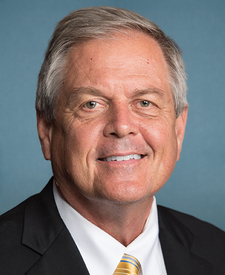


Legislative Progress
ReportedReceived in the Senate and Read twice and referred to …
Received; read twice and referred to the Committee on Indian …
Motion to reconsider laid on the table Agreed to without …
On motion to suspend the rules and pass the bill …
Passed/agreed to in House: On motion to suspend the rules …
DEBATE - The House proceeded with forty minutes of debate …
Considered under suspension of the rules. (consideration: CR H3751-3752)
Mr. Westerman moved to suspend the rules and pass the …
Placed on the Union Calendar, Calendar No. 503.
Reported by the Committee on Natural Resources. H. Rept. 119-583.
Stakeholder Effects
cui bono?How this legislation distributes effects. Mention counts reflect frequency, not effect magnitude.
Catawba Indian Tribe enrollment authorities, Catawba enrollment administrators, Existing Catawba tribal members
Positive-direction: Catawba Indian Tribe enrollment authorities, People seeking Catawba tribal membership
Negative-direction: Catawba enrollment administrators
Bill Structure & Actor Mappings
Who is "The Secretary" in each section?
- "catawba"
- → Catawba Indian Tribe of South Carolina
- "interior"
- → Department of the Interior
We use a combination of our own taxonomy and classification in addition to large language models to assess meaning and potential beneficiaries. High confidence means strong textual evidence. Always verify with the original bill text.
Learn more about our methodology