To address root causes of homelessness, meet the needs of community members experiencing harms from homelessness, transition communities towards providing housing for all, end penalization of homelessness, and ensure full democratic participation and inclusion of persons experiencing homelessness, and for other purposes.
Sponsors
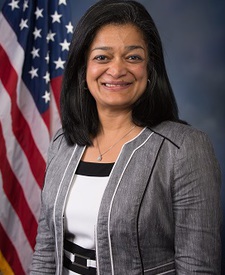
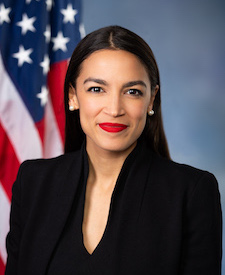
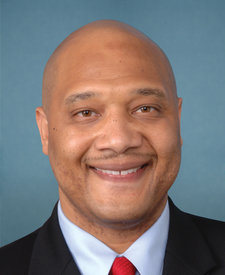
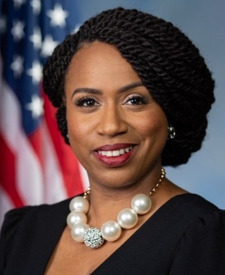

Legislative Progress
IntroducedMs. Jayapal (for herself, Ms. Meng, Ms. Ansari, Mr. Carson, …
Primary Purpose
Establishes comprehensive programs to address homelessness through Housing First strategies, creates alternatives to criminalizing homelessness, and imposes new taxes on large real estate transactions to fund housing programs.
Policy Domains
Legislative Strategy
"Comprehensive approach combining decriminalization, Housing First strategies, new block grants, voting access, and new taxes on large real estate transactions to fund homelessness programs"
Likely Beneficiaries
- Homeless and housing-unstable individuals and families
- Nonprofit organizations serving homeless populations
- State and local governments receiving grant funding
- Public defenders and diversion programs
- Affordable housing developers
- Communities of color and other populations at higher risk of homelessness
Likely Burden Bearers
- Large real estate investors (transactions over $10M face 5% tax)
- Anonymous shell companies purchasing real estate (10% tax)
- Law enforcement agencies (must shift from enforcement to diversion)
- Local governments that currently criminalize homelessness (lose eligibility for funds)
- Federal taxpayers (appropriations of $6B+ for CDBG Plus, $100M for diversion programs, $10M for Interagency Council)
Bill Structure & Actor Mappings
Who is "The Secretary" in each section?
- "the_secretary"
- → Secretary of HUD (as default for housing provisions)
- "the_attorney_general"
- → Attorney General
- "the_secretary"
- → Secretary of Housing and Urban Development
- "the_secretary"
- → Secretary of HUD
- "comptroller_general"
- → Comptroller General of the United States
- "election_assistance_commission"
- → Election Assistance Commission
- "the_council"
- → United States Interagency Council on Homelessness
- "executive_director"
- → Executive Director of the Council
- "the_secretary"
- → Secretary of the Treasury
Note: 'The Secretary' refers to different cabinet officials depending on title: HUD Secretary (Titles II, III), Attorney General (Title I), Treasury Secretary (Title VI)
Key Definitions
Terms defined in this bill
An individual or family with income less than 30% of median, lacking support networks to prevent homelessness, with housing instability indicators
An individual or family that spends more than 22% of income on rent or housing-related costs
An individual or family lacking fixed, regular, adequate nighttime residence including those in shelters or transitional housing
An approach to quickly connect homeless individuals to permanent housing without preconditions like sobriety or treatment requirements
Broad category including those lacking fixed residence, sharing housing due to economic hardship, or at imminent risk of eviction
Imposing criminal or civil penalties on homeless persons for necessary human activities like sleeping, resting, eating
Housing with indefinite leasing and non-mandatory culturally competent supportive services
Groups experiencing homelessness at higher rates including communities of color, persons with disabilities, LGBTQ persons, veterans, foster youth, justice-involved persons
We use a combination of our own taxonomy and classification in addition to large language models to assess meaning and potential beneficiaries. High confidence means strong textual evidence. Always verify with the original bill text.
Learn more about our methodology