To provide for reform of the Department of State with respect to security assistance.
Analysis under review: This bill has generated analysis that may be too generic or incomplete. Clause-level evidence remains available below.
Summary
What This Bill Does
The United States Security Assistance Effectiveness Act reorganizes how the State Department manages security assistance to foreign countries. It creates a new Office of Security Assistance within the State Department, led by a senior official called the Coordinator for Security Assistance. The bill mandates specialized training for diplomatic staff handling security assistance, establishes a shared database tracking all U.S. security aid programs, and requires systematic evaluation of whether security assistance is achieving its goals.
Who Benefits and How
U.S. Government Agencies: The State Department gains clearer organizational authority over security assistance programs, with dedicated staff, training, and data systems. Congressional oversight committees benefit from improved reporting and visibility into security assistance activities.
Foreign Service Officers: Receive specialized career development through new training curricula at the Foreign Service Institute, aligned with Defense Department programs.
Allied and Partner Nations: May receive more effectively planned and delivered security assistance, with better coordination between U.S. agencies and clearer evaluation of program success.
Defense Industry (Indirect): Streamlined processes and better-trained State Department staff may facilitate smoother arms transfer approvals, though the bill does not directly modify sales authorities.
Who Bears the Burden and How
State Department Bureaucracy: Must implement significant organizational restructuring, including establishing a new office, designating coordinators across all regional bureaus, and developing new training programs within tight timelines (180 days to 2 years).
Department of Defense: Required to coordinate with State on training development, share data for the common database, and align planning processes with the new framework.
U.S. Taxpayers: Implementation costs for new staff positions, database development, training programs, and evaluation systems, though no specific appropriations are authorized.
Recipient Countries: Subject to more rigorous baseline assessments evaluating their corruption levels, human rights records, civilian oversight of security forces, and capacity to absorb assistance before receiving aid.
Key Provisions
-
Office of Security Assistance (Section 2): Establishes a dedicated office under the Under Secretary for Arms Control and International Security, with a senior executive as Coordinator. All regional bureaus must designate security assistance officers, and embassies must appoint senior diplomats to coordinate in-country assistance.
-
Workforce Development (Section 3): Requires new Foreign Service Institute curricula covering security assistance authorities, military systems, human rights vetting requirements, and common risks like corruption and political instability.
-
Common Database (Section 5): Within 2 years, the Secretary must maintain a unified database of all security assistance and security cooperation programs by recipient country, tracking funding, recipients, purposes, and outcomes since fiscal year 2017.
-
Assessment Framework (Section 6): Requires baseline assessments for recipient countries covering corruption, civilian oversight, human rights records, political will, and absorptive capacity, with ongoing monitoring and evaluation.
-
Strategic Planning (Section 7): Creates a framework linking security assistance to National Security Strategy goals, with annual reporting to Congress on priority recipients and evaluation results.
Evidence Chain:
This summary is generated from the full bill text using AI analysis. Expand "Detailed Analysis" below for identified beneficiaries/burden bearers.
At a Glance
What This Bill Does
The United States Security Assistance Effectiveness Act reforms the Department of State's organizational structure, workforce development, and coordination mechanisms for security assistance programs. It establishes a new Office of Security Assistance under the Under Secretary for Arms Control and International Security, creates a common database of security assistance programs, and requires assessment, monitoring, and evaluation frameworks for recipient countries.
Who Benefits
- Department of State (gains organizational clarity and authority over security assistance)
- Foreign Service Officers (receive specialized training and career development)
- U.S. Diplomatic Posts (receive clearer authority and coordination mechanisms)
Who Bears Costs
- Department of State Bureaucracy (must implement significant organizational changes)
- Defense Security Cooperation Agency (must coordinate on training and databases)
- Department of Defense (must share data and coordinate processes)
Key Policy Areas
National Defense, Foreign Policy, Government Operations, International Security
Primary Purpose
The United States Security Assistance Effectiveness Act reforms the Department of State's organizational structure, workforce development, and coordination mechanisms for security assistance programs. It establishes a new Office of Security Assistance under the Under Secretary for Arms Control and International Security, creates a common database of security assistance programs, and requires assessment, monitoring, and evaluation frameworks for recipient countries.
Policy Domains
Legislative Strategy
"This bill takes a comprehensive administrative reform approach to improve security assistance effectiveness. Rather than creating new funding or programs, it restructures existing bureaucratic processes within the State Department and mandates better coordination with the Department of Defense. The strategy relies on: (1) centralizing authority under a new Office of Security Assistance, (2) improving data collection and transparency through a common database, (3) requiring evidence-based evaluation frameworks, and (4) mandating workforce training to professionalize security assistance delivery."
Sponsors

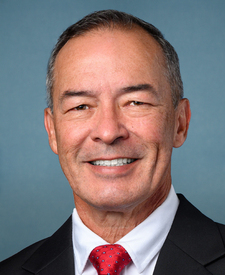
Legislative Progress
IntroducedMs. Jacobs (for herself and Mr. Moylan) introduced the following …
Stakeholder Effects
cui bono?How this legislation distributes effects. Mention counts reflect frequency, not effect magnitude.
Coordinator for Security Assistance, Department of Defense, Department of State
Positive-direction: Coordinator for Security Assistance, Office of the Under Secretary for Arms Control and International Security, Political-Military Affairs Bureau
Negative-direction: Department of Defense, Department of State, Department of State Regional Bureaus
Congressional Appropriations Committees, Congressional Armed Services Committees, Congressional Foreign Affairs Committees
Positive-direction: Congressional Appropriations Committees, Congressional Armed Services Committees, Congressional Foreign Affairs Committees, Congressional Foreign Relations Committees
Negative-direction: Government Accountability Office
Defense Security Cooperation Agency, Direct Commercial Sales, Foreign Military Sales Program
Countries with Poor Human Rights Records, Foreign Partner Countries, Security Assistance Recipient Countries
Positive-direction: U.S. Allied Countries
Negative-direction: Countries with Poor Human Rights Records, Security Assistance Recipient Countries
Department of State Employees, U.S. Diplomatic Posts Abroad
Positive-direction: Department of State Employees
Negative-direction: U.S. Diplomatic Posts Abroad
Bill Structure & Actor Mappings
Who is "The Secretary" in each section?
- "the_secretary"
- → Secretary of State
- "the_coordinator"
- → Coordinator for Security Assistance
- "chief_of_mission"
- → Chief of Mission of the United States in a foreign country
- "the_under_secretary"
- → Under Secretary for Arms Control and International Security
- "the_secretary"
- → Secretary of State
- "the_secretary"
- → Secretary of State
- "comptroller_general"
- → Comptroller General of the United States
- "secretary_of_defense"
- → Secretary of Defense
- "director_dsca"
- → Director of the Defense Security Cooperation Agency
- "the_secretary"
- → Secretary of State
- "secretary_of_defense"
- → Secretary of Defense
- "the_coordinator"
- → Coordinator for Security Assistance
- "the_secretary"
- → Secretary of State
- "the_coordinator"
- → Coordinator for Security Assistance
Note: {'term': 'the_secretary', 'conflict': 'In sections 2-7, "the Secretary" refers to Secretary of State, while section 4 also references "Secretary of Defense" explicitly when coordination is required.'}
Key Definitions
Terms defined in this bill
The Office of Security Assistance designated under section 2(b).
The Secretary of State.
The Committee on Foreign Affairs and the Committee on Armed Services of the House of Representatives; and the Committee on Foreign Relations and the Committee on Armed Services of the Senate.
The Department of State.
The Coordinator for Security Assistance established under section 2(b)(2).
Assistance provided under the Foreign Assistance Act of 1961, the Arms Export Control Act (other than Foreign Military Sales or direct commercial sales), or any other provision of law.
We use a combination of our own taxonomy and classification in addition to large language models to assess meaning and potential beneficiaries. High confidence means strong textual evidence. Always verify with the original bill text.
Learn more about our methodology