To modernize unemployment compensation benefits.
Legislative Progress
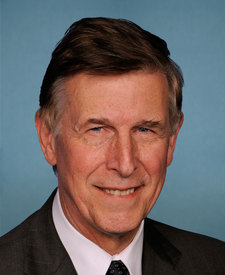
IntroducedMr. Beyer introduced the following bill; which was referred to …
Summary
What This Bill Does
This bill comprehensively modernizes the unemployment insurance system by strengthening automatic stabilizers that trigger during economic downturns, setting minimum federal standards for state unemployment programs, and expanding eligibility to cover more workers. It aims to ensure unemployed workers receive adequate benefits for longer periods, especially during recessions and emergencies.
Who Benefits and How
Unemployed workers benefit significantly: they would receive at least 26 weeks of benefits at 75% wage replacement, with extended benefits up to 52 weeks during severe recessions. Part-time workers, gig economy workers (who would be reclassified as employees under the ABC test), domestic violence survivors, caregivers, and workers locked out during labor disputes would gain new eligibility. Workers with dependents receive an additional USD 25 per dependent per week. A new jobseeker allowance provides a safety net for those who exhaust regular benefits or lack sufficient work history. The federal government would pay 100% of extended benefit costs, relieving states of that burden.
Who Bears the Burden and How
Federal taxpayers bear the primary cost through 100% federal funding of extended benefits, emergency compensation, dependents allowances, and the new jobseeker allowance. States with below-standard benefit levels (shorter durations, lower replacement rates, or lower maximum benefits) must increase their programs, raising costs for their unemployment trust funds. Gig economy platforms like Uber, Lyft, and DoorDash face significant cost increases from mandatory employee classification under the ABC test. Employers using independent contractors would need to reclassify many workers as employees and pay into unemployment insurance.
Key Provisions
- Establishes minimum 26-week benefit duration and 75% wage replacement floor for all states
- Creates tiered extended benefits: 26 weeks at 6.5% unemployment, 39 weeks at 7.5%, 52 weeks at 8.5%+
- Requires 100% federal funding for extended unemployment benefits (shifting costs from states)
- Mandates ABC test for worker classification, making most gig workers employees eligible for benefits
- Creates new USD 25/week dependents allowance indexed to inflation
- Provides 100% wage replacement during declared public health emergencies or disasters
- Establishes jobseeker allowance for those who exhaust benefits or lack sufficient work history
- Eliminates waiting weeks before benefits begin
- Requires all states to offer work-sharing and self-employment assistance programs
Evidence Chain:
This summary is derived from the structured analysis below. See "Detailed Analysis" for per-title beneficiaries/burden bearers with clause-level evidence links.
Primary Purpose
Modernizes unemployment insurance by expanding extended benefits, improving triggers for benefit extensions during recessions, establishing minimum benefit standards, and creating automatic stabilizers for high unemployment periods.
Policy Domains
Legislative Strategy
"Strengthen the unemployment insurance safety net with automatic stabilizers that trigger during economic downturns, while modernizing eligibility rules to cover more workers"
Likely Beneficiaries
- Unemployed workers (longer benefits, higher replacement rates)
- Part-time workers (can now qualify for partial unemployment)
- Gig economy workers/independent contractors (reclassified as employees under ABC test)
- Workers with dependents (new dependents allowance of /dependent/week)
- Workers during emergencies (100% wage replacement during disasters/public health emergencies)
- Educational employees (retroactive payments if not rehired)
- Workers locked out during labor disputes
Likely Burden Bearers
- Federal taxpayers (100% federal funding for extended benefits, emergency compensation)
- State unemployment insurance systems (implementation costs, higher benefits)
- Employers using gig/contractor labor (must reclassify workers as employees)
- States with below-standard benefit levels (must increase minimum benefits)
Bill Structure & Actor Mappings
Who is "The Secretary" in each section?
- "the_secretary"
- → Secretary of Labor
- "the_commissioner"
- → Commissioner of the Bureau of Labor Statistics
- "state_agency"
- → State Unemployment Agency
- "the_secretary"
- → Secretary of Labor
Key Definitions
Terms defined in this bill
Children under 18, full-time students under 24 previously in care, foster children, disabled family members, nonworking senior family members, nonworking spouses not receiving unemployment
A worker is an employee unless: (A) free from control and direction, (B) service is outside usual course of business, and (C) customarily engaged in independent trade/profession
Period during which a public health emergency (section 319 PHS Act) or major disaster/emergency (Stafford Act sections 401/501) has been declared
Tiered periods based on unemployment rates: Tier 2 (6.5%-7.5%), Tier 3 (7.5%-8.5%), Tier 4 (8.5%+)
National unemployment rate is at least 0.5 percentage points higher than lowest 3-month average in preceding 12 months
We use a combination of our own taxonomy and classification in addition to large language models to assess meaning and potential beneficiaries. High confidence means strong textual evidence. Always verify with the original bill text.
Learn more about our methodology