Improving Capital Allocation for Newcomers Act of 2025
Summary
What This Bill Does
The Improving Capital Allocation for Newcomers Act amends section 3(c)(1) of the Investment Company Act of 1940 for qualifying venture capital funds. It increases the investor threshold from 250 persons to 500 persons and raises the dollar threshold from $10,000,000 to $50,000,000. It also changes the measurement language so the relevant dollar figure is measured from the date of enactment of the Act rather than a later date selected by the SEC.
The bill pairs that deregulatory change with a delayed review process. Beginning five years after enactment, the SEC Advocate for Small Business Capital Formation, in consultation with the Investor Advocate, must study how the threshold changes affected businesses and startup entities in which qualifying venture capital funds invest. The study must examine geographic distribution of capital, socioeconomic characteristics of founders or controlling persons, veteran status, industry sector, company size, stage of development, and other metrics. The Advocate may use SEC data, request help from SEC divisions such as Economic and Risk Analysis, and hire third parties for data analysis. After a public report and a 180-day public feedback period, the SEC may adjust the thresholds only if the report finds demonstrable effects on geographic distribution, socioeconomic variety, or veteran founders, and any rule may not raise the investor cap above 750 or the dollar cap above $100,000,000, or lower them below 250 and $10,000,000.
Who Benefits and How
Venture capital fund managers benefit because qualifying funds can accept more investors and manage more capital before losing the exemption. Emerging fund managers benefit because a larger qualifying-fund box can support more portfolio construction without full investment-company registration. Startup companies seeking venture capital, founders in underserved geographic regions, veteran entrepreneurs, and founders from varied socioeconomic backgrounds could benefit if the larger thresholds increase capital availability. Accredited investors benefit from more access to qualifying venture capital fund opportunities.
Who Bears the Burden and How
The SEC Advocate for Small Business Capital Formation, SEC Investor Advocate, Securities and Exchange Commission staff, SEC Division of Economic and Risk Analysis, third-party data analysts, registered investment companies monitoring competitive effects, and investor-protection advocates must conduct the five-year study, collect data, publish a report, solicit comments, comply with a narrow rulemaking window, and evaluate whether larger exempt venture funds affect investor protection or capital allocation. Smaller investors excluded from private-fund opportunities may still lack access to the new fund capacity.
Key Provisions
- Amends the Investment Company Act qualifying venture capital fund threshold from 250 to 500 persons.
- Raises the qualifying venture capital fund dollar threshold from $10,000,000 to $50,000,000.
- Requires a five-year SEC Advocate study on effects for startup portfolio companies and founders.
- Requires analysis of geographic capital distribution, socioeconomic founder characteristics, veteran founder status, industry sector, company size, and development stage.
- Authorizes the Advocate to use SEC data, SEC division assistance, and third-party data-analysis agreements.
- Requires a public report, 180-day public feedback period, and limited SEC rulemaking authority tied to demonstrable capital-allocation effects.
Evidence Chain:
This summary is generated from the full bill text using AI analysis. Expand "Detailed Analysis" below for identified beneficiaries/burden bearers with clause-level evidence links.
At a Glance
What This Bill Does
Raises qualifying venture capital fund thresholds under the Investment Company Act from 250 to 500 investors and from $10,000,000 to $50,000,000, then requires an SEC small-business capital study, public comment, and limited rulemaking authority tied to geographic, socioeconomic, and veteran-founder capital effects.
Key Policy Areas
Financial Services, Venture Capital, Small Business
Primary Purpose
Raises qualifying venture capital fund thresholds under the Investment Company Act from 250 to 500 investors and from $10,000,000 to $50,000,000, then requires an SEC small-business capital study, public comment, and limited rulemaking authority tied to geographic, socioeconomic, and veteran-founder capital effects.
Policy Domains
Substantive provisions
Identified Gains
- Venture capital fund managers
- Emerging fund managers
- Startup companies seeking venture capital
- Founders in underserved geographic regions
- Veteran entrepreneurs
- Founders from varied socioeconomic backgrounds
- Accredited investors
Identified Costs
- SEC Advocate for Small Business Capital Formation
- SEC Investor Advocate
- Securities and Exchange Commission staff
- SEC Division of Economic and Risk Analysis
- Third-party data analysts
- Registered investment companies
- Investor-protection advocates
Sponsors
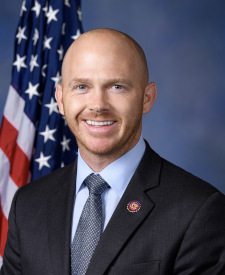

Legislative Progress
Passed HouseReceived; read twice and referred to the Committee on Banking, …
Received in the Senate and Read twice and referred to …
Passed House (inferred from eh version)
Motion to reconsider laid on the table Agreed to without …
On motion to suspend the rules and pass the bill, …
Passed/agreed to in House: On motion to suspend the rules …
DEBATE - The House proceeded with forty minutes of debate …
Considered under suspension of the rules. (consideration: CR H4950-4952)
Mr. Davidson moved to suspend the rules and pass the …
Additional sponsor: Ms. Pettersen
Stakeholder Effects
cui bono?How this legislation distributes effects. Mention counts reflect frequency, not effect magnitude.
Accredited investors, Emerging fund managers, Registered investment companies
Founders in underserved geographic regions, Startup companies seeking venture capital, Veteran entrepreneurs
SEC Advocate for Small Business Capital Formation, SEC Division of Economic and Risk Analysis, SEC Investor Advocate
Bill Structure & Actor Mappings
Who is "The Secretary" in each section?
- "advocate"
- → SEC Advocate for Small Business Capital Formation
- "commission"
- → Securities and Exchange Commission
- "investor_advocate"
- → SEC Investor Advocate
We use a combination of our own taxonomy and classification in addition to large language models to assess meaning and potential beneficiaries. High confidence means strong textual evidence. Always verify with the original bill text.
Learn more about our methodology