Child Care for Working Families Act
Summary
What This Bill Does
The Child Care for Working Families Act is a broad early-childhood funding bill. Title II creates BASE Grants for state lead agencies, Indian Tribes, and Tribal organizations to stabilize and expand child care, with HHS reserving up to 3 percent for administration and technical assistance. States must apply with subgrant processes, cost methodologies based on enrollment capacity rather than attendance when formulas are used, workforce wage plans, quality-improvement plans, outreach, and technical assistance. Lead agencies may reserve up to 10 percent for administration and provider support, then issue five-year advance-paid subgrants to eligible providers. Priority goes to providers offering nontraditional or extended hours, infant and toddler care, care for dual language learners, children with disabilities, children experiencing homelessness, foster children, low-income children, subsidized families, child care deserts, rural communities, small businesses, and nonprofits. Providers must accept subsidy certificates, remain open except for specified closures, raise staff compensation, and use at least 70 percent of subgrant funds for personnel costs such as wages, cost-of-living adjustments, wage ladders, benefits, hiring, paid leave support, occupancy, supplies, health and safety compliance, quality, and comprehensive services. HHS receives $9 billion for each fiscal year 2026 through 2031 for this title. Title III funds universal, high-quality, free, inclusive preschool for 3- and 4-year-olds through state payments from fiscal years 2026 through 2031, with federal shares phasing from 90 percent to 60 percent, 50 percent support for system-wide activities capped at 10 percent of preschool expenditures, subgrants or contracts of at least three years, enhanced payments for low-income children, high-need community priority, Tribal and territory payments, local grants and Head Start expansion in nonparticipating states, maintenance of effort, nondiscrimination, monitoring, enforcement, and annual reports. Title IV adds Head Start grants for full school day and full school year service or quality enhancement and appropriates $2.7 billion for fiscal year 2026 and each later year to help Head Start teachers and staff receive wages comparable to elementary educators with similar credentials and experience or at least a living wage.
Who Benefits and How
Working families benefit from more stable and affordable child care supply, universal preschool, and expanded Head Start hours. Child care providers benefit from five-year BASE subgrants that can cover operations, occupancy, quality improvements, and staff costs. Early childhood educators benefit because at least 70 percent of child care subgrant funds go to personnel costs and Head Start wage funds target elementary-educator parity or a living wage. Children in low-income families, rural communities, foster care, homelessness, disability, dual-language, infant, and toddler categories benefit from priority and inclusive service rules.
Who Bears the Burden and How
HHS must administer child care grants, universal preschool payments, Tribal and territory payments, local grants, Head Start expansion, monitoring, enforcement, and reports. State lead agencies must build cost methodologies, run subgrants, provide outreach and technical assistance, track provider and wage data, and maintain effort. Child care providers must accept subsidies, stay open except for permitted closures, raise compensation, report data, and spend at least 70 percent of funds on personnel costs. Federal taxpayers fund $9 billion annually for child care stabilization from fiscal years 2026 through 2031 plus $2.7 billion annually for Head Start wages and additional preschool appropriations.
Key Provisions
- Appropriates $9 billion annually from fiscal years 2026 through 2031 for child care BASE Grants and provider subgrants.
- Requires provider subgrants to prioritize underserved care needs and spend at least 70 percent on personnel costs, wages, benefits, and staffing.
- Creates universal preschool payments for states from fiscal years 2026 through 2031 with federal shares phasing from 90 percent to 60 percent.
- Provides preschool funding for Indian Tribes, territories, localities in nonparticipating states, and Head Start expansion.
- Requires maintenance of effort, supplement-not-supplant, nondiscrimination, monitoring, enforcement, annual reporting, and provider data collection.
- Appropriates $2.7 billion annually for Head Start wages and authorizes grants for full-day, full-year Head Start and Early Head Start service.
Evidence Chain:
This summary is generated from the full bill text using AI analysis. Expand "Detailed Analysis" below for identified beneficiaries/burden bearers with clause-level evidence links.
At a Glance
What This Bill Does
Appropriates large federal investments for child care stabilization grants, universal preschool, Head Start extended duration, and Head Start wage parity, including $9 billion annually for child care grants and $2.7 billion annually for Head Start wages.
Key Policy Areas
Child Care, Early Education, Head Start
Primary Purpose
Appropriates large federal investments for child care stabilization grants, universal preschool, Head Start extended duration, and Head Start wage parity, including $9 billion annually for child care grants and $2.7 billion annually for Head Start wages.
Policy Domains
Resolution provisions
Identified Gains
- Working families needing child care
- Child care providers
- Early childhood educators
- Children in underserved communities
Identified Costs
- Department of Health and Human Services
- State lead agencies
- Child care provider administrators
- Federal taxpayers
Sponsors
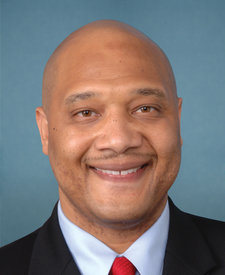
Legislative Progress
In CommitteeMr. Scott of Virginia (for himself, Ms. Lee of Pennsylvania, …
Referred to the House Committee on Education and Workforce.
Introduced in House
Stakeholder Effects
cui bono?How this legislation distributes effects. Mention counts reflect frequency, not effect magnitude.
Child care providers, Early childhood educators, Working families needing child care
Bill Structure & Actor Mappings
Who is "The Secretary" in each section?
We use a combination of our own taxonomy and classification in addition to large language models to assess meaning and potential beneficiaries. High confidence means strong textual evidence. Always verify with the original bill text.
Learn more about our methodology