Excluding Illegal Aliens from Medicaid Act
Summary
What This Bill Does
The Excluding Illegal Aliens from Medicaid Act changes Medicaid financing rules for states that provide health coverage or health-insurance assistance to certain nonqualified aliens. First, it amends the effective date for the alien Medicaid eligibility provision added by Public Law 119-21, replacing October 1, 2026 with July 4, 2025 and making the change effective as if included in that law. Second, for calendar quarters beginning on or after July 4, 2025, it changes the federal match treatment for a specified State. A specified State is one that provides state general-fund financial assistance to or on behalf of an alien who is not a qualified alien and is not a lawfully residing child or pregnant woman eligible under the protected Medicaid or CHIP provisions, for purchasing health insurance; or provides comprehensive health benefits coverage, except federally required coverage, to such a person regardless of funding source or whether the program is under Medicaid, a waiver, or another state program. For those specified states, the bill substitutes the regular FMAP under section 1905(b) for the enhanced expansion FMAP that would otherwise apply, and it adjusts expansion-FMAP calculations from annual to quarterly tests.
Who Benefits and How
Federal taxpayers benefit if enhanced Medicaid expansion matching funds are reduced for states that fund covered nonqualified-alien health coverage. States that do not provide the specified coverage benefit competitively because they avoid the reduced expansion-FMAP treatment. Federal Medicaid oversight officials benefit from a quarterly definition of specified State tied to coverage and financial-assistance choices. Medicaid budget hawks benefit from an earlier July 4, 2025 effective date and broader financing penalty.
Who Bears the Burden and How
Specified states providing covered health benefits or insurance assistance to nonqualified aliens lose enhanced expansion-FMAP treatment for affected quarters. State Medicaid agencies must track quarterly specified-State status and adjust federal claiming. Nonqualified aliens receiving state-funded coverage face indirect risk if states reduce programs to avoid FMAP penalties. The Centers for Medicare and Medicaid Services must administer the earlier effective date and quarterly FMAP calculations.
Key Provisions
- Moves the relevant Medicaid alien-eligibility effective date from October 1, 2026 to July 4, 2025.
- Defines specified State based on state-funded insurance assistance or comprehensive health benefits for nonqualified aliens outside protected child and pregnancy categories.
- Requires specified states to receive regular FMAP instead of enhanced expansion FMAP for calendar quarters beginning on or after July 4, 2025.
- Modifies expansion-FMAP calculations to operate by calendar quarter rather than year for the specified-State rule.
Evidence Chain:
This summary is generated from the full bill text using AI analysis. Expand "Detailed Analysis" below for identified beneficiaries/burden bearers with clause-level evidence links.
At a Glance
What This Bill Does
Moves the Medicaid alien-eligibility effective date in Public Law 119-21 from October 1, 2026 to July 4, 2025 and reduces enhanced expansion FMAP to regular FMAP for specified states that fund coverage or insurance assistance for nonqualified aliens outside protected child and pregnancy categories.
Key Policy Areas
Medicaid, Immigration, State Budgets
Primary Purpose
Moves the Medicaid alien-eligibility effective date in Public Law 119-21 from October 1, 2026 to July 4, 2025 and reduces enhanced expansion FMAP to regular FMAP for specified states that fund coverage or insurance assistance for nonqualified aliens outside protected child and pregnancy categories.
Policy Domains
Resolution provisions
Identified Gains
- Federal taxpayers
- States not providing specified nonqualified-alien coverage
- Federal Medicaid oversight officials
- Medicaid budget hawks
Identified Costs
- Specified state Medicaid agencies
- State budget offices
- Nonqualified aliens receiving state-funded coverage
- Centers for Medicare and Medicaid Services
Legislative Progress
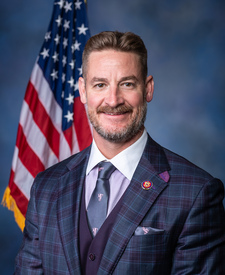
In CommitteeMr. Steube introduced the following bill; which was referred to …
Referred to the House Committee on Energy and Commerce.
Introduced in House
Stakeholder Effects
cui bono?How this legislation distributes effects. Mention counts reflect frequency, not effect magnitude.
State budget offices, States not providing specified nonqualified-alien coverage
Positive-direction: States not providing specified nonqualified-alien coverage
Negative-direction: State budget offices
Nonqualified aliens receiving state-funded coverage
Bill Structure & Actor Mappings
Who is "The Secretary" in each section?
We use a combination of our own taxonomy and classification in addition to large language models to assess meaning and potential beneficiaries. High confidence means strong textual evidence. Always verify with the original bill text.
Learn more about our methodology