Caribbean Basin Security Initiative Authorization Act
Summary
What This Bill Does
The Caribbean Basin Security Initiative Authorization Act authorizes the Secretary of State and USAID Administrator to run the Caribbean Basin Security Initiative in Antigua and Barbuda, the Bahamas, Barbados, Dominica, the Dominican Republic, Grenada, Guyana, Jamaica, Saint Lucia, Saint Kitts and Nevis, Saint Vincent and the Grenadines, Suriname, and Trinidad and Tobago. The initiative promotes citizen safety, security, rule of law, border and port security, maritime and aerial interdiction, counter-gang operations, youth recruitment prevention, anti-corruption, anti-money-laundering, anti-trafficking, police training, military professionalization, human-rights training, vetting, community-based policing, justice-sector capacity, and private-sector and civil-society engagement. Within 180 days, State and USAID must submit a multi-year implementation plan with objectives, country-specific timelines, measurable benchmarks, agency roles for State, USAID, Justice, Defense, and other agencies, activity tracking under the Foreign Aid Transparency and Accountability Act, and co-location of USAID crime-prevention projects with State INL enforcement projects where needed. During the first five years, State, USAID, and the Inter-American Foundation must promote disaster response and resilience through federal coordination, infrastructure resilience best practices, rapid-response mechanisms, and a 180-day strategy with benchmarks and public-information goals.
Who Benefits and How
Caribbean beneficiary-country governments benefit from security, rule-of-law, port, border, disaster-response, and resilience assistance. Caribbean civil society organizations benefit from engagement and crime-prevention support in the initiative. At-risk youth in beneficiary countries benefit from programs targeting gang recruitment and local violence. U.S. foreign-assistance oversight committees benefit from implementation plans, measurable benchmarks, and annual progress reports.
Who Bears the Burden and How
The Secretary of State must coordinate the initiative, implementation plan, annual progress reports, and disaster-resilience strategy. The USAID Administrator must coordinate development, prevention, resilience, and co-location planning with State activities. The Department of Justice and Department of Defense must coordinate roles to avoid overlap and unintended competition. Beneficiary-country agencies receiving assistance must meet benchmarks, human-rights training, vetting, and accountability expectations.
Key Provisions
- Authorizes the Caribbean Basin Security Initiative in 13 named beneficiary countries.
- Provides purposes including citizen safety, border security, port security, maritime and aerial interdiction, rule of law, justice-sector capacity, anti-corruption, and anti-trafficking.
- Requires a 180-day implementation plan with multi-year country objectives, measurable benchmarks, agency roles, transparency tracking, and project co-location planning.
- Requires a five-year natural-disaster response and resilience effort plus a benchmarked strategy and annual progress reports.
Evidence Chain:
This summary is generated from the full bill text using AI analysis. Expand "Detailed Analysis" below for identified beneficiaries/burden bearers with clause-level evidence links.
At a Glance
What This Bill Does
Authorizes the State Department and USAID to carry out a Caribbean Basin Security Initiative in named beneficiary countries, requires implementation plans and annual progress reports, and adds a five-year disaster resilience strategy.
Key Policy Areas
Foreign Assistance, Caribbean Security, Disaster Resilience
Primary Purpose
Authorizes the State Department and USAID to carry out a Caribbean Basin Security Initiative in named beneficiary countries, requires implementation plans and annual progress reports, and adds a five-year disaster resilience strategy.
Policy Domains
Resolution provisions
Identified Gains
- Caribbean beneficiary-country governments
- Caribbean civil society organizations
- At-risk youth in beneficiary countries
- U.S. foreign-assistance oversight committees
Identified Costs
- Secretary of State
- USAID Administrator
- Department of Justice
- Beneficiary-country security agencies
Sponsors

Legislative Progress
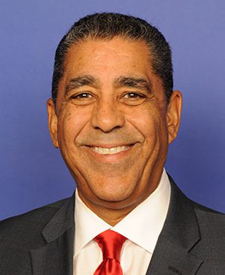
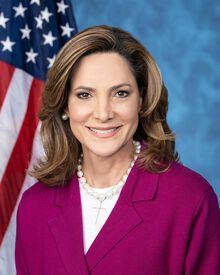
In CommitteeMr. Espaillat (for himself and Ms. Salazar) introduced the following …
Referred to the House Committee on Foreign Affairs.
Introduced in House
Stakeholder Effects
cui bono?How this legislation distributes effects. Mention counts reflect frequency, not effect magnitude.
Beneficiary-country security agencies, Caribbean beneficiary-country governments, Secretary of State
Positive-direction: Caribbean beneficiary-country governments
Negative-direction: Beneficiary-country security agencies, Secretary of State, USAID Administrator
Bill Structure & Actor Mappings
Who is "The Secretary" in each section?
We use a combination of our own taxonomy and classification in addition to large language models to assess meaning and potential beneficiaries. High confidence means strong textual evidence. Always verify with the original bill text.
Learn more about our methodology