STOP China Act
Summary
What This Bill Does
The STOP China Act expands federal transportation procurement restrictions aimed at vehicles and electric power trains connected to covered nations, including entities tied to the People's Republic of China through location, incorporation, ownership, control, affiliates, subsidiaries, joint ventures, successors, or prior prohibited rolling-stock manufacturers. The bill amends 49 U.S.C. 5323(u) so the Secretary of Transportation may not award or obligate covered chapter 53 funding for covered vehicle procurement or for infrastructure to fuel or charge a covered bus when the vehicle is procured under a post-enactment contract or subcontract. USTR, consulting the Attorney General and Transportation Secretary, must publish a public list of covered entities within 30 days, update it every 90 days during the first 180 days, and update it annually thereafter. A parallel section applies the same basic prohibition to other Department of Transportation appropriations outside chapter 53. The bill preserves exceptions for vehicle inspection, investigation, safety research, development, or testing and allows completion of certain pre-enactment contracts that were eligible before the Act.
Who Benefits and How
U.S. transit vehicle manufacturers benefit because federal transportation funds would be less available to covered foreign-nation competitors. Domestic electric power train suppliers benefit from restrictions on listed covered-entity vehicle technology in federally funded procurements. Transit security officials benefit from a public USTR list identifying covered vehicle and power train providers. U.S. taxpayers benefit if federal funds are kept away from PRC-subsidized vehicle manufacturers and covered affiliates.
Who Bears the Burden and How
Transit agencies must screen covered vehicles, electric power trains, bus charging infrastructure, and vendors against the USTR list. The Secretary of Transportation must enforce procurement and infrastructure funding restrictions across covered DOT funds. The United States Trade Representative must publish and update the covered-entity list on a public website. PRC-linked rolling-stock and electric power train providers lose access to federally funded vehicle procurements.
Key Provisions
- Expands covered-entity definitions to include ownership, control, subsidiaries, affiliates, joint ventures, successors, and prior prohibited manufacturers.
- Prohibits covered DOT funding for covered vehicle procurement and covered bus fueling or charging infrastructure.
- Requires USTR to publish a covered-entity list within 30 days, update it every 90 days at first, and update it annually thereafter.
- Provides exceptions for inspection, investigation, safety research, development, and testing while preserving delivery of eligible pre-enactment contracts.
Evidence Chain:
This summary is generated from the full bill text using AI analysis. Expand "Detailed Analysis" below for identified beneficiaries/burden bearers with clause-level evidence links.
At a Glance
What This Bill Does
Bars Department of Transportation funding for covered vehicles and bus fueling or charging infrastructure tied to covered foreign-nation entities, requires USTR to publish and update covered-entity lists, and extends the restriction beyond chapter 53 transit funds.
Key Policy Areas
Transportation, China Competition, Federal Procurement
Primary Purpose
Bars Department of Transportation funding for covered vehicles and bus fueling or charging infrastructure tied to covered foreign-nation entities, requires USTR to publish and update covered-entity lists, and extends the restriction beyond chapter 53 transit funds.
Policy Domains
Resolution provisions
Identified Gains
- U.S. transit vehicle manufacturers
- Domestic electric power train suppliers
- Transit security officials
- U.S. taxpayers
Identified Costs
- Transit agencies
- Secretary of Transportation
- United States Trade Representative
- PRC-linked vehicle providers
Sponsors

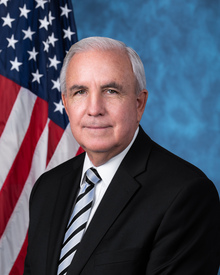

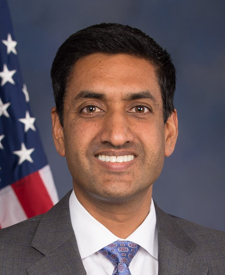
Legislative Progress
In CommitteeReferred to the Subcommittee on Highways and Transit.
Mr. Crawford (for himself and Mr. Khanna) introduced the following …
Referred to the Committee on Transportation and Infrastructure, and in …
Introduced in House
Stakeholder Effects
cui bono?How this legislation distributes effects. Mention counts reflect frequency, not effect magnitude.
PRC-linked vehicle providers, Transit security officials, U.S. transit vehicle manufacturers
Positive-direction: U.S. transit vehicle manufacturers
Negative-direction: PRC-linked vehicle providers
Bill Structure & Actor Mappings
Who is "The Secretary" in each section?
We use a combination of our own taxonomy and classification in addition to large language models to assess meaning and potential beneficiaries. High confidence means strong textual evidence. Always verify with the original bill text.
Learn more about our methodology