Anti-Rigging Act of 2025
Summary
What This Bill Does
The Anti-Rigging Act creates a federal limit on mid-decade congressional redistricting. It invokes Congress's authority over the time, place, and manner of House elections and its Fourteenth Amendment enforcement authority. After a state has redistricted congressional districts following an apportionment, the state may not redistrict those congressional districts again until after the next apportionment. The only exception is court-required redistricting to comply with the Constitution or to enforce the Voting Rights Act of 1965. The bill does not affect state or local office elections or how states draw state and local districts. It applies to congressional redistricting after the regular decennial census conducted during 2020.
Who Benefits and How
Voters benefit because congressional district boundaries would be less vulnerable to repeated partisan mid-decade changes. Candidates for the U.S. House benefit from more stable district lines between decennial apportionments. Voting-rights plaintiffs benefit because court-ordered maps remain available for constitutional and Voting Rights Act compliance. Election administrators benefit from clearer limits on when congressional district maps can change.
Who Bears the Burden and How
State legislatures lose authority to redraw congressional maps mid-decade for political or policy reasons. State redistricting commissions must wait until the next apportionment unless a court requires a new map. Partisan mapmakers lose opportunities to seek additional congressional advantage between censuses. Federal courts may need to distinguish prohibited mid-decade redistricting from required remedial redistricting.
Key Provisions
- Limits congressional redistricting to once after each decennial apportionment.
- Provides an exception for court-required maps needed to comply with the Constitution or enforce the Voting Rights Act.
- Protects state and local office redistricting from the bill's federal congressional-map limit.
- Applies the limit to congressional redistricting after the 2020 decennial census.
Evidence Chain:
This summary is generated from the full bill text using AI analysis. Expand "Detailed Analysis" below for identified beneficiaries/burden bearers with clause-level evidence links.
At a Glance
What This Bill Does
Bars states from redistricting congressional districts again after a post-apportionment map until the next decennial apportionment, except when a court requires redistricting to comply with the Constitution or enforce the Voting Rights Act.
Key Policy Areas
Elections, Redistricting, Voting Rights
Primary Purpose
Bars states from redistricting congressional districts again after a post-apportionment map until the next decennial apportionment, except when a court requires redistricting to comply with the Constitution or enforce the Voting Rights Act.
Policy Domains
Resolution provisions
Identified Gains
- Voters
- Candidates for the U.S. House
- Voting-rights plaintiffs
- Election administrators
Identified Costs
- State legislatures
- State redistricting commissions
- Partisan mapmakers
- Federal courts
Sponsors
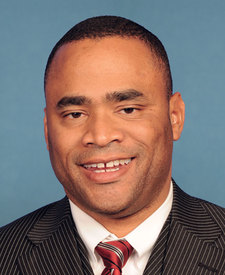
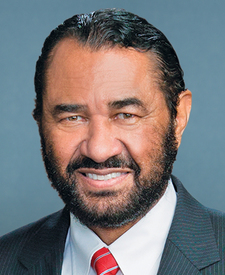



Legislative Progress
In CommitteeMr. Veasey (for himself, Ms. Johnson of Texas, Mr. Doggett, …
Referred to the House Committee on the Judiciary.
Introduced in House
Stakeholder Effects
cui bono?How this legislation distributes effects. Mention counts reflect frequency, not effect magnitude.
State legislatures, State redistricting commissions
Bill Structure & Actor Mappings
Who is "The Secretary" in each section?
We use a combination of our own taxonomy and classification in addition to large language models to assess meaning and potential beneficiaries. High confidence means strong textual evidence. Always verify with the original bill text.
Learn more about our methodology