Unearth America’s Future Act
Analysis under review: This bill has generated analysis that may be too generic or incomplete. Clause-level evidence remains available below.
Summary
What This Bill Does
The bill creates expresses Congressional intent that the Secretary of Commerce should strengthen critical material supply chains while prioritizing domestic capabilities, environmental sustainability, worker protections, establishes a national center within the Department of Commerce to study critical material supply chains, provide policy recommendations, promote environmental sustainability, and strengthen the workforce for critical, and creates a federal loan and loan guarantee program for covered entities to acquire, establish, or enhance critical material manufacturing facilities, with loans up to USD 2 billion for domestic facilities and USD 500. It relies on appropriations, definition changes, tax credits, and grants. The main policy areas are Energy, Trade, Manufacturing, and Science & Space.
Who Benefits and How
Domestic critical material producers could gain revenue opportunities, Rare earth permanent magnet manufacturers could gain revenue opportunities, and Critical material production facilities could see lower costs.
Who Bears the Burden and How
Federal Treasury could lose revenue opportunities, Foreign entities of concern (Chinese companies) could face higher barriers, and Federal taxpayers could face higher costs.
Key Provisions
- Creates expresses Congressional intent that the Secretary of Commerce should strengthen critical material supply chains while prioritizing domestic capabilities, environmental sustainability, worker protections...
- Establishes a national center within the Department of Commerce to study critical material supply chains, provide policy recommendations, promote environmental sustainability, and strengthen the workforce for critical...
- Creates a federal loan and loan guarantee program for covered entities to acquire, establish, or enhance critical material manufacturing facilities, with loans up to USD 2 billion for domestic facilities and USD 500...
- Requires the Secretary of Commerce to coordinate critical material supply chain activities with multiple federal agencies including DOD, DOE, Interior, Treasury, EXIM Bank, and DFC to leverage existing government...
- Establishes a public-private partnership and investment fund to support critical material supply chain development, with authority to buy and sell critical materials, invest in startups, and provide financial tools...
Evidence Chain:
This summary is generated from the full bill text using AI analysis. Expand "Detailed Analysis" below for identified beneficiaries/burden bearers with clause-level evidence links.
At a Glance
What This Bill Does
The bill creates expresses Congressional intent that the Secretary of Commerce should strengthen critical material supply chains while prioritizing domestic capabilities, environmental sustainability, worker protections, establishes a national center within the Department of Commerce to study critical material supply chains, provide policy recommendations, promote environmental sustainability, and strengthen the workforce for critical, and creates a federal loan and loan guarantee program for covered entities to acquire, establish, or enhance critical material manufacturing facilities, with loans up to USD 2 billion for domestic facilities and USD 500.
Key Policy Areas
Energy, Trade, Manufacturing, Science & Space
Primary Purpose
The bill creates expresses Congressional intent that the Secretary of Commerce should strengthen critical material supply chains while prioritizing domestic capabilities, environmental sustainability, worker protections, establishes a national center within the Department of Commerce to study critical material supply chains, provide policy recommendations, promote environmental sustainability, and strengthen the workforce for critical, and creates a federal loan and loan guarantee program for covered entities to acquire, establish, or enhance critical material manufacturing facilities, with loans up to USD 2 billion for domestic facilities and USD 500.
Policy Domains
Title I - Supply Chain Security and Loan Program
Identified Gains
- Domestic critical material producers
- Rare earth permanent magnet manufacturers
- Critical material production facilities
- Critical material processing and refining facilities
- Critical material mining facilities
Identified Costs
- Federal Treasury
- Foreign entities of concern (Chinese companies)
- Federal taxpayers
- Foreign entities of concern
- Department of Commerce
Sponsors


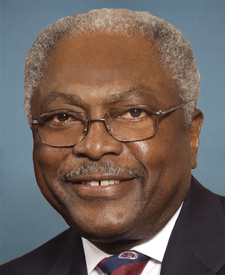

Legislative Progress
In CommitteeMs. Stevens (for herself and Mr. Clyburn) introduced the following …
Referred to the Committee on Ways and Means, and in …
Introduced in House
Stakeholder Effects
cui bono?How this legislation distributes effects. Mention counts reflect frequency, not effect magnitude.
Battery component manufacturers, Battery electrode manufacturers, Critical material processing and refining companies
Critical material extraction companies, Critical material mining and manufacturing companies, Critical material mining and processing companies
Department of Commerce, Federal Treasury, Federal agencies involved in critical materials policy
Positive-direction: National Institute of Standards and Technology
Negative-direction: Department of Commerce, Federal Treasury, Federal agencies involved in critical materials policy
Critical material technology developers, National laboratories conducting energy research, Nonprofit research organizations
Critical material industry trade associations, Critical material testing and certification companies, Industrial decarbonization technology providers
Critical material recyclers, Critical material recycling facilities, Critical material recycling innovators
Universities conducting materials science research, Universities with energy and materials research programs, Universities with mining and materials science programs
Foreign entities of concern, Foreign entities of concern (Chinese companies)
Bill Structure & Actor Mappings
Who is "The Secretary" in each section?
- "the_center"
- → National Center for Secure and Transparent Critical Material Supply Chains
- "the_secretary"
- → Secretary of Commerce, acting through the Center established in section 102
- "the_secretary"
- → Secretary of the Treasury
- "the_secretary"
- → Secretary of Energy
- "the_director_nsf"
- → Director of the National Science Foundation
- "the_director_nist"
- → Director of the National Institute of Standards and Technology
Note: The Secretary refers to Secretary of Commerce acting through the Center in Title I, Secretary of the Treasury in Title II, and Secretary of Energy in Title III sections 302 and 305
Key Definitions
Terms defined in this bill
A nonprofit entity, private entity, or consortium with demonstrated ability to finance/construct critical material facilities, determined by Commerce not to be owned or operated by foreign entities of concern
Has the meaning given in section 7002(a)(2) of the Energy Act of 2020 - minerals essential for national security, energy, and economic needs
Has the meaning given in section 9901 of the NDAA FY2021 - entities posing national security risks
Has the meaning given in section 9901 of the William M. (Mac) Thornberry National Defense Authorization Act for Fiscal Year 2021
Technology, practice, or technique that lowers environmental impact or energy requirements of industrial processes, including renewable energy agreements
We use a combination of our own taxonomy and classification in addition to large language models to assess meaning and potential beneficiaries. High confidence means strong textual evidence. Always verify with the original bill text.
Learn more about our methodology