To establish a loan program to expand capabilities to manufacture critical materials to secure the United States supply chain, to amend the Internal Revenue Code of 1986 to provide credits for qualified investments into critical material facilities and production credits for manufacturing critical materials, and to authorize cross-cutting research, development, and demonstration activities relating to critical material supply chains, and for other purposes.
Analysis under review: This bill has generated analysis that may be too generic or incomplete. Clause-level evidence remains available below.
Summary
What This Bill Does
The Unearth America Future Act creates a comprehensive program to build domestic supply chains for critical materials like rare earth elements used in electronics, defense systems, and clean energy technologies. It establishes a national center at the Commerce Department to coordinate supply chain security, provides up to USD 10 billion annually in loans and loan guarantees for critical material manufacturing facilities, and offers significant tax credits for production and investment in critical materials.
Who Benefits and How
Critical material mining and processing companies benefit from loans up to USD 2 billion per project for domestic facilities and tax credits of up to 10 percent on investments plus per-unit production credits. Domestic manufacturers of rare earth magnets, battery components, and related equipment gain access to financing and a stable supply of materials. Clean energy and defense industries benefit from reduced dependence on foreign supply chains. Workers in critical material industries benefit from prevailing wage requirements and collective bargaining protections under neutrality agreements.
Who Bears the Burden and How
Foreign entities of concern (primarily Chinese companies) are explicitly excluded from participation, losing access to U.S. financing and partnerships. Taxpayers fund the program through authorized appropriations of up to USD 10 billion per year. Loan recipients face extensive compliance requirements including 10-year clawback provisions, labor neutrality agreements, environmental standards, and prohibitions on transactions with foreign countries of concern.
Key Provisions
- Creates a national center and loan program with up to USD 10 billion per year for critical material supply chain facilities
- Provides investment tax credits of 6-10 percent and production tax credits of 10 percent for critical material manufacturing
- Requires loan recipients to agree to labor neutrality, prevailing wages, and collective bargaining through binding arbitration
- Excludes foreign entities of concern and requires 10-year agreements with clawback provisions
Evidence Chain:
This summary is generated from the full bill text using AI analysis. Expand "Detailed Analysis" below for identified beneficiaries/burden bearers.
At a Glance
What This Bill Does
Establishes a national center, loan program, public-private partnership, and tax incentives to build secure and resilient domestic critical material supply chains, reducing dependence on foreign countries of concern.
Key Policy Areas
Manufacturing, National Security, Trade, Energy, Environment, Tax, Research and Development, Labor
Primary Purpose
Establishes a national center, loan program, public-private partnership, and tax incentives to build secure and resilient domestic critical material supply chains, reducing dependence on foreign countries of concern.
Policy Domains
Title I - Supply Chain Security and Loan Program
Identified Gains
Contextual inference, no direct clause citation- Critical material mining companies
- Critical material processing and refining companies
- Domestic manufacturers of rare earth magnets and components
- Clean energy equipment manufacturers
- Defense contractors
- Labor unions in manufacturing sector
Contextual inference, no direct clause citation
Identified Costs
Contextual inference, no direct clause citation- Foreign entities of concern (primarily Chinese companies)
- Federal taxpayers
- Loan recipients facing compliance requirements
Contextual inference, no direct clause citation
Title II - Tax Incentives for Critical Materials
Identified Gains
Contextual inference, no direct clause citation- Critical material production facilities
- Critical material recycling operations
- Battery component manufacturers
- Permanent magnet manufacturers
Contextual inference, no direct clause citation
Identified Costs
Contextual inference, no direct clause citation- Federal Treasury (reduced tax revenue)
- Manufacturers in foreign countries of concern
Contextual inference, no direct clause citation
Title III - Research and Development
Identified Gains
Contextual inference, no direct clause citation- Universities with mining and materials science programs
- National laboratories
- Critical material technology startups
- NIST and NSF research programs
Contextual inference, no direct clause citation
Identified Costs
Contextual inference, no direct clause citation- Federal research agencies (additional mandates)
Contextual inference, no direct clause citation
Sponsors

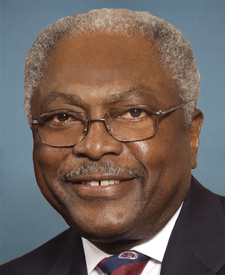
Legislative Progress
IntroducedMs. Stevens (for herself and Mr. Clyburn) introduced the following …
Stakeholder Effects
cui bono?How this legislation distributes effects. Mention counts reflect frequency, not effect magnitude.
Battery component manufacturers, Battery electrode manufacturers, Critical material processing and refining companies
Critical material extraction companies, Critical material mining and manufacturing companies, Critical material mining and processing companies
Department of Commerce, Federal Treasury, Federal agencies involved in critical materials policy
Positive-direction: National Institute of Standards and Technology
Negative-direction: Department of Commerce, Federal Treasury, Federal agencies involved in critical materials policy
Critical material technology developers, National laboratories conducting energy research, Nonprofit research organizations
Critical material industry trade associations, Critical material testing and certification companies, Industrial decarbonization technology providers
Critical material recyclers, Critical material recycling facilities, Critical material recycling innovators
Universities conducting materials science research, Universities with energy and materials research programs, Universities with mining and materials science programs
Foreign entities of concern, Foreign entities of concern (Chinese companies)
Bill Structure & Actor Mappings
Who is "The Secretary" in each section?
- "the_center"
- → National Center for Secure and Transparent Critical Material Supply Chains
- "the_secretary"
- → Secretary of Commerce, acting through the Center established in section 102
- "the_secretary"
- → Secretary of the Treasury
- "the_secretary"
- → Secretary of Energy
- "the_director_nsf"
- → Director of the National Science Foundation
- "the_director_nist"
- → Director of the National Institute of Standards and Technology
Note: The Secretary refers to Secretary of Commerce acting through the Center in Title I, Secretary of the Treasury in Title II, and Secretary of Energy in Title III sections 302 and 305
Key Definitions
Terms defined in this bill
A nonprofit entity, private entity, or consortium with demonstrated ability to finance/construct critical material facilities, determined by Commerce not to be owned or operated by foreign entities of concern
Has the meaning given in section 7002(a)(2) of the Energy Act of 2020 - minerals essential for national security, energy, and economic needs
Has the meaning given in section 9901 of the NDAA FY2021 - entities posing national security risks
Has the meaning given in section 9901 of the William M. (Mac) Thornberry National Defense Authorization Act for Fiscal Year 2021
Technology, practice, or technique that lowers environmental impact or energy requirements of industrial processes, including renewable energy agreements
We use a combination of our own taxonomy and classification in addition to large language models to assess meaning and potential beneficiaries. High confidence means strong textual evidence. Always verify with the original bill text.
Learn more about our methodology