To establish a loan program to expand capabilities to manufacture critical materials to secure the United States supply chain, to amend the Internal Revenue Code of 1986 to provide credits for qualified investments into critical material facilities and production credits for manufacturing critical materials, and to authorize cross-cutting research, development, and demonstration activities relating to critical material supply chains, and for other purposes.
Sponsors

Legislative Progress
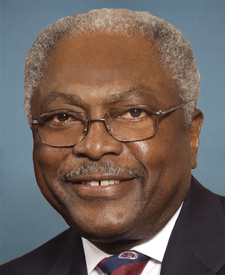
IntroducedMs. Stevens (for herself and Mr. Clyburn) introduced the following …
Primary Purpose
Establishes a comprehensive framework to secure U.S. critical materials supply chains through federal loan programs, tax incentives, and research initiatives to reduce dependence on foreign sources of critical minerals essential for national, energy, and economic security.
Policy Domains
Legislative Strategy
"Comprehensive industrial policy combining direct federal financing, tax incentives, and R&D investment to onshore critical minerals supply chains and reduce dependence on China and other foreign adversaries"
Likely Beneficiaries
- U.S. mining and extraction companies
- Critical minerals processing and refining companies
- Rare earth magnet manufacturers
- Battery materials companies
- Clean energy equipment manufacturers
- Universities and research institutions
- Skilled technical workforce in mining and materials sectors
Likely Burden Bearers
- U.S. taxpayers (via appropriations and tax expenditures)
- Chinese and foreign critical minerals suppliers (reduced market access)
- Companies with supply chain ties to foreign countries of concern
Bill Structure & Actor Mappings
Who is "The Secretary" in each section?
- "the_secretary"
- → Secretary of Commerce (acting through the Center established in section 102)
- "the_secretary"
- → Secretary of the Treasury
- "the_secretary"
- → Secretary of Energy
- "the_director_nsf"
- → Director of the National Science Foundation
- "the_director_nist"
- → Director of the National Institute of Standards and Technology
Note: 'The Secretary' refers to Secretary of Commerce in Title I (sections 101-108), Secretary of the Treasury in Title II (sections 201-203), and Secretary of Energy in Title III (sections 301-306)
Key Definitions
Terms defined in this bill
Has the meaning given such term in section 7002(a)(2) of the Energy Act of 2020 (30 U.S.C. 1606(a)(2))
A nonprofit entity, private entity, or consortium eligible for loans that can finance, construct, expand, or modernize critical materials facilities, and is not owned by a foreign entity of concern
Has the meaning given in section 9901 of the William M. (Mac) Thornberry National Defense Authorization Act for Fiscal Year 2021 (15 U.S.C. 4651) - includes China, Russia, North Korea, Iran
A foreign country not of concern with environmental protections meeting or exceeding U.S. standards and no products prohibited for import under forced labor provisions
Any verifiable alternative to a critical material able to carry out an essential function of a critical material
Any manufacturing process related to extraction, refining/processing, conversion, recycling, or production of qualified substitutes for critical materials
The lifecycle of a critical material, including extraction, processing or refining, conversion, and recycling
We use a combination of our own taxonomy and classification in addition to large language models to assess meaning and potential beneficiaries. High confidence means strong textual evidence. Always verify with the original bill text.
Learn more about our methodology