To reauthorize the Kay Hagan Tick Act, and for other purposes.
Summary
What This Bill Does
This bill reauthorizes Federal tick-borne disease programs under the Kay Hagan Tick Act framework. It amends Public Health Service Act section 317U by replacing a reference to the former Tick-Borne Disease Working Group and other individuals with appropriate individuals, adding language that program activities include increasing capacity to identify, report, prevent, and respond to tick-borne diseases, and extending the authorization period from fiscal years 2021 through 2025 to fiscal years 2026 through 2030. It also amends Public Health Service Act section 2822(c) by extending the same fiscal-year range to 2026 through 2030.
Who Benefits and How
State health departments benefit from continued Federal authority for tick-borne disease surveillance and response capacity. Local public health agencies benefit from programs that support identifying, reporting, preventing, and responding to tick-borne diseases. Patients with Lyme disease and other tick-borne diseases benefit if reauthorized programs improve detection and prevention. Clinicians treating tick-borne diseases benefit from stronger public-health capacity and guidance. CDC vector-borne disease offices benefit from continued program authority through fiscal year 2030.
Who Bears the Burden and How
The Department of Health and Human Services must continue administering the tick-borne disease program authorities. CDC program officers must coordinate with appropriate individuals and support capacity-building work. State health departments receiving support must report, prevent, and respond under program expectations. Federal taxpayers bear the cost of continued program funding if Congress appropriates money. Congressional appropriators must decide annual funding levels for the reauthorized fiscal years.
Key Provisions
- Amends Public Health Service Act section 317U consultation language for tick-borne disease programs.
- Requires program activities to include capacity to identify, report, prevent, and respond to tick-borne diseases.
- Extends the section 317U authorization period from 2021-2025 to 2026-2030.
- Extends the Public Health Service Act section 2822(c) authorization period to 2026-2030.
- Provides continued Federal authority for Kay Hagan Tick Act disease-surveillance and response work.
Evidence Chain:
This summary is generated from the full bill text using AI analysis. Expand "Detailed Analysis" below for identified beneficiaries/burden bearers with clause-level evidence links.
At a Glance
What This Bill Does
Reauthorizes Kay Hagan Tick Act and Public Health Service Act tick-borne disease programs for fiscal years 2026 through 2030, broadens consultation language, and strengthens capacity to identify, report, prevent, and respond to tick-borne diseases.
Key Policy Areas
Public Health, Disease Surveillance, Appropriations
Primary Purpose
Reauthorizes Kay Hagan Tick Act and Public Health Service Act tick-borne disease programs for fiscal years 2026 through 2030, broadens consultation language, and strengthens capacity to identify, report, prevent, and respond to tick-borne diseases.
Policy Domains
House resolution provisions
Identified Gains
- State health departments
- Local public health agencies
- Patients with tick-borne diseases
- Clinicians treating tick-borne diseases
- CDC vector-borne disease offices
Identified Costs
- Department of Health and Human Services
- CDC program officers
- State health departments
- Federal taxpayers
- Congressional appropriators
Sponsors

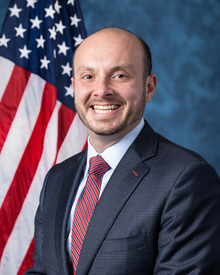

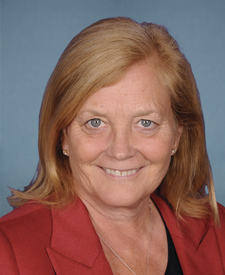
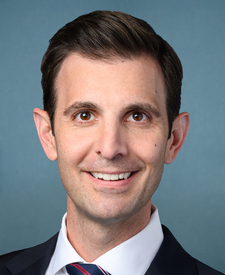
Legislative Progress
ReportedOrdered to be Reported by the Yeas and Nays: 48 …
Committee Consideration and Mark-up Session Held
Forwarded by Subcommittee to Full Committee by Voice Vote.
Subcommittee Consideration and Mark-up Session Held
Referred to the Subcommittee on Health.
Referred to the House Committee on Energy and Commerce.
Introduced in House
Mr. Smith of New Jersey (for himself, Mr. Doggett, Mr. …
Stakeholder Effects
cui bono?How this legislation distributes effects. Mention counts reflect frequency, not effect magnitude.
Clinicians treating tick-borne diseases, Local public health agencies, Patients with tick-borne diseases
Bill Structure & Actor Mappings
Who is "The Secretary" in each section?
- "cdc"
- → Centers for Disease Control and Prevention
- "hhs"
- → Department of Health and Human Services
We use a combination of our own taxonomy and classification in addition to large language models to assess meaning and potential beneficiaries. High confidence means strong textual evidence. Always verify with the original bill text.
Learn more about our methodology