PEACE Act of 2025
Summary
What This Bill Does
The PEACE Act responds to Russia's attacks on Ukraine by tightening financial pressure on Russia-linked banks, sanctioned persons, and energy companies. Within 180 days, Treasury must prescribe regulations prohibiting or imposing strict conditions on U.S. correspondent or payable-through accounts for foreign financial institutions that knowingly provide significant financial services to Russian-sanctioned persons, Directive 2 institutions, Directive 3 entities, or foreign persons operating in Russia's energy sector. Violations are subject to civil penalties.
Treasury must report within 90 days on whether Gazprom, Rosneft, and Lukoil are covered Russian energy-sector persons. The President may waive foreign-financial-institution restrictions for up to 180 days at a time if the waiver advances resolution of the national emergency or is important to U.S. national interests. The bill also requires Treasury to seize, confiscate, transfer, or vest covered Russian resources held by U.S. financial institutions and deposit the resulting funds in the Ukraine Support Fund, where they can be used for REPO for Ukrainians Act purposes or to buy defense articles for Ukraine. The Act terminates 30 days after the President reports that Russia has ceased destabilizing Ukraine's sovereignty and territorial integrity, or five years after enactment.
Who Benefits and How
The Ukraine Support Fund benefits because covered Russian resources held by U.S. financial institutions must be deposited into the fund. The Government of Ukraine benefits because the fund may support Ukraine-related recovery purposes or defense articles. Treasury sanctions staff benefit from explicit authority to target foreign banks serving Russian-sanctioned persons and energy-sector actors. U.S. policy makers seeking leverage over Russia benefit from sanctions tied to correspondent-account access and Russian asset transfer. Ukrainian civilians and energy infrastructure users benefit indirectly if the pressure helps deter Russian attacks or fund recovery.
Who Bears the Burden and How
Foreign financial institutions dealing with Russian-sanctioned persons face loss or strict conditions on U.S. correspondent and payable-through accounts. Russian energy companies, including Gazprom, Rosneft, and Lukoil if Treasury determines they qualify, face heightened sanctions risk. Russian government asset holders and oligarch-linked asset holders lose covered resources held by U.S. financial institutions. U.S. financial institutions holding covered Russian resources must comply with Treasury seizure, transfer, vesting, and reporting processes. Treasury sanctions staff must issue regulations, make energy-company determinations, administer waivers, and handle asset transfers.
Key Provisions
- Requires Treasury to restrict U.S. correspondent or payable-through accounts for foreign banks serving Russian-sanctioned persons or Russian energy-sector actors.
- Requires civil penalties for violations of Treasury regulations.
- Requires Treasury to report within 90 days on whether Gazprom, Rosneft, and Lukoil are sanctionable Russian energy-sector persons.
- Authorizes presidential waivers for up to 180 days at a time with congressional reporting.
- Requires transfer of covered Russian resources held by U.S. financial institutions to the Ukraine Support Fund.
- Terminates the Act when Russia stops destabilizing Ukraine or five years after enactment.
Evidence Chain:
This summary is generated from the full bill text using AI analysis. Expand "Detailed Analysis" below for identified beneficiaries/burden bearers with clause-level evidence links.
At a Glance
What This Bill Does
Imposes PEACE Act Russia sanctions by requiring Treasury correspondent-account restrictions for foreign banks that provide significant services to Russian-sanctioned persons, Directive 2 institutions, Directive 3 entities, or Russian energy-sector persons; requiring determinations on Gazprom, Rosneft, and Lukoil; authorizing waivers; transferring certain Russian assets to the Ukraine Support Fund; and terminating when Russia stops destabilizing Ukraine or after five years.
Key Policy Areas
Sanctions, Ukraine, Russia, Finance, Energy
Primary Purpose
Imposes PEACE Act Russia sanctions by requiring Treasury correspondent-account restrictions for foreign banks that provide significant services to Russian-sanctioned persons, Directive 2 institutions, Directive 3 entities, or Russian energy-sector persons; requiring determinations on Gazprom, Rosneft, and Lukoil; authorizing waivers; transferring certain Russian assets to the Ukraine Support Fund; and terminating when Russia stops destabilizing Ukraine or after five years.
Policy Domains
House resolution provisions
Identified Gains
- Ukraine Support Fund administrators
- Government of Ukraine officials
- Department of the Treasury sanctions staff
- Congressional banking committee staff
- Ukrainian civilian communities
- Ukrainian energy infrastructure users
Identified Costs
- Foreign bank compliance officers dealing with Russia
- Russian energy company officers
- Gazprom executives
- Rosneft executives
- Lukoil executives
- Russian government asset holders
- U.S. bank compliance officers holding Russian resources
- Department of the Treasury asset-transfer staff
Sponsors
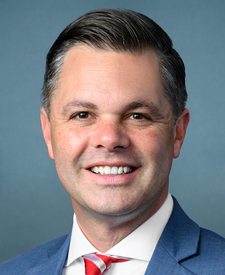

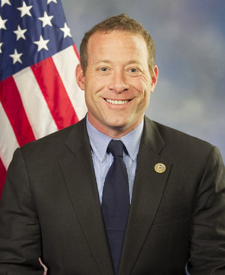
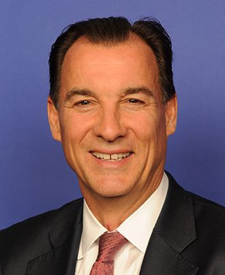

Legislative Progress
ReportedAdditional sponsors: Mr. Barrett, Mr. Conaway, and Mr. Suozzi
Reported with an amendment, committed to the Committee of the …
Placed on the Union Calendar, Calendar No. 277.
Reported (Amended) by the Committee on Financial Services. H. Rept. …
Ordered to be Reported (Amended) by the Yeas and Nays: …
Committee Consideration and Mark-up Session Held
Mr. Nunn of Iowa (for himself and Mr. Gottheimer) introduced …
Referred to the House Committee on Financial Services.
Introduced in House
Stakeholder Effects
cui bono?How this legislation distributes effects. Mention counts reflect frequency, not effect magnitude.
Congressional banking committee staff, President national security staff, Treasury sanctions staff
Positive-direction: Congressional banking committee staff
Negative-direction: President national security staff, Treasury sanctions staff
Foreign financial institutions dealing with Russia, U.S. correspondent banks
Foreign financial institutions dealing with Russia faces effects in multiple directions
Russian-sanctioned persons, Ukrainian civilians
Bill Structure & Actor Mappings
Who is "The Secretary" in each section?
- "treasury"
- → Secretary of the Treasury
- "president"
- → President of the United States
We use a combination of our own taxonomy and classification in addition to large language models to assess meaning and potential beneficiaries. High confidence means strong textual evidence. Always verify with the original bill text.
Learn more about our methodology