Renewable Energy for U.S. Territories Act
Summary
What This Bill Does
The Renewable Energy for U.S. Territories Act directs the Secretary of Agriculture to establish, within 180 days, a grant program for eligible not-for-profit covered entities in U.S. territories. Grant funds can support renewable energy systems, energy-efficiency activities, energy storage tied to those systems or activities, smart grids, microgrids, and training territory residents to develop, construct, maintain, or operate renewable energy systems. Funds may not be used for fossil-fuel or nuclear electricity facilities. DOE national laboratories must offer technical assistance to each grantee. USDA must report within two years and annually on funds disbursed, energy conservation achieved, implementation challenges, and legislative recommendations. GAO must study renewable energy, microgrids, and energy resiliency in each territory within 180 days, with $1.5 million authorized for that study.
Who Benefits and How
Residents of U.S. territories benefit because grants can support local renewable generation, storage, microgrids, smart grids, efficiency, and workforce training. Territory nonprofit energy organizations benefit from a dedicated USDA grant program for renewable and resiliency projects. Puerto Rico, Guam, the U.S. Virgin Islands, American Samoa, and the Northern Mariana Islands benefit from GAO study attention to grid resiliency and microgrid potential. DOE national laboratories benefit from a defined technical-assistance role with territory energy projects.
Who Bears the Burden and How
The Secretary of Agriculture must establish the program, review applications, award grants, and submit annual reports. DOE national laboratories must offer technical assistance to each covered entity carrying out a grant project. The Comptroller General must complete the territory renewable-energy and resiliency study within 180 days. Fossil-fuel and nuclear project developers cannot use this grant program for covered electricity facilities.
Key Provisions
- Creates a USDA renewable-energy grant program for eligible nonprofits in U.S. territories within 180 days.
- Authorizes projects for renewable energy, energy efficiency, storage, smart grids, microgrids, and resident workforce training.
- Bars grant funds from fossil-fuel or nuclear electricity generation facilities.
- Requires DOE national-lab technical assistance, annual USDA reporting, and a GAO resiliency study funded at $1.5 million.
Evidence Chain:
This summary is generated from the full bill text using AI analysis. Expand "Detailed Analysis" below for identified beneficiaries/burden bearers with clause-level evidence links.
At a Glance
What This Bill Does
Creates a USDA renewable-energy grant program for eligible nonprofit organizations in Puerto Rico, Guam, the U.S. Virgin Islands, American Samoa, and the Northern Mariana Islands, with DOE national-lab technical assistance and a GAO study.
Key Policy Areas
Renewable Energy, U.S. Territories, Rural Development
Primary Purpose
Creates a USDA renewable-energy grant program for eligible nonprofit organizations in Puerto Rico, Guam, the U.S. Virgin Islands, American Samoa, and the Northern Mariana Islands, with DOE national-lab technical assistance and a GAO study.
Policy Domains
Resolution provisions
Identified Gains
- Residents of U.S. territories
- Territory nonprofit energy organizations
- Puerto Rico energy customers
- DOE national laboratories
Identified Costs
- Secretary of Agriculture
- DOE national laboratories
- Comptroller General
- Fossil-fuel project developers
Sponsors


Legislative Progress
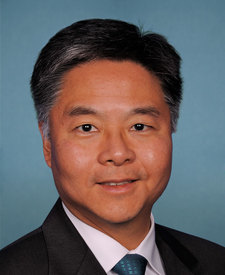
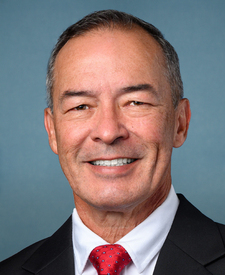
In CommitteeMr. Lieu (for himself, Mr. Hernández, Ms. Plaskett, and Mr. …
Referred to the Committee on Agriculture, and in addition to …
Introduced in House
Stakeholder Effects
cui bono?How this legislation distributes effects. Mention counts reflect frequency, not effect magnitude.
Bill Structure & Actor Mappings
Who is "The Secretary" in each section?
We use a combination of our own taxonomy and classification in addition to large language models to assess meaning and potential beneficiaries. High confidence means strong textual evidence. Always verify with the original bill text.
Learn more about our methodology