Department of Education Protection Act
Summary
What This Bill Does
The Department of Education Protection Act is a funding restriction aimed at preventing executive-branch reorganization of the Department of Education without Congress. The findings list Congress's role in creating, structuring, funding, and overseeing agencies and name major Department offices, including Federal Student Aid, the Institute of Education Sciences, the Office for Civil Rights, the Office of Elementary and Secondary Education, the Office of Postsecondary Education, and the Office of Special Education and Rehabilitative Services. The operative section says no funds made available by previous appropriations Acts to the Department for the current fiscal year may be used for activity relating to a reorganization that decentralizes the Department, reduces staffing, or alters responsibilities, structure, authority, or functionality compared with the Department's January 1, 2025 organization.
Who Benefits and How
Department of Education offices benefit because appropriated funds could not be used to dismantle, decentralize, or reduce their January 1, 2025 functions. Students served by Federal Student Aid benefit if the office's staffing and responsibilities are protected from funded reorganization activity. Students protected by the Office for Civil Rights benefit if the office's authority and functionality are preserved. Education stakeholders relying on special education, elementary, secondary, postsecondary, and research offices benefit from organizational continuity.
Who Bears the Burden and How
The Secretary of Education and reorganization planners cannot use covered appropriations for prohibited reorganization activity. Office of Management and Budget reviewers must respect the funding restriction when approving Department reorganization work. Department managers must avoid spending current-year appropriated funds on decentralization, staffing reductions, or altered responsibilities. Executive officials seeking to restructure the Department must obtain new legal authority or funding rather than relying on prior appropriations.
Key Provisions
- Finds that Congress has the central role in structuring and funding federal agencies.
- Identifies major Department of Education offices and institutes protected by the current organization baseline.
- Bars use of prior appropriations in the current fiscal year for reorganizations that decentralize, reduce staffing, or alter Department functions.
- Uses January 1, 2025 as the benchmark for Department structure, authority, responsibilities, and functionality.
Evidence Chain:
This summary is generated from the full bill text using AI analysis. Expand "Detailed Analysis" below for identified beneficiaries/burden bearers with clause-level evidence links.
At a Glance
What This Bill Does
Bars use of previously appropriated Department of Education funds in the current fiscal year for any reorganization that decentralizes, reduces staffing, or changes the Department's responsibilities, structure, authority, or functionality from its January 1, 2025 organization.
Key Policy Areas
Education, Federal Agencies, Appropriations
Primary Purpose
Bars use of previously appropriated Department of Education funds in the current fiscal year for any reorganization that decentralizes, reduces staffing, or changes the Department's responsibilities, structure, authority, or functionality from its January 1, 2025 organization.
Policy Domains
Resolution provisions
Identified Gains
- Department of Education offices
- Students served by Federal Student Aid
- Students protected by the Office for Civil Rights
- Education stakeholders relying on Department offices
Identified Costs
- Secretary of Education
- Office of Management and Budget reviewers
- Department managers
- Executive reorganization officials
Sponsors


Legislative Progress
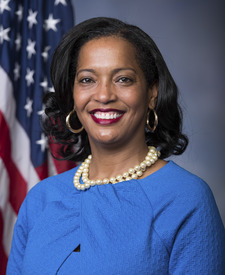
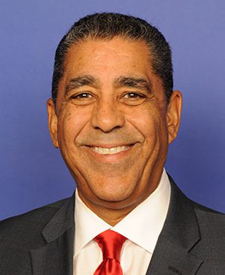
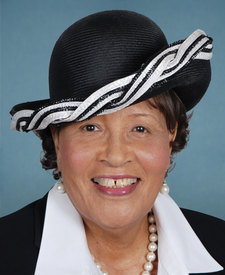
In CommitteeMrs. Hayes (for herself, Ms. Adams, Ms. Titus, Mrs. McIver, …
Referred to the House Committee on Education and Workforce.
Introduced in House
Stakeholder Effects
cui bono?How this legislation distributes effects. Mention counts reflect frequency, not effect magnitude.
Department of Education offices, Executive reorganization officials, Office of Management and Budget reviewers
Positive-direction: Department of Education offices
Negative-direction: Office of Management and Budget reviewers
Students protected by the Office for Civil Rights
Bill Structure & Actor Mappings
Who is "The Secretary" in each section?
We use a combination of our own taxonomy and classification in addition to large language models to assess meaning and potential beneficiaries. High confidence means strong textual evidence. Always verify with the original bill text.
Learn more about our methodology