Remembering Our Local Heroes Act
Summary
What This Bill Does
The Remembering Our Local Heroes Act establishes a federal memorial grant program within six months of enactment. The Secretary may award grants to local governments and nonprofit organizations to construct, restore, renovate, or maintain covered memorials such as statues, monuments, sculptures, plaques, inscriptions, gardens, memorial groves, and other permanent structures or landscape features. Priority goes to projects with strong local support and memorials honoring individuals or groups who contributed exemplary public service to their community or the United States, or who distinguished themselves through acts of bravery that risked their lives. Grants are limited to one per fiscal year per applicant or covered memorial, may not exceed $100,000, require at least a 50 percent nonfederal match including in-kind support, and are authorized at $2 million per year for fiscal years 2026 through 2030.
Who Benefits and How
Local governments maintaining memorials benefit because grants can fund construction, restoration, renovation, and maintenance work. Nonprofit memorial organizations benefit from access to federal grants for permanent public-service and bravery memorials. Families of local heroes benefit when memorial projects honor exemplary public service or acts of bravery. Community heritage groups benefit because in-kind support can count toward the 50 percent nonfederal match.
Who Bears the Burden and How
The Secretary administering memorial grants must establish the program, review applications, enforce grant caps, and prioritize qualifying projects. Grant recipients must provide at least a 50 percent nonfederal match and limit funds to covered memorial work. Federal taxpayers fund the $2 million annual authorization from fiscal years 2026 through 2030. Applicants seeking repeated funding are limited by the one-grant-per-fiscal-year rule for each applicant or memorial.
Key Provisions
- Creates a grant program for covered memorial construction, restoration, renovation, and maintenance within six months.
- Limits recipients to local governments and nonprofit organizations with eligible public-service or bravery memorials.
- Caps grants at $100,000, limits awards to one per applicant or memorial per fiscal year, and requires a 50 percent nonfederal match.
- Authorizes $2 million annually for fiscal years 2026 through 2030.
Evidence Chain:
This summary is generated from the full bill text using AI analysis. Expand "Detailed Analysis" below for identified beneficiaries/burden bearers with clause-level evidence links.
At a Glance
What This Bill Does
Authorizes $2 million annually through 2030 for grants up to $100,000 to local governments and nonprofits for construction, restoration, renovation, or maintenance of public-service and bravery memorials with a 50 percent nonfederal match.
Key Policy Areas
Commemoration, Local Government, Grants
Primary Purpose
Authorizes $2 million annually through 2030 for grants up to $100,000 to local governments and nonprofits for construction, restoration, renovation, or maintenance of public-service and bravery memorials with a 50 percent nonfederal match.
Policy Domains
Resolution provisions
Identified Gains
- Local governments maintaining memorials
- Nonprofit memorial organizations
- Families of local heroes
- Community heritage groups
Identified Costs
- Secretary administering memorial grants
- Grant recipients
- Federal taxpayers
- Applicants seeking repeated funding
Sponsors
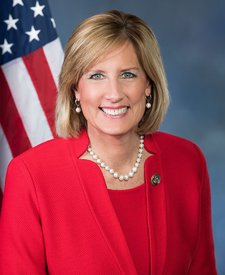
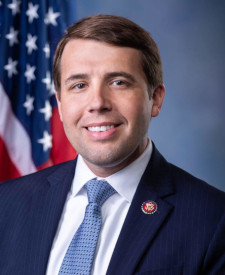

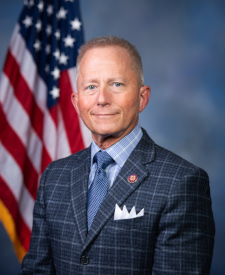
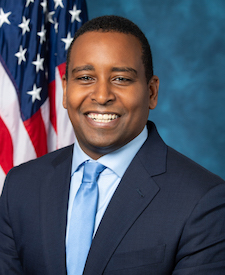
Legislative Progress
In CommitteeMs. Tenney (for herself and Mr. Pappas) introduced the following …
Referred to the House Committee on Natural Resources.
Introduced in House
Stakeholder Effects
cui bono?How this legislation distributes effects. Mention counts reflect frequency, not effect magnitude.
Grant recipients, Nonprofit memorial organizations
Positive-direction: Nonprofit memorial organizations
Negative-direction: Grant recipients
Local governments maintaining memorials
Bill Structure & Actor Mappings
Who is "The Secretary" in each section?
We use a combination of our own taxonomy and classification in addition to large language models to assess meaning and potential beneficiaries. High confidence means strong textual evidence. Always verify with the original bill text.
Learn more about our methodology