Digital Coast Reauthorization Act of 2025
Summary
What This Bill Does
The Digital Coast Reauthorization Act of 2025 makes three amendments to 16 U.S.C. 1467. It requires data and integrated products developed under the program to be fully and freely available as well as readily accessible. It adds underground infrastructure and subsurface utilities to the critical-infrastructure data addressed by the program. Finally, it changes the last authorized fiscal year from 2025 to 2030, keeping the existing $4 million annual amount. That extends authorization by five years, or $20 million for fiscal years 2026 through 2030; it does not itself appropriate that money. The Secretary of Commerce acts through NOAA to administer Digital Coast.
Who Benefits and How
Coastal state and local planning agencies, researchers and other data users gain a stronger free-access requirement for the program's data products. Including subsurface information can help users consider utility locations and infrastructure exposure alongside other coastal information, although the bill does not guarantee complete maps or eliminate uncertainty. NOAA's Digital Coast program gains an extended funding authorization. Surveying and geospatial-service providers could receive opportunities if Congress funds the program and NOAA uses its existing contracting or agreement authorities; no contractor or award is selected. Better planning may benefit coastal residents, but avoided storm damage or construction costs are not guaranteed.
Who Bears the Burden and How
NOAA must implement the strengthened availability requirement and include the additional infrastructure-data categories in its coordination and integration work. Federal taxpayers would fund any subsequent appropriations, not an automatic $20 million expenditure from this bill. The amendment supplies no new authority to compel private utility owners to disclose every map or sensitive record, and it does not expressly override other disclosure restrictions. The free-data wording does not repeal the separate authority to charge cost-limited fees for training, workshops or conferences when provided for in appropriations acts. Data contributors retain their existing arrangements; the bill imposes no blanket new private reporting mandate and funds no specific utility repair or coastal construction project.
Key Provisions
- Extends the existing $4 million annual authorization through fiscal year 2030 without providing an appropriation.
- Requires Digital Coast data and integrated products developed under the statute to be fully and freely available as well as readily accessible.
- Expands the critical-infrastructure data category to expressly include underground infrastructure and subsurface utilities.
- Provides no automatic grant award, utility-disclosure mandate or repeal of the separate cost-limited training-fee authority.
Evidence Chain:
This summary is generated from the full bill text using AI analysis. Expand "Detailed Analysis" below for identified beneficiaries/burden bearers with clause-level evidence links.
At a Glance
What This Bill Does
Extend Digital Coast's $4 million annual authorization through fiscal year 2030, require program data and integrated products to be fully and freely available, and expressly include underground infrastructure and subsurface utility data.
Key Policy Areas
Coastal Management, Geospatial Data, Federal Spending
Primary Purpose
Extend Digital Coast's $4 million annual authorization through fiscal year 2030, require program data and integrated products to be fully and freely available, and expressly include underground infrastructure and subsurface utility data.
Policy Domains
Digital Coast Reauthorization Act of 2025
Identified Gains
- Coastal state planning agencies
- Coastal local planning agencies
- Geospatial data users
- Geospatial-service providers
- NOAA Digital Coast program
Identified Costs
- National Oceanic and Atmospheric Administration
- Federal taxpayers
Sponsors


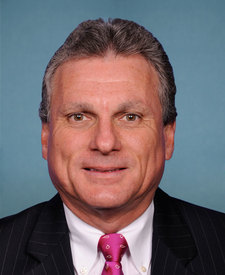
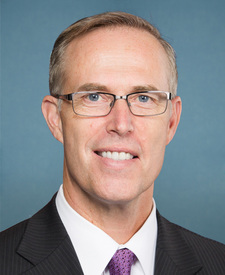

Legislative Progress
ReportedAdditional sponsors: Mr. Krishnamoorthi, Mrs. Radewagen, Ms. Elfreth, Mr. Ezell, …
Committed to the Committee of the Whole House on the …
Placed on the Union Calendar, Calendar No. 310.
Reported by the Committee on Natural Resources. H. Rept. 119-358.
Ordered to be Reported by Unanimous Consent.
Committee Consideration and Mark-up Session Held
Subcommittee on Water, Wildlife and Fisheries Discharged
Subcommittee Hearings Held
Referred to the Subcommittee on Water, Wildlife and Fisheries.
Mr. Min (for himself, Mr. Wittman, Mr. Mullin, and Mr. …
Stakeholder Effects
cui bono?How this legislation distributes effects. Mention counts reflect frequency, not effect magnitude.
Coastal local planning agencies, Coastal state planning agencies, NOAA Digital Coast program
Positive-direction: Coastal local planning agencies, Coastal state planning agencies, NOAA Digital Coast program
Negative-direction: National Oceanic and Atmospheric Administration
Geospatial data users, Taxpayers
Positive-direction: Geospatial data users
Negative-direction: Taxpayers
Bill Structure & Actor Mappings
Who is "The Secretary" in each section?
- "the_program"
- → NOAA Digital Coast
- "the_secretary"
- → Secretary of Commerce acting through the Administrator of the National Oceanic and Atmospheric Administration
Key Definitions
Terms defined in this bill
Applies to data and integrated products developed under the section. It does not amend the distinct training, workshop and conference fee provisions in subsection (e)(2).
The unchanged $4 million per year in 16 U.S.C. 1467(g) would run through 2030 rather than 2025; the additional five authorized years total $20 million, subject to appropriations.
We use a combination of our own taxonomy and classification in addition to large language models to assess meaning and potential beneficiaries. High confidence means strong textual evidence. Always verify with the original bill text.
Learn more about our methodology