Innovate Less Lethal to De-Escalate Tax Modernization Act
Summary
What This Bill Does
This bill creates federal tax and firearms-law exemptions for a defined class of less-than-lethal projectile devices. It amends Internal Revenue Code section 4182 so the section 4181 firearms and ammunition excise tax does not apply to qualifying less-than-lethal projectile devices, devices appearing on Treasury's public list, or shells and cartridges designed for those devices. To qualify, a device cannot be designed or readily convertible to fire common handgun, rifle, or shotgun ammunition, cannot discharge projectiles above 500 feet per second, must be intended for use in a way not likely to cause death or serious bodily injury, and cannot accept or be readily modified to accept certain semiautomatic ammunition feeding devices.
The bill also creates an administrative classification system. Manufacturers, producers, and importers may request a determination from the Secretary of the Treasury, and Treasury must decide within 90 days. Treasury must publish and annually update lists of devices that qualify and devices that do not qualify. A second section amends the National Firearms Act firearm definition so antiques, qualifying less-than-lethal projectile devices, and listed devices are excluded from the NFA definition.
Who Benefits and How
Less-lethal projectile device manufacturers benefit because qualifying products are exempt from the firearms and ammunition excise tax and excluded from NFA firearm status. Device importers and producers benefit from a 90-day Treasury classification process and public lists that can reduce product-launch uncertainty. Law enforcement procurement offices and security training providers benefit because qualifying de-escalation tools can become cheaper and less administratively burdensome to acquire. Civilian less-lethal device purchasers benefit if manufacturers pass through lower tax and compliance costs.
Who Bears the Burden and How
Secretary of the Treasury staff must review classification requests within 90 days, maintain annual public lists, and distinguish qualifying devices from nonqualifying devices. ATF classification examiners and NFA administrators must adjust treatment of covered less-lethal devices under the firearm definition. Federal excise tax collections bear a revenue loss because covered devices and compatible shells or cartridges no longer generate section 4181 tax. Traditional firearms and ammunition manufacturers may face competitive pressure if qualifying less-lethal devices become cheaper alternatives for some customers.
Key Provisions
- Exempts qualifying less-than-lethal projectile devices from the section 4181 firearms and ammunition excise tax.
- Defines qualifying devices by projectile velocity, ammunition compatibility, injury-risk purpose, and magazine-feeding limits.
- Requires Treasury to decide manufacturer, producer, or importer classification requests within 90 days.
- Requires Treasury to publish and annually update lists of qualifying and nonqualifying devices.
- Adds qualifying less-than-lethal projectile devices to exclusions from the National Firearms Act firearm definition.
Evidence Chain:
This summary is generated from the full bill text using AI analysis. Expand "Detailed Analysis" below for identified beneficiaries/burden bearers with clause-level evidence links.
At a Glance
What This Bill Does
Exempts qualifying less-than-lethal projectile devices, listed devices, and compatible shells or cartridges from the federal firearms and ammunition excise tax and excludes those devices from the National Firearms Act firearm definition, while requiring Treasury classification decisions and public device lists.
Key Policy Areas
Tax, Firearms Regulation, Public Safety, Manufacturing
Primary Purpose
Exempts qualifying less-than-lethal projectile devices, listed devices, and compatible shells or cartridges from the federal firearms and ammunition excise tax and excludes those devices from the National Firearms Act firearm definition, while requiring Treasury classification decisions and public device lists.
Policy Domains
House resolution provisions
Identified Gains
- Less-lethal projectile device manufacturers
- Less-lethal device importers
- Law enforcement procurement offices
- Security training providers
- Civilian less-lethal device purchasers
Identified Costs
- Secretary of the Treasury staff
- ATF classification examiners
- Federal excise tax collections
- Traditional firearms manufacturers
Sponsors


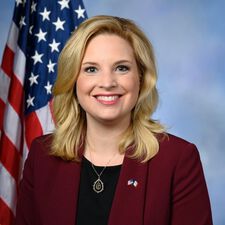

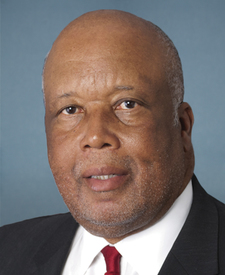
Legislative Progress
ReportedPlaced on the Union Calendar, Calendar No. 407.
Reported (Amended) by the Committee on Ways and Means. H. …
Additional sponsors: Mrs. Miller of West Virginia, Mr. Rutherford, Mr. …
Placed on the Union Calendar, Calendar No. 407.
Committee Consideration and Mark-up Session Held
Ordered to be Reported in the Nature of a Substitute …
Introduced in House
Referred to the House Committee on Ways and Means.
Mr. Schweikert (for himself, Mr. Stanton, Mr. Fitzgerald, Mrs. Fischbach, …
Stakeholder Effects
cui bono?How this legislation distributes effects. Mention counts reflect frequency, not effect magnitude.
ATF classification examiners, Law enforcement procurement offices, Secretary of the Treasury staff
Positive-direction: Law enforcement procurement offices
Negative-direction: ATF classification examiners, Secretary of the Treasury staff
Compatible cartridge manufacturers, Less-lethal projectile device manufacturers
Bill Structure & Actor Mappings
Who is "The Secretary" in each section?
- "atf"
- → Bureau of Alcohol, Tobacco, Firearms and Explosives
- "secretary"
- → Secretary of the Treasury
We use a combination of our own taxonomy and classification in addition to large language models to assess meaning and potential beneficiaries. High confidence means strong textual evidence. Always verify with the original bill text.
Learn more about our methodology