National Wildlife Refuge System Invasive Species Strike Team Act of 2025
Summary
What This Bill Does
The National Wildlife Refuge System Invasive Species Strike Team Act authorizes a Fish and Wildlife Service program to eradicate, control, and reduce invasive-species harms on and adjacent to National Wildlife Refuge System lands and waters. The Secretary must establish at least one strike team in each FWS region trained for early detection and rapid response across multiple taxa. Teams conduct prevention, surveillance, eradication, containment, mapping, monitoring, active management, integrated pest management, Incident Command System exercises, outreach, and data-driven evaluation. The program can work with federal, state, Tribal, local, nonprofit, private, and nongovernmental partners, provide financial or technical assistance, contracts, grants, or cooperative agreements, assist other agencies on request, coordinate with adjacent landowners, use standardized national and regional invasive-species reporting platforms, publish reports after two and five years, and is authorized at $15 million per fiscal year from 2026 through 2030.
Who Benefits and How
National wildlife refuges benefit because each FWS region would have a trained invasive-species strike team. Native species habitat benefits from prevention, early detection, eradication, containment, mapping, monitoring, and active management. Adjacent landowners benefit from coordination and assistance when invasive species cross refuge boundaries. State wildlife agencies benefit from partnerships, standardized taxonomy, and shared reporting platforms.
Who Bears the Burden and How
The Secretary of the Interior must establish and operate the strike team program across Fish and Wildlife Service regions. Fish and Wildlife Service regional offices must train teams, coordinate partners, report outcomes, and maintain data standards. Federal taxpayers fund the $15 million annual authorization for fiscal years 2026 through 2030. Invasive-species control contractors must meet program goals, data expectations, and integrated pest-management practices.
Key Provisions
- Establishes at least one invasive-species strike team in each Fish and Wildlife Service region.
- Requires prevention, biosecurity, early detection, rapid response, eradication, containment, mapping, monitoring, and integrated pest management.
- Authorizes assistance, contracts, grants, cooperative agreements, interagency support, adjacent-landowner coordination, and standardized reporting platforms.
- Requires public reports after two and five years and authorizes $15 million annually for fiscal years 2026 through 2030.
Evidence Chain:
This summary is generated from the full bill text using AI analysis. Expand "Detailed Analysis" below for identified beneficiaries/burden bearers with clause-level evidence links.
At a Glance
What This Bill Does
Authorizes a National Wildlife Refuge System invasive-species strike team program with at least one team per Fish and Wildlife Service region, partner assistance, standardized data reporting, public reports, and $15 million annually through 2030.
Key Policy Areas
Wildlife, Public Lands, Invasive Species
Primary Purpose
Authorizes a National Wildlife Refuge System invasive-species strike team program with at least one team per Fish and Wildlife Service region, partner assistance, standardized data reporting, public reports, and $15 million annually through 2030.
Policy Domains
Resolution provisions
Identified Gains
- National wildlife refuges
- Native species habitat
- Adjacent landowners
- State wildlife agencies
Identified Costs
- Secretary of the Interior
- Fish and Wildlife Service regional offices
- Federal taxpayers
- Invasive-species control contractors
Sponsors
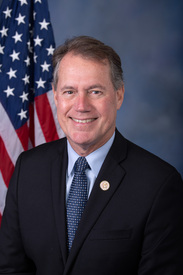
Ed Case
D-HI | Primary Sponsor
Legislative Progress
In CommitteeSubcommittee Hearings Held
Referred to the Subcommittee on Water, Wildlife and Fisheries.
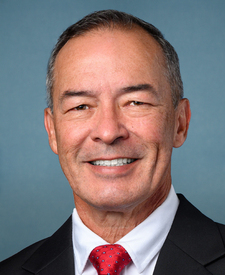
Mr. Case (for himself and Mr. Moylan) introduced the following …
Referred to the House Committee on Natural Resources.
Introduced in House
Sponsor introductory remarks on measure. (CR E631)
Stakeholder Effects
cui bono?How this legislation distributes effects. Mention counts reflect frequency, not effect magnitude.
Fish and Wildlife Service regional offices, Secretary of the Interior
Bill Structure & Actor Mappings
Who is "The Secretary" in each section?
We use a combination of our own taxonomy and classification in addition to large language models to assess meaning and potential beneficiaries. High confidence means strong textual evidence. Always verify with the original bill text.
Learn more about our methodology