CLEAR Act
Summary
What This Bill Does
This bill changes how national ambient air quality standards are reviewed, implemented, and enforced. It extends Clean Air Act section 109 review intervals from five years to 10 years and lets EPA consider likely attainability as a secondary factor when the scientific review committee identifies a range of air-quality levels that protect public health. It gives States at least one year to correct a deficient implementation plan before EPA promulgates a federal implementation plan, and can give EPA up to three years to act if a State submits a correction.
The bill expands exceptional-event treatment to include actions to mitigate wildfire risk, such as prescribed fire or similar State-approved measures, and updates EPA rulemaking deadlines for those events. It creates a new section 179C so sanctions and fees do not apply to severe or extreme ozone areas or serious particulate-matter areas when a State demonstrates the failure resulted from emissions outside the nonattainment area, exceptional events, or mobile-source emissions beyond State control. It also expands Clean Air Scientific Advisory Committee State representation from one State air pollution control representative to three geographically diverse representatives and requires review of adverse public health, welfare, social, economic, and energy effects of attainment strategies.
Who Benefits and How
State environmental regulatory agencies benefit from longer NAAQS cycles, more time before federal implementation plans, and relief from sanctions when emissions are outside State control. Industrial emitters in ozone or particulate-matter nonattainment areas benefit from more room to account for attainability, exceptional events, wildfire smoke, and mobile-source emissions. Forestry and wildfire management operations benefit because prescribed fire and similar mitigation can be treated as exceptional events rather than ordinary pollution violations. State air pollution control agencies benefit from three seats on the Clean Air Scientific Advisory Committee across EPA regions. Energy-intensive industries benefit from advisory review of economic and energy effects of attainment strategies.
Who Bears the Burden and How
EPA air-quality staff must administer longer review cycles, exceptional-event revisions, State demonstrations, and additional advisory-committee consultation. Clean Air Scientific Advisory Committee members must assess health, welfare, social, economic, and energy effects of attainment strategies after public comment. Communities in nonattainment areas may face higher health risk if standards are delayed, sanctions are waived, or prescribed-fire emissions receive exceptional-event treatment. Environmental public-health organizations bear a policy burden because the bill elevates attainability and economic effects in standard-setting and implementation. Residents near prescribed burns may face smoke exposure even when the burns reduce broader wildfire risk.
Key Provisions
- Extends Clean Air Act NAAQS review intervals from five years to 10 years.
- Allows EPA to consider likely attainability as a secondary factor when setting or revising primary standards.
- Requires EPA to give States at least one year to correct deficient implementation plans before federal implementation plans.
- Expands exceptional-event treatment to prescribed fire and similar wildfire-risk mitigation actions.
- Provides sanctions and fee relief when nonattainment is caused by outside emissions, exceptional events, or mobile-source emissions beyond State control.
- Adds geographically diverse State air pollution control representatives to the Clean Air Scientific Advisory Committee.
Evidence Chain:
This summary is generated from the full bill text using AI analysis. Expand "Detailed Analysis" below for identified beneficiaries/burden bearers with clause-level evidence links.
At a Glance
What This Bill Does
Changes Clean Air Act implementation by extending NAAQS review intervals to 10 years, allowing attainability as a secondary consideration, giving States more time before federal implementation plans, expanding exceptional-event treatment for wildfire mitigation, limiting sanctions and fees for emissions beyond State control, and changing Clean Air Scientific Advisory Committee membership and review duties.
Key Policy Areas
Air Quality, Federalism, Wildfire, Environmental Regulation
Primary Purpose
Changes Clean Air Act implementation by extending NAAQS review intervals to 10 years, allowing attainability as a secondary consideration, giving States more time before federal implementation plans, expanding exceptional-event treatment for wildfire mitigation, limiting sanctions and fees for emissions beyond State control, and changing Clean Air Scientific Advisory Committee membership and review duties.
Policy Domains
House resolution provisions
Identified Gains
- State environmental regulatory agencies
- Industrial emitters in nonattainment areas
- Forestry wildfire managers
- State air pollution control agencies
- Energy-intensive industries
Identified Costs
- EPA air-quality staff
- Clean Air Scientific Advisory Committee members
- Communities in nonattainment areas
- Environmental public-health organizations
- Residents near prescribed burns
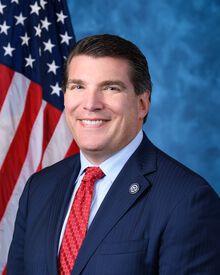
Sponsors
Legislative Progress
ReportedOrdered to be Reported by the Yeas and Nays: 27 …
Committee Consideration and Mark-up Session Held
Forwarded by Subcommittee to Full Committee by the Yeas and …
Subcommittee Consideration and Mark-up Session Held
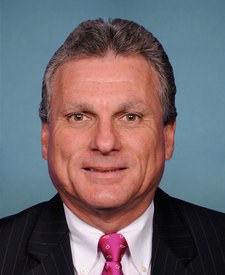
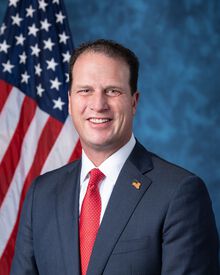
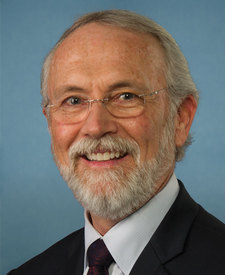
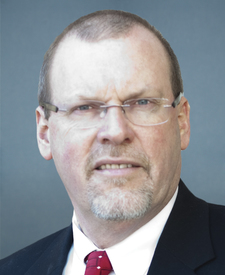
Mr. Carter of Georgia (for himself, Mr. Griffith, Mr. Allen, …
Referred to the Subcommittee on Environment.
Referred to the House Committee on Energy and Commerce.
Introduced in House
Stakeholder Effects
cui bono?How this legislation distributes effects. Mention counts reflect frequency, not effect magnitude.
Clean Air Scientific Advisory Committee members, EPA, EPA Administrator
EPA Administrator faces effects in multiple directions
Positive-direction: EPA enforcement and sanctions authority, State air pollution control agencies, State environmental regulatory agencies, State governments in Severe and Extreme ozone and Serious particulate matter nonattainment areas, State governments in Severe/Extreme ozone and Serious particulate matter nonattainment areas
Negative-direction: Clean Air Scientific Advisory Committee members, EPA
Industrial emitters in ozone and particulate matter nonattainment areas, Industrial emitters seeking economic feasibility consideration in standard-setting, Industrial facilities in areas affected by cross-state or wildfire pollution
Communities in ozone and particulate matter nonattainment areas, Communities near prescribed burn areas and in nonattainment zones, Residents of nonattainment areas
Oil and gas companies and refineries in nonattainment areas
Forestry and wildfire management operations conducting prescribed burns
Energy-intensive industries subject to NAAQS compliance
Bill Structure & Actor Mappings
Who is "The Secretary" in each section?
- "casac"
- → Clean Air Scientific Advisory Committee
- "administrator"
- → Administrator of the Environmental Protection Agency
We use a combination of our own taxonomy and classification in addition to large language models to assess meaning and potential beneficiaries. High confidence means strong textual evidence. Always verify with the original bill text.
Learn more about our methodology