Taxpayer Protection Act
Summary
What This Bill Does
The Taxpayer Protection Act bars the President and other executive-branch officials from targeting a donor state by imposing a general prohibition on federal grants, contracts, or other agreements with the state, its political subdivisions, or public or nonprofit entities in the state. It also bars revoking or suspending those grants, contracts, or agreements unless the Comptroller General determines the state, subdivision, or entity committed fraud, waste, or abuse.
The bill defines donor state as a state whose taxpayers paid more federal income taxes over the preceding three-year average than the average federal funding provided to the state during that period. Public entities include public schools and public hospitals.
The bill creates a Donor State Protection Trust Fund in the Treasury. Amounts equal to federal income taxes paid by donor-state taxpayers are appropriated to the fund. If unobligated balances exceed $4 trillion at year end, the excess goes to the general fund. Trust fund amounts are available without further appropriation to a donor state if the executive branch violates the grant or contract prohibitions, and the state may use the money for necessary or appropriate expenditures. If a grant, contract, or agreement was revoked or suspended, the trust-fund amount is limited to the amount the state or entity would have received.
Who Benefits and How
Donor state governments, donor-state public schools, donor-state public hospitals, political subdivisions, and nonprofit entities benefit from statutory protection against broad executive-branch funding bans and from access to trust-fund replacement money if prohibited actions occur. State budget offices and public service providers in donor states benefit from more predictable federal funding.
Who Bears the Burden and How
Executive-branch grant and contracting officials lose discretion to impose broad funding bans or suspensions against donor states. The Comptroller General must determine whether fraud, waste, or abuse exists before covered funding can be revoked or suspended. Treasury trust fund administrators must track income-tax amounts paid by donor-state taxpayers, fund balances, transfers above $4 trillion, and qualifying payments to donor states.
Key Provisions
- Prohibits executive-branch officials from imposing broad grant, contract, or agreement bans on donor states and covered entities.
- Prohibits revocation or suspension of covered awards unless the Comptroller General determines fraud, waste, or abuse.
- Defines donor states based on a three-year average comparison of federal income taxes paid and federal funding received.
- Creates the Donor State Protection Trust Fund in the Treasury.
- Appropriates amounts equivalent to donor-state income taxes to the trust fund and transfers balances above $4 trillion to the general fund.
- Provides trust-fund payments to donor states when executive-branch officials violate the bill's funding protections.
Evidence Chain:
This summary is generated from the full bill text using AI analysis. Expand "Detailed Analysis" below for identified beneficiaries/burden bearers with clause-level evidence links.
At a Glance
What This Bill Does
Prohibits executive-branch officials from politically targeting donor states by blocking or revoking federal grants, contracts, or agreements absent a Comptroller General fraud, waste, or abuse determination, and creates a Donor State Protection Trust Fund funded by donor-state income taxes to reimburse donor states when violations occur.
Key Policy Areas
Federal Grants, Federal Contracts, Tax, Intergovernmental Relations
Primary Purpose
Prohibits executive-branch officials from politically targeting donor states by blocking or revoking federal grants, contracts, or agreements absent a Comptroller General fraud, waste, or abuse determination, and creates a Donor State Protection Trust Fund funded by donor-state income taxes to reimburse donor states when violations occur.
Policy Domains
Sections 2 and 3 donor state grant, contract, and trust fund protections
Identified Gains
- Donor state governments
- Donor-state public schools
- Donor-state public hospitals
- Donor-state nonprofit grant recipients
Identified Costs
- Executive-branch grant officials
- Federal contracting officers
- Comptroller General fraud reviewers
- Treasury trust fund administrators
Legislative Progress
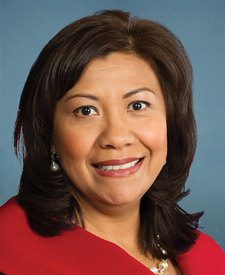
In CommitteeMrs. Torres of California introduced the following bill; which was …
Referred to the Committee on Oversight and Government Reform, and …
Introduced in House
Stakeholder Effects
cui bono?How this legislation distributes effects. Mention counts reflect frequency, not effect magnitude.
Comptroller General fraud reviewers, Executive-branch grant officials, Federal general fund receipts
Bill Structure & Actor Mappings
Who is "The Secretary" in each section?
- "treasury"
- → Department of the Treasury
- "president"
- → President of the United States
- "donor_state"
- → Donor state government
- "executive_branch"
- → Executive branch officials
- "comptroller_general"
- → Comptroller General of the United States
Key Definitions
Terms defined in this bill
A Treasury trust fund funded by donor-state income tax amounts and available to donor states when prohibited executive funding actions occur.
A state whose taxpayers paid more federal income taxes on average over the preceding three years than the average federal funding provided to the state over that period.
Includes public schools and public hospitals.
We use a combination of our own taxonomy and classification in addition to large language models to assess meaning and potential beneficiaries. High confidence means strong textual evidence. Always verify with the original bill text.
Learn more about our methodology