CONNECT for Health Act of 2025
Summary
What This Bill Does
The CONNECT for Health Act is a broad Medicare telehealth permanence and oversight bill. It removes Medicare geographic requirements for telehealth after October 1, 2025, expands originating sites, allows HHS to waive practitioner-type limits when clinically appropriate with public comment and reassessment, and pays Federally Qualified Health Centers and Rural Health Clinics as distant-site telehealth providers after October 1, 2025. It removes originating-site restrictions for Indian Health Service, Tribal, and Native Hawaiian facilities after January 1, 2026, repeals the six-month in-person visit requirement for telemental health, permits telehealth waivers during later public health emergencies, and allows hospice recertification by telehealth with a GAO report. It also clarifies that providers can furnish technologies to beneficiaries for telehealth and remote monitoring without triggering beneficiary-inducement penalties if conditions are met, authorizes $3 million annually for HHS OIG telehealth oversight in fiscal years 2026-2030, requires identification and notification of telehealth outlier billers, and mandates beneficiary accessibility guidance, provider training, quality-measure review, technical guidance, and quarterly CMS public telehealth data.
Who Benefits and How
Medicare beneficiaries in nonrural areas benefit because geographic telehealth restrictions would no longer block coverage. Rural Medicare beneficiaries benefit because FQHCs and rural health clinics can continue furnishing covered telehealth as distant sites. Native American health facilities benefit because Indian Health Service, Tribal, and Native Hawaiian facilities receive originating-site flexibility. Medicare beneficiaries with disabilities or limited English proficiency benefit from required accessibility resources, interpreter guidance, captioning, transcripts, and engagement strategies.
Who Bears the Burden and How
The Secretary of Health and Human Services must manage practitioner waivers, public comments, reassessments, accessibility guidance, provider training, quality measures, and CMS data posting. HHS Inspector General must conduct telehealth audits, investigations, oversight, and enforcement using the new $3 million annual authorization. Telehealth outlier billers face identification, peer comparisons, billing guidance, and possible scrutiny for inappropriate duration, complexity, duplicate, or concurrent-order patterns. Medicare program integrity staff must balance permanent access expansion with fraud, abuse, quality, and expenditure monitoring.
Key Provisions
- Repeals Medicare telehealth geographic requirements and expands originating sites after 2025.
- Authorizes clinically appropriate practitioner waivers, safety-net clinic distant-site payment, Native American facility flexibility, and repeal of telemental-health in-person visit rules.
- Funds HHS OIG telehealth oversight at $3 million annually for fiscal years 2026 through 2030 and protects beneficiary technology provision for telehealth and remote monitoring.
- Requires outlier billing notices, beneficiary accessibility guidance, provider training, telehealth quality-measure review, technical guidance, and quarterly CMS telehealth data posting.
Evidence Chain:
This summary is generated from the full bill text using AI analysis. Expand "Detailed Analysis" below for identified beneficiaries/burden bearers with clause-level evidence links.
At a Glance
What This Bill Does
Permanently broadens Medicare telehealth by removing geographic and originating-site restrictions, expanding eligible practitioners and safety-net sites, repealing telemental-health in-person visit rules, while adding OIG funding, outlier billing oversight, accessibility guidance, quality measures, and CMS public data.
Key Policy Areas
Medicare, Telehealth, Health Care Oversight
Primary Purpose
Permanently broadens Medicare telehealth by removing geographic and originating-site restrictions, expanding eligible practitioners and safety-net sites, repealing telemental-health in-person visit rules, while adding OIG funding, outlier billing oversight, accessibility guidance, quality measures, and CMS public data.
Policy Domains
Resolution provisions
Identified Gains
- Medicare beneficiaries in nonrural areas
- Rural Medicare beneficiaries
- Native American health facilities
- Medicare beneficiaries with disabilities
Identified Costs
- Secretary of Health and Human Services
- HHS Inspector General
- Telehealth outlier billers
- Medicare program integrity staff
Sponsors
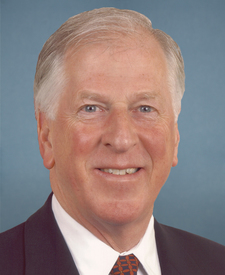
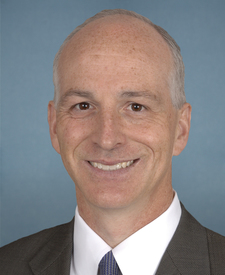


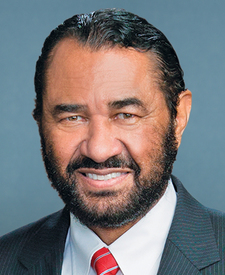
Legislative Progress
In CommitteeMr. Thompson of California (for himself, Mr. Schweikert, Ms. Matsui, …
Referred to the Committee on Energy and Commerce, and in …
Introduced in House
Stakeholder Effects
cui bono?How this legislation distributes effects. Mention counts reflect frequency, not effect magnitude.
Federally qualified health centers, Native American health facilities, Telehealth outlier billers
Positive-direction: Federally qualified health centers
Negative-direction: Telehealth outlier billers
Medicare beneficiaries in nonrural areas, Rural Medicare beneficiaries
Bill Structure & Actor Mappings
Who is "The Secretary" in each section?
We use a combination of our own taxonomy and classification in addition to large language models to assess meaning and potential beneficiaries. High confidence means strong textual evidence. Always verify with the original bill text.
Learn more about our methodology