Stop Hate Crimes Act of 2025
Summary
What This Bill Does
The Stop Hate Crimes Act changes the causation language in the federal hate-crime statute. It replaces because of language with a formulation under which the victim's actual or perceived protected characteristic must be a contributory motivating factor for causing or attempting bodily injury. The change applies both to race, color, religion, national origin, and other paragraph (1) categories and to paragraph (2) categories such as religion, national origin, gender, sexual orientation, gender identity, and disability. The policy effect is to make mixed-motive hate-crime prosecutions easier where bias was one motivating factor even if other motives also existed.
Who Benefits and How
Hate crime victims benefit because prosecutors would not have to prove bias was the sole or dominant cause of the attack. Civil rights prosecutors benefit from a clearer contributory-motivation standard in federal hate-crime cases. Communities targeted by bias violence benefit because mixed-motive attacks can still qualify for federal prosecution. State civil rights offices benefit from federal alignment around a lower causation threshold for hate-crime enforcement.
Who Bears the Burden and How
Defendants in federal hate-crime cases face broader exposure when protected status was a contributory motivating factor. Criminal defense attorneys must litigate mixed-motive evidence under the amended causation standard. Federal courts must instruct juries on contributory motivating factor language rather than a simpler because-of test. Justice Department trial teams must document how bias contributed to the injury or attempted injury.
Key Provisions
- Amends federal hate-crime causation language from because of to contributory motivating factor.
- Applies the standard to protected characteristics including race, color, religion, national origin, gender, sexual orientation, gender identity, and disability.
- Improves federal prosecution of mixed-motive hate crimes.
- Requires courts and prosecutors to focus on whether bias contributed to causing or attempting bodily injury.
Evidence Chain:
This summary is generated from the full bill text using AI analysis. Expand "Detailed Analysis" below for identified beneficiaries/burden bearers.
At a Glance
What This Bill Does
Clarifies that protected characteristics need only be a contributory motivating factor in federal hate-crime injury cases.
Key Policy Areas
Civil Rights, Hate Crimes, Criminal Justice
Primary Purpose
Clarifies that protected characteristics need only be a contributory motivating factor in federal hate-crime injury cases.
Policy Domains
Resolution provisions
Identified Gains
Contextual inference, no direct clause citation- Hate crime victims
- Civil rights prosecutors
- Communities targeted by bias violence
- State civil rights offices
Contextual inference, no direct clause citation
Identified Costs
Contextual inference, no direct clause citation- Defendants in federal hate-crime cases
- Criminal defense attorneys
- Federal courts
- Justice Department trial teams
Contextual inference, no direct clause citation
Sponsors
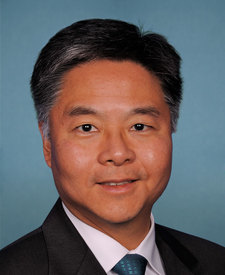
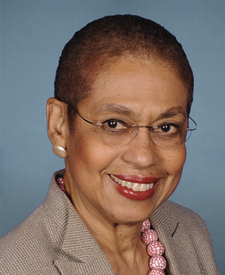
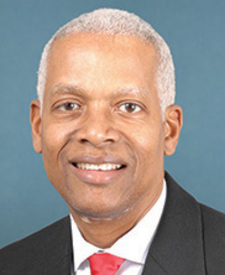
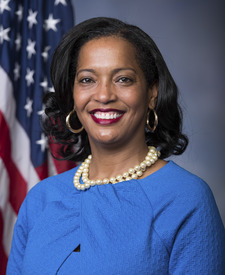

Legislative Progress
In CommitteeMr. Lieu (for himself, Mrs. McBath, Mr. Johnson of Georgia, …
Referred to the House Committee on the Judiciary.
Introduced in House
Bill Structure & Actor Mappings
Who is "The Secretary" in each section?
We use a combination of our own taxonomy and classification in addition to large language models to assess meaning and potential beneficiaries. High confidence means strong textual evidence. Always verify with the original bill text.
Learn more about our methodology