PAPA Act of 2025
Summary
What This Bill Does
The PAPA Act combines aircraft-data privacy with airport fee transparency. It bars any person, government, or entity from using ADS-B data to identify aircraft for revenue from an owner or operator without consent, while preserving air-traffic-control use and requiring DOT notice-and-comment approval for other proposed uses. It also extends complaint limits in aviation enforcement to officials at federal, state, local, territorial, and Tribal levels. For airport finance, it requires a public-use airport to disclose expense-reduction efforts, non-general-aviation revenue efforts, airside safety project costs, fee allocation, timelines, and impact on general aviation before imposing landing or takeoff fees on general aviation aircraft; fee revenue may be used only for airside safety projects.
Who Benefits and How
General aviation aircraft owners benefit because ADS-B data cannot be monetized against them without consent. General aviation pilots benefit because airports must justify takeoff or landing fees and assess effects on pilots, students, nonprofits, and businesses. Flight schools benefit because the impact assessment must consider the health and vitality of general aviation users. Airside safety project users benefit because any general-aviation fee revenue is restricted to safety improvements.
Who Bears the Burden and How
Public-use airport operators must publish detailed cost, revenue, project, timeline, and general-aviation impact information before imposing fees. Airport fee collectors lose flexibility because general-aviation fee revenue is restricted to airside safety projects. Aircraft-data businesses bear revenue limits when ADS-B data is used to identify aircraft without owner or operator consent. Federal Aviation Administration staff must oversee complaints, reports, and possible regulations implementing the fee-transparency rules.
Key Provisions
- Prohibits ADS-B data from being used to identify aircraft for revenue without owner or operator consent.
- Preserves air-traffic-control use and requires DOT notice-and-comment approval for other ADS-B uses.
- Requires public-use airports to disclose cost savings, non-GA revenue efforts, project costs, fee shares, timelines, and GA impacts before imposing fees.
- Limits revenue from general-aviation landing or takeoff fees to airside safety projects.
Evidence Chain:
This summary is generated from the full bill text using AI analysis. Expand "Detailed Analysis" below for identified beneficiaries/burden bearers with clause-level evidence links.
At a Glance
What This Bill Does
Restricts ADS-B aircraft data monetization without consent and requires public-use airports to justify general aviation takeoff or landing fees with cost, revenue, safety-project, and impact disclosures.
Key Policy Areas
Aviation, Privacy, Transportation Finance
Primary Purpose
Restricts ADS-B aircraft data monetization without consent and requires public-use airports to justify general aviation takeoff or landing fees with cost, revenue, safety-project, and impact disclosures.
Policy Domains
Resolution provisions
Identified Gains
- General aviation aircraft owners
- General aviation pilots
- Flight schools
- Airside safety project users
Identified Costs
- Public-use airport operators
- Airport fee collectors
- Aircraft-data businesses
- Federal Aviation Administration staff
Sponsors


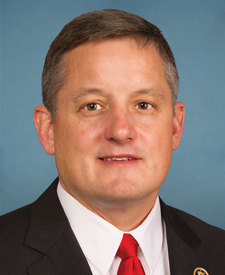


Legislative Progress
In CommitteeReferred to the Subcommittee on Aviation.
Mr. Onder introduced the following bill; which was referred to …
Referred to the House Committee on Transportation and Infrastructure.
Introduced in House
Stakeholder Effects
cui bono?How this legislation distributes effects. Mention counts reflect frequency, not effect magnitude.
Flight schools, General aviation aircraft owners, General aviation pilots
Bill Structure & Actor Mappings
Who is "The Secretary" in each section?
We use a combination of our own taxonomy and classification in addition to large language models to assess meaning and potential beneficiaries. High confidence means strong textual evidence. Always verify with the original bill text.
Learn more about our methodology