Ensuring Justice for Camp Lejeune Victims Act of 2025
Summary
What This Bill Does
The Ensuring Justice for Camp Lejeune Victims Act changes how Camp Lejeune water-contamination claims move through court. It clarifies that a claimant can prove entitlement by showing a relationship between the contaminant type and harm type and at least 30 nonconsecutive days of Camp Lejeune exposure, using an at-least-as-likely-as-not causation standard. It keeps the Eastern District of North Carolina as the coordinated venue but allows transfer to other North Carolina districts or South Carolina for pretrial and trial work, requires expedited handling, gives either party a jury trial on request, and caps attorney fees at 20 percent for pre-suit settlements and 25 percent after civil action. The bill is meant to make compensation litigation more claimant-friendly while limiting legal-fee extraction.
Who Benefits and How
Camp Lejeune claimants benefit because the bill states a workable causation standard tied to contaminant type, harm type, and documented presence. Camp Lejeune families benefit because expedited proceedings and jury-trial rights can make delayed exposure claims more meaningful. Plaintiff attorneys benefit from clearer venue and proof rules, although their fees are capped. South Carolina district courts benefit from authority to receive transferred cases for trial and pretrial proceedings when appropriate.
Who Bears the Burden and How
The United States government bears litigation and payout exposure if more claimants can satisfy the clarified causation standard. Justice Department litigators must defend or settle claims under expedited schedules and potential jury trials. Plaintiff attorneys bear fee limits of 20 percent before a civil action and 25 percent after a civil action. North Carolina district courts must manage coordinated pretrial administration and case transfers.
Key Provisions
- Clarifies that Camp Lejeune claimants can prove relief through contaminant-harm relationship evidence and at least 30 days of presence.
- Requires courts to advance and expedite Camp Lejeune claims.
- Provides jury-trial rights on request of either party and permits transfer to specified North Carolina or South Carolina districts.
- Caps attorney fees at 20 percent before suit and 25 percent after a civil action.
Evidence Chain:
This summary is generated from the full bill text using AI analysis. Expand "Detailed Analysis" below for identified beneficiaries/burden bearers with clause-level evidence links.
At a Glance
What This Bill Does
Revises Camp Lejeune Justice Act claims by clarifying causation, preserving jury trials, allowing North Carolina or South Carolina trial transfers, expediting cases, and capping attorney fees.
Key Policy Areas
Veterans, Toxic Exposure, Civil Justice
Primary Purpose
Revises Camp Lejeune Justice Act claims by clarifying causation, preserving jury trials, allowing North Carolina or South Carolina trial transfers, expediting cases, and capping attorney fees.
Policy Domains
Resolution provisions
Identified Gains
- Camp Lejeune claimants
- Camp Lejeune families
- Plaintiff attorneys
- South Carolina district courts
Identified Costs
- United States government
- Justice Department litigators
- Plaintiff attorneys
- North Carolina district courts
Sponsors
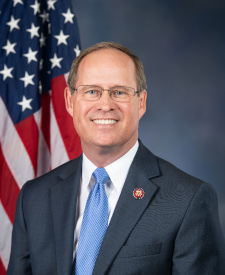

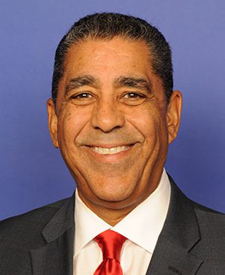
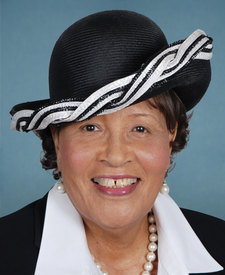
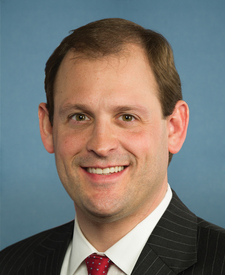
Legislative Progress
In CommitteeMr. Murphy (for himself, Ms. Ross, Ms. Tenney, Mr. Knott, …
Referred to the House Committee on the Judiciary.
Introduced in House
Stakeholder Effects
cui bono?How this legislation distributes effects. Mention counts reflect frequency, not effect magnitude.
Justice Department litigators, United States government
Bill Structure & Actor Mappings
Who is "The Secretary" in each section?
We use a combination of our own taxonomy and classification in addition to large language models to assess meaning and potential beneficiaries. High confidence means strong textual evidence. Always verify with the original bill text.
Learn more about our methodology