FIT Procurement Act
Summary
What This Bill Does
This bill changes federal procurement rules for information and communications technology. It requires the Federal Acquisition Institute to create an experiential-learning pilot for acquisition credentials and to provide cross-functional ICT acquisition training covering market research, communication with industry, requirements, acquisition planning, outcome-based contracts, source selection, proposal evaluation, award administration, cloud computing, artificial intelligence, data analytics, and cybersecurity. The Director of FAI must coordinate with the Administrator for Federal Procurement Policy, the General Services Administration, the Office of Electronic Government, and other agency heads.
The bill raises procurement thresholds by increasing one title 41 threshold from $250,000 to $500,000 and the micro-purchase threshold from $10,000 to $25,000. It lets agencies treat charges for ICT subscriptions, reservations, or tenancy, including cloud environments, as allowable advance-payment items when the agency defines access and security standards. It also requires OFPP guidance on accepting commercial and non-government past performance, validating private-sector references, and using demonstrations or technology testing when a requirement lacks precedent.
The Administrator must convene the Chief Acquisition Officers Council within 90 days to identify unnecessary procedural barriers that disproportionately affect small businesses, obtain public and APEX Accelerator input, publish a plan within one year, and implement barrier-removal recommendations within two years where feasible. GAO must report within 18 months on small-business participation in federal procurement, support programs, and technology-project trends. The bill authorizes no additional funds.
Who Benefits and How
Federal acquisition workforce members benefit from new ICT training and experiential-learning pilots. Cloud computing service providers, artificial intelligence vendors, cybersecurity companies, and small technology businesses benefit from higher thresholds, clearer subscription payment authority, and broader recognition of commercial past performance. Small businesses seeking federal contracts benefit from agency guidance and Chief Acquisition Officers Council work aimed at reducing documentation and qualification barriers. New market entrants to federal contracting benefit from demonstrations and testing as alternatives when past performance is limited. Congress benefits from a GAO assessment of small-business participation and technology-project trends.
Who Bears the Burden and How
Federal Acquisition Institute staff must build and maintain training programs within 18 months. Administrator for Federal Procurement Policy staff must issue guidance and convene the Chief Acquisition Officers Council. Chief Acquisition Officers Council members must collect public input, produce a plan, and implement barrier-removal recommendations. Government Accountability Office staff must complete a public assessment within 18 months. Large incumbent federal contractors may face more competition from small businesses and new entrants. Agencies implementing the Act must absorb work without additional authorized funding.
Key Provisions
- Requires FAI experiential-learning pilots and cross-functional ICT acquisition training within 18 months.
- Raises specified procurement thresholds from $250,000 to $500,000 and from $10,000 to $25,000.
- Adds ICT subscriptions, reservations, tenancy, and cloud environments to advance-payment authority when access and security standards are defined.
- Requires OFPP guidance on commercial past performance, reference validation, and alternative evaluation methods.
- Requires the Chief Acquisition Officers Council to identify and remove small-business procurement barriers.
- Requires GAO to assess small-business participation in federal procurement and technology projects within 18 months.
Evidence Chain:
This summary is generated from the full bill text using AI analysis. Expand "Detailed Analysis" below for identified beneficiaries/burden bearers with clause-level evidence links.
At a Glance
What This Bill Does
Modernizes federal information and communications technology procurement by creating acquisition-workforce training, raising simplified acquisition and micro-purchase thresholds, allowing ICT subscription and cloud payment treatment, broadening past-performance guidance, convening the Chief Acquisition Officers Council to remove small-business barriers, requiring a GAO small-business procurement assessment, and authorizing no additional funds.
Key Policy Areas
Federal Procurement, Technology, Small Business, Government Operations
Primary Purpose
Modernizes federal information and communications technology procurement by creating acquisition-workforce training, raising simplified acquisition and micro-purchase thresholds, allowing ICT subscription and cloud payment treatment, broadening past-performance guidance, convening the Chief Acquisition Officers Council to remove small-business barriers, requiring a GAO small-business procurement assessment, and authorizing no additional funds.
Policy Domains
House resolution provisions
Identified Gains
- Federal acquisition workforce members
- Cloud computing service providers
- Artificial intelligence vendors
- Small technology businesses
- Small businesses seeking federal contracts
- New market entrants to federal contracting
- Congressional procurement oversight staff
Identified Costs
- Federal Acquisition Institute staff
- Administrator for Federal Procurement Policy staff
- Chief Acquisition Officers Council members
- Government Accountability Office staff
- Large incumbent federal contractors
- Federal agencies implementing the Act
Sponsors
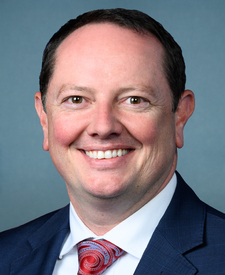

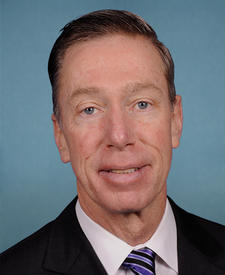

Legislative Progress
ReportedOrdered to be Reported (Amended) by the Yeas and Nays: …
Committee Consideration and Mark-up Session Held
Mr. Burlison (for himself, Mr. Subramanyam, Mrs. Luna, and Mr. …
Referred to the Committee on Oversight and Government Reform, and …
Introduced in House
Stakeholder Effects
cui bono?How this legislation distributes effects. Mention counts reflect frequency, not effect magnitude.
Administrator for Federal Procurement Policy, Chief Acquisition Officers Council, Congress
Positive-direction: Congress, Federal acquisition workforce members, Federal contracting officers, New market entrants to federal contracting
Negative-direction: Administrator for Federal Procurement Policy, Chief Acquisition Officers Council, Federal Acquisition Institute, Federal agencies implementing the Act, General Services Administration, Government Accountability Office, Large incumbent federal contractors
Cloud computing and AI vendors, Information technology companies selling to the federal government, Technology vendors selling commercial products to federal agencies
Small businesses in federal technology procurement, Small businesses seeking federal contracts, Small technology businesses
Bill Structure & Actor Mappings
Who is "The Secretary" in each section?
- "fai"
- → Federal Acquisition Institute
- "gao"
- → Government Accountability Office
- "gsa"
- → General Services Administration
- "caoc"
- → Chief Acquisition Officers Council
- "ofpp"
- → Office of Federal Procurement Policy
We use a combination of our own taxonomy and classification in addition to large language models to assess meaning and potential beneficiaries. High confidence means strong textual evidence. Always verify with the original bill text.
Learn more about our methodology