EVEST Act
Summary
What This Bill Does
The EVEST Act changes VA health enrollment from opt-in to automatic enrollment for eligible veterans after separation. Once VA receives necessary information transmitted under title 10 transition provisions, the Secretary must enroll the veteran in the VA patient enrollment system within 60 days. Within 60 days after enrollment, VA must send notice, opt-out instructions, and later-enrollment instructions by physical mail and, where practical, email, while considering mass texting. The rule applies to veterans discharged or separated on or after 90 days before enactment when VA receives the necessary information after enactment. VA must make an electronic certificate of eligibility and an electronic opt-out mechanism available by August 1, 2026. GAO must report within 180 days on the best notice methods, considering age and urban or rural residence.
Who Benefits and How
Recently separated veterans benefit because VA health enrollment happens automatically rather than requiring an initial application. Veterans in rural areas benefit if GAO and VA tailor notice methods to different residence needs. Veterans in urban areas benefit from improved mailed, email, text, electronic certificate, and opt-out communication options. Veterans service organizations benefit because the default enrollment structure can reduce transition gaps in VA health access.
Who Bears the Burden and How
The Department of Veterans Affairs must enroll eligible veterans within 60 days, issue notices, manage opt-outs, and build electronic tools. The Department of Defense must transmit the information VA needs under transition-assistance provisions. The Government Accountability Office must study and report on the best notice methods within 180 days. Federal taxpayers bear administrative costs for automatic enrollment, notice, texting, certificates, and opt-out systems.
Key Provisions
- Requires automatic VA patient enrollment for eligible veterans within 60 days after VA receives necessary transition information.
- Requires mailed notice and practical email or text communication with opt-out and later-enrollment instructions.
- Requires electronic eligibility certificates and opt-out mechanisms by August 1, 2026.
- Requires GAO to report within 180 days on notice methods for veterans by age and urban or rural residence.
Evidence Chain:
This summary is generated from the full bill text using AI analysis. Expand "Detailed Analysis" below for identified beneficiaries/burden bearers with clause-level evidence links.
At a Glance
What This Bill Does
Automatically enrolls eligible recently separated veterans in the VA patient enrollment system within 60 days of receiving transition information, requires mailed and practical electronic opt-out notice, electronic eligibility and opt-out tools by August 1, 2026, and a GAO notice-methods report within 180 days.
Key Policy Areas
Veterans Health, VA Enrollment, Transition Assistance
Primary Purpose
Automatically enrolls eligible recently separated veterans in the VA patient enrollment system within 60 days of receiving transition information, requires mailed and practical electronic opt-out notice, electronic eligibility and opt-out tools by August 1, 2026, and a GAO notice-methods report within 180 days.
Policy Domains
Resolution provisions
Identified Gains
- Recently separated veterans
- Rural veterans
- Urban veterans
- Veterans service organizations
Identified Costs
- Department of Veterans Affairs
- Department of Defense
- Government Accountability Office
- Federal taxpayers
Sponsors
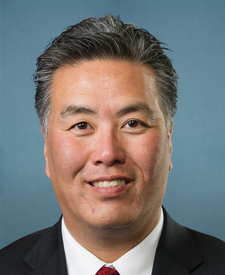
Mark Takano
D-CA | Primary Sponsor

Legislative Progress
In CommitteeCommittee Hearings Held
Subcommittee on Health Discharged
Committee Hearings Held
Referred to the Subcommittee on Health.
Referred to the House Committee on Veterans' Affairs.
Introduced in House
Mr. Takano introduced the following bill; which was referred to …
Stakeholder Effects
cui bono?How this legislation distributes effects. Mention counts reflect frequency, not effect magnitude.
Recently separated veterans, Rural veterans, Urban veterans
Department of Defense, Department of Veterans Affairs, Government Accountability Office
Bill Structure & Actor Mappings
Who is "The Secretary" in each section?
We use a combination of our own taxonomy and classification in addition to large language models to assess meaning and potential beneficiaries. High confidence means strong textual evidence. Always verify with the original bill text.
Learn more about our methodology