Break the Cycle of Violence Act
Summary
What This Bill Does
The Break the Cycle of Violence Act treats community violence as a public health, public safety, and economic-development problem. It creates HHS grants for community-based violence intervention, prioritizing nonprofit organizations serving eligible local governments and communities of color, while limiting direct local-government shares to 15 percent and requiring local-government grantees to pass at least 75 percent to community organizations, non-law-enforcement public agencies, or hospitals. Programs must use culturally competent, trauma-responsive, evidence-informed strategies that reduce violence without contributing to mass incarceration and expand jobs, education, or training. The bill creates an HHS Office of Community Violence Intervention, an advisory committee with workforce and community representation, a National Community Violence Response Center with technical assistance and data systems, a research advisory council, a sense of Congress on victim services, HHS funding of $300 million in FY2026, $500 million in FY2027, and $700 million annually for FY2028-FY2033, plus Department of Labor IMPACT grants for opportunity youth in communities affected by gun violence.
Who Benefits and How
Community-based violence intervention nonprofits benefit from HHS grants, technical assistance, and priority as direct service providers. Young people in high-violence neighborhoods benefit from violence interruption, trauma-responsive services, job training, education, and paid work pathways. Hospitals serving shooting survivors benefit because local-government grants can fund hospital-linked intervention and victim support programs. Opportunity youth benefit from Department of Labor grants connecting them to in-demand occupations, apprenticeships, skilled trades, and education.
Who Bears the Burden and How
The Department of Health and Human Services must administer grants, create the Office, manage the advisory committee, and operate the national response center. Eligible local governments must meet homicide or compelling-need thresholds and pass most grant funds to community organizations, public safety agencies, or hospitals. Grant recipients must collect data on safety, community health, opportunity-youth engagement, economic development, and recidivism. Federal taxpayers bear authorizations of $300 million, $500 million, and then $700 million annually for HHS activities, plus Labor grant funding if appropriated.
Key Provisions
- Creates HHS community-based violence intervention grants for eligible nonprofits and local governments.
- Establishes an HHS Office of Community Violence Intervention, advisory committee, and National Community Violence Response Center.
- Authorizes $300 million in FY2026, $500 million in FY2027, and $700 million annually for FY2028 through FY2033.
- Creates Department of Labor IMPACT grants for opportunity-youth job training in communities affected by gun violence.
Evidence Chain:
This summary is generated from the full bill text using AI analysis. Expand "Detailed Analysis" below for identified beneficiaries/burden bearers with clause-level evidence links.
At a Glance
What This Bill Does
Creates HHS community violence intervention grants, an HHS Office of Community Violence Intervention, advisory and response-center infrastructure, victim-services guidance, HHS authorizations rising to $700 million annually, and Labor IMPACT grants for opportunity-youth workforce programs.
Key Policy Areas
Gun Violence, Public Health, Workforce Development
Primary Purpose
Creates HHS community violence intervention grants, an HHS Office of Community Violence Intervention, advisory and response-center infrastructure, victim-services guidance, HHS authorizations rising to $700 million annually, and Labor IMPACT grants for opportunity-youth workforce programs.
Policy Domains
Resolution provisions
Identified Gains
- Community violence nonprofits
- Youth in high-violence neighborhoods
- Hospitals serving shooting survivors
- Opportunity youth
Identified Costs
- Department of Health and Human Services
- Eligible local governments
- Grant recipients
- Federal taxpayers
Sponsors
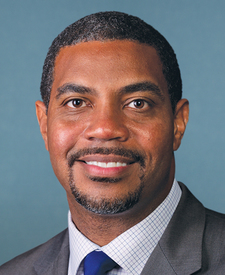
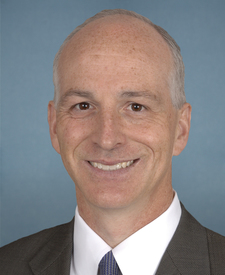

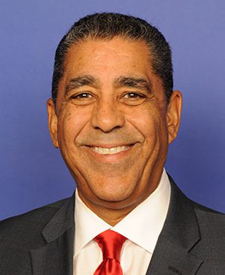
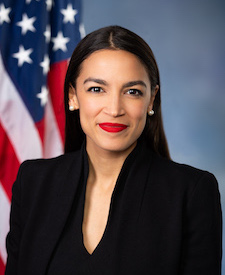
Legislative Progress
In CommitteeMr. Horsford (for himself, Mr. Thompson of California, Mrs. McBath, …
Referred to the Committee on the Judiciary, and in addition …
Introduced in House
Stakeholder Effects
cui bono?How this legislation distributes effects. Mention counts reflect frequency, not effect magnitude.
Community violence nonprofits, Youth in high-violence neighborhoods
Department of Health and Human Services, Eligible local governments
Bill Structure & Actor Mappings
Who is "The Secretary" in each section?
We use a combination of our own taxonomy and classification in addition to large language models to assess meaning and potential beneficiaries. High confidence means strong textual evidence. Always verify with the original bill text.
Learn more about our methodology