To establish Haskell Indian Nations University as a federally chartered educational institution to fulfill the treaty and trust responsibility of the Federal Government to Indians, and for other purposes.
Sponsors
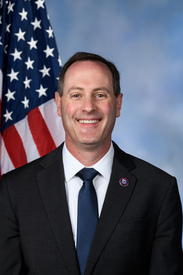
Tracey Mann
R-KS | Primary Sponsor

Legislative Progress
IntroducedMr. Mann (for himself and Mr. Schmidt) introduced the following …
Summary
What This Bill Does
This bill transforms Haskell Indian Nations University from a federally-managed school under the Bureau of Indian Education into an independent, federally chartered corporation governed by its own Board of Trustees. The university, located in Lawrence, Kansas, will continue providing tuition-free higher education to Native American students from approximately 140 tribes nationwide, but with greater autonomy to raise private funds and manage its own affairs.
Who Benefits and How
Native American students benefit from continued tuition-free education with potential for improved programs and facilities as the university gains independence and fundraising ability.
Haskell Indian Nations University gains tax-exempt status, the ability to accept private donations, and freedom from Bureau of Indian Education bureaucracy, allowing more responsive decision-making.
Indian Tribes gain representation through a 15-member Board of Trustees with members from all 12 BIA regions, ensuring tribal voices direct the university's future.
Private donors can now make tax-deductible contributions to the university, with federal matching funds amplifying their impact.
Who Bears the Burden and How
Federal taxpayers will fund at least $27 million annually plus $10 million for endowment establishment, continuing the federal trust responsibility to Native American education.
Department of the Interior loses management authority over the university but retains responsibility for providing grants and assuming pre-enactment debts and obligations.
Current university employees must undergo background checks and transition to a new employment system outside federal civil service rules, though their positions and compensation are protected for one year.
Key Provisions
-
Creates a federally chartered corporation with a 15-member Board of Trustees appointed by the President (with Senate confirmation) from enrolled tribal members representing all 12 BIA regions
-
Exempts the university from all federal, state, tribal, and local taxes and limits tort liability to federal agency standards
-
Establishes an endowment program with federal matching funds for private donations
-
Transfers all property, personnel, and functions from the current Bureau of Indian Education-managed institution
-
Maintains tuition-free education for members of Indian Tribes, descendants of tribal members, or those with 1/4 blood quantum
-
Authorizes minimum $27 million in annual appropriations using forward funding to ensure budget stability
Evidence Chain:
This summary is derived from the structured analysis below. See "Detailed Analysis" for per-title beneficiaries/burden bearers with clause-level evidence links.
Primary Purpose
Establishes Haskell Indian Nations University as an independent federally chartered corporation with its own Board of Trustees, removing it from Bureau of Indian Education management while maintaining federal funding and tuition-free education for Native American students.
Policy Domains
Legislative Strategy
"Restructure an existing federal educational institution serving Native Americans from direct Bureau of Indian Education management to an independent federally chartered corporation with its own governance, while maintaining federal funding and educational mission"
Likely Beneficiaries
- Native American students seeking higher education
- Haskell Indian Nations University as an institution
- Indian Tribes represented on the Board of Trustees
- Private donors who can now contribute to a tax-exempt educational institution
Likely Burden Bearers
- Bureau of Indian Education (loses management authority)
- Department of the Interior (retains funding responsibility but loses direct control)
- Federal taxpayers (continue to fund tuition-free education)
- Current University employees (must undergo background checks, transition to new employment system)
Bill Structure & Actor Mappings
Who is "The Secretary" in each section?
- "the_secretary"
- → Secretary of the Interior
- "the_board"
- → Board of Trustees of Haskell Indian Nations University
- "the_secretary"
- → Secretary of the Interior
- "the_university"
- → Haskell Indian Nations University (federally chartered corporation)
- "the_board"
- → Board of Trustees of the University
- "the_president"
- → President of the United States
- "the_secretary"
- → Secretary of the Interior
- "the_executive_board"
- → Executive Board of the Board of Trustees
- "the_board"
- → Board of Trustees of the University
- "the_inspector_general"
- → Inspector General of the Department of the Interior
- "the_president_of_university"
- → President of Haskell Indian Nations University
- "the_university"
- → Haskell Indian Nations University
- "the_board"
- → Board of Trustees
- "the_secretary"
- → Secretary of the Interior
- "the_director_omb"
- → Director of the Office of Management and Budget
- "the_comptroller_general"
- → Comptroller General of the United States
Note: The Secretary consistently refers to the Secretary of the Interior throughout the bill - no conflicts
Key Definitions
Terms defined in this bill
Haskell Indian Nations University, the federally chartered corporation established by section 5(a)
The Board of Trustees of the University established by section 8(a)
A monetary payment made by the University towards the health and retirement plans of an employee of the University
An Indian or Alaska Native tribe, band, nation, pueblo, village, or community that the Secretary recognizes as an Indian Tribe pursuant to section 104(a) of the Federally Recognized Indian Tribe List Act of 1994
The Haskell Indian Nations University, as operated by the Bureau of Indian Education before the date of enactment of this Act
The Prairie Band Potawatomi Nation; the Kickapoo Tribe of Indians of the Kickapoo Reservation in Kansas; the Sac and Fox Nation of Missouri in Kansas and Nebraska; and the Iowa Tribe of Kansas and Nebraska
Committee on Appropriations, Health Education Labor and Pensions, and Indian Affairs of the Senate; and Committee on Appropriations, Education and Workforce, and Natural Resources of the House
We use a combination of our own taxonomy and classification in addition to large language models to assess meaning and potential beneficiaries. High confidence means strong textual evidence. Always verify with the original bill text.
Learn more about our methodology