Safer Response Act of 2025
Summary
What This Bill Does
The Safer Response Act updates section 546 of the Public Health Service Act. It broadens the first responder training program by replacing references to opioid-only overdose response with overdose and other drug language, and by covering drugs or devices that are approved, cleared, or otherwise legally marketed. It also updates references to Tribes and Tribal organizations and raises the authorization from $36 million for fiscal years 2019 through 2023 to $57 million for each fiscal year 2026 through 2030. The result is a broader overdose-response training program for first responders facing polysubstance and non-opioid overdose emergencies.
Who Benefits and How
First responders benefit because training and response tools can cover overdoses involving opioids, heroin, and other drugs. People experiencing non-opioid overdoses benefit because the program is no longer limited to opioid overdose response. Tribal public health agencies benefit from updated Tribal terminology and eligibility language. Overdose response training providers benefit from a $57 million annual authorization for fiscal years 2026 through 2030.
Who Bears the Burden and How
The Department of Health and Human Services must administer a broader overdose-response training program. Grant recipients must adapt training materials from opioid-only response to broader overdose response. Federal taxpayers bear the increased $57 million annual authorization. First responder agencies must implement training for a wider set of drugs and legally marketed reversal or response products.
Key Provisions
- Amends the first responder training program to cover opioid, heroin, and other drug overdoses.
- Expands covered products to drugs or devices approved, cleared, or otherwise legally marketed.
- Provides updated Tribal terminology in the Public Health Service Act program.
- Authorizes $57 million annually for fiscal years 2026 through 2030.
Evidence Chain:
This summary is generated from the full bill text using AI analysis. Expand "Detailed Analysis" below for identified beneficiaries/burden bearers.
At a Glance
What This Bill Does
Expands the Public Health Service Act first responder training program beyond opioid overdoses to overdoses involving other drugs and reauthorizes it at $57 million annually for fiscal years 2026 through 2030.
Key Policy Areas
Public Health, Substance Use, Emergency Response
Primary Purpose
Expands the Public Health Service Act first responder training program beyond opioid overdoses to overdoses involving other drugs and reauthorizes it at $57 million annually for fiscal years 2026 through 2030.
Policy Domains
Resolution provisions
Identified Gains
Contextual inference, no direct clause citation- First responders
- People experiencing non-opioid overdoses
- Tribal public health agencies
- Overdose training providers
Contextual inference, no direct clause citation
Identified Costs
Contextual inference, no direct clause citation- Department of Health and Human Services
- Grant recipients
- Federal taxpayers
- First responder agencies
Contextual inference, no direct clause citation
Sponsors
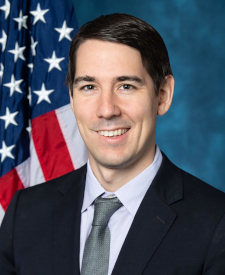


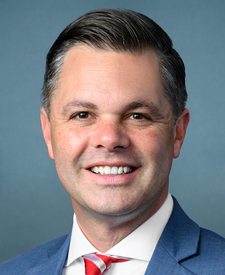
Legislative Progress
In CommitteeMr. Harder of California (for himself and Mr. Lawler) introduced …
Referred to the House Committee on Energy and Commerce.
Introduced in House
Bill Structure & Actor Mappings
Who is "The Secretary" in each section?
We use a combination of our own taxonomy and classification in addition to large language models to assess meaning and potential beneficiaries. High confidence means strong textual evidence. Always verify with the original bill text.
Learn more about our methodology