Stop Unlawful Detention and End Mistreatment Act of 2025
Summary
What This Bill Does
The Stop Unlawful Detention and End Mistreatment Act creates transparency and oversight requirements for ICE detention. DHS must establish a public online database showing, for detained individuals, the legal detention authority, detention duration, location where disclosure is allowed, transfers, and removal-order status. At the population level, the database must include demographic information, disciplinary actions, uses of force, transfers, and deportations. For nontraditional detention locations, DHS must disclose location type, justification, bed counts, due-process and access safeguards, medical standard of care, timeline, costs, budget, funds used, agreements, proposed payments, and unresolved oversight recommendations. The bill also bars DHS, subject to appropriations, from discontinuing or reducing the Office of the Immigration Detention Ombudsman or the DHS Office for Civil Rights and Civil Liberties.
Who Benefits and How
People in ICE custody benefit because detention authority, duration, transfers, and facility information become more visible to the public. Immigration attorneys benefit from a public database that can help locate clients and understand detention status. Oversight organizations benefit from data on demographics, uses of force, discipline, deportations, and nontraditional detention sites. The Immigration Detention Ombudsman benefits because DHS may not discontinue or reduce the office while appropriations are available.
Who Bears the Burden and How
The Department of Homeland Security must build and maintain the public detention database. U.S. Immigration and Customs Enforcement must supply individual, population, transfer, discipline, deportation, and facility data. Nontraditional detention operators face public disclosure of standards, agreements, payments, budgets, and unresolved oversight recommendations. DHS Civil Rights and Civil Liberties staff must continue operations rather than being reduced or discontinued.
Key Provisions
- Creates a publicly available DHS online immigration detention database.
- Requires individual-level detention authority, duration, transfer, location, and removal-order information with safety exceptions.
- Requires nontraditional detention site disclosures on location, justification, beds, standards, costs, budgets, agreements, and oversight recommendations.
- Protects continued operation of the Immigration Detention Ombudsman and DHS Civil Rights and Civil Liberties offices.
Evidence Chain:
This summary is generated from the full bill text using AI analysis. Expand "Detailed Analysis" below for identified beneficiaries/burden bearers with clause-level evidence links.
At a Glance
What This Bill Does
Requires a public DHS immigration detention database and protects continued operation of the Immigration Detention Ombudsman and DHS Civil Rights and Civil Liberties offices.
Key Policy Areas
Immigration, Detention Oversight, Civil Rights
Primary Purpose
Requires a public DHS immigration detention database and protects continued operation of the Immigration Detention Ombudsman and DHS Civil Rights and Civil Liberties offices.
Policy Domains
Resolution provisions
Identified Gains
- People in ICE custody
- Immigration attorneys
- Detention oversight organizations
- Immigration Detention Ombudsman
Identified Costs
- Department of Homeland Security
- U.S. Immigration and Customs Enforcement
- Nontraditional detention operators
- DHS civil rights office
Sponsors

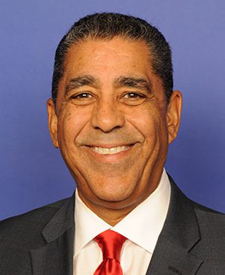



Legislative Progress
In CommitteeReferred to the Subcommittee on Border Security and Enforcement.
Mr. Frost (for himself, Ms. Wasserman Schultz, and Mr. Espaillat) …
Referred to the Committee on the Judiciary, and in addition …
Introduced in House
Stakeholder Effects
cui bono?How this legislation distributes effects. Mention counts reflect frequency, not effect magnitude.
Department of Homeland Security, Immigration and Customs Enforcement
Bill Structure & Actor Mappings
Who is "The Secretary" in each section?
We use a combination of our own taxonomy and classification in addition to large language models to assess meaning and potential beneficiaries. High confidence means strong textual evidence. Always verify with the original bill text.
Learn more about our methodology