Fire Weather Development Act of 2025
Summary
What This Bill Does
The Fire Weather Development Act builds a federal fire-weather forecasting and communications architecture around NOAA. NOAA must establish a program to improve fire weather and fire environment forecasting, detection, warning products, smoke-dispersion communication, early detection, and wildland-urban interface forecasting, using input from the weather industry, academics, and stakeholders. OSTP must create an Interagency Coordinating Committee on Wildfires chaired by NOAA and including FEMA, the United States Fire Administration, Forest Service, NASA, Interior, Agriculture, USGS, OSTP, and other agencies, with a strategic plan due within one year. OSTP must also create a nonfederal advisory committee. NOAA must establish a fire-weather testbed funded at $4 million annually for fiscal years 2026 through 2029, assess National Weather Service incident meteorologist workforce needs within six months, and conduct wildland-fire communications research and field testing through NIST public safety and fire research units.
Who Benefits and How
State emergency officials benefit from more timely and usable fire-weather forecasts, warnings, and communications. Local wildfire responders benefit from improved real-time data, alerts, smoke information, and communications standards. National Weather Service incident meteorologists benefit from workforce planning and premium-pay treatment for emergency wildland fire suppression services. Weather researchers and technology developers benefit from a NOAA testbed that evaluates models, tools, products, and services.
Who Bears the Burden and How
NOAA must create and administer the fire-weather program, testbed, workforce assessment, and forecasting improvements. OSTP must establish and manage the interagency wildfire committee and national advisory committee. Federal wildfire agencies must coordinate strategic planning, data infrastructure, stakeholder engagement, and implementation roles. Federal taxpayers bear the $4 million annual fire-weather testbed authorization and related program costs.
Key Provisions
- Creates a NOAA fire-weather forecasting, detection, and product-delivery program.
- Establishes an OSTP-led interagency wildfire committee and nonfederal national advisory committee.
- Authorizes a NOAA fire-weather testbed at $4 million annually for fiscal years 2026 through 2029.
- Requires incident meteorologist workforce planning and wildland-fire communications research, testing, recommendations, and reporting.
Evidence Chain:
This summary is generated from the full bill text using AI analysis. Expand "Detailed Analysis" below for identified beneficiaries/burden bearers with clause-level evidence links.
At a Glance
What This Bill Does
Creates a NOAA fire-weather program, wildfire interagency and advisory committees, a $4 million annual fire-weather testbed, incident meteorologist workforce planning, and wildland-fire communications research.
Key Policy Areas
Wildfire, Weather Forecasting, NOAA
Primary Purpose
Creates a NOAA fire-weather program, wildfire interagency and advisory committees, a $4 million annual fire-weather testbed, incident meteorologist workforce planning, and wildland-fire communications research.
Policy Domains
Resolution provisions
Identified Gains
- State emergency officials
- Local wildfire responders
- NWS incident meteorologists
- Weather technology developers
Identified Costs
- National Oceanic and Atmospheric Administration
- Office of Science and Technology Policy
- Federal wildfire agencies
- Federal taxpayers
Sponsors


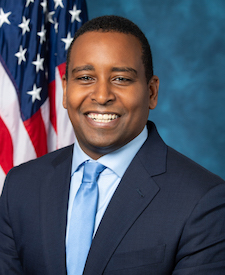
Legislative Progress
In CommitteeMr. Crank (for himself, Mr. Begich, Ms. Rivas, and Mr. …
Referred to the House Committee on Science, Space, and Technology.
Introduced in House
Stakeholder Effects
cui bono?How this legislation distributes effects. Mention counts reflect frequency, not effect magnitude.
National Oceanic and Atmospheric Administration, Office of Science and Technology Policy
Bill Structure & Actor Mappings
Who is "The Secretary" in each section?
We use a combination of our own taxonomy and classification in addition to large language models to assess meaning and potential beneficiaries. High confidence means strong textual evidence. Always verify with the original bill text.
Learn more about our methodology