Downpayment Toward Equity Act of 2025
Summary
What This Bill Does
The Downpayment Toward Equity Act creates a large HUD grant program for first-generation homebuyers. HUD would provide grants to states and eligible entities, with 75 percent allocated by state formula and 25 percent awarded competitively to eligible entities such as minority depository institutions, certified CDFIs serving minority or low-income areas, mission-driven nonprofits, and local governments. Assistance can cover downpayments, closing costs, interest-rate buydowns, shared-equity subsidies, and disability-related pre-occupancy modifications. A qualified buyer generally must meet income limits of 120 percent of area median income, or 140 percent in high-cost areas, be a first-time and first-generation homebuyer or a person placed in foster or institutional care, complete housing counseling, use an eligible mortgage, and occupy a one-to-four unit primary residence. The bill authorizes $100 billion, requires public demographic and property reporting with privacy protections, and directs HUD and DOJ to study historic housing discrimination and remedies.
Who Benefits and How
First-generation homebuyers benefit because the program can provide up to the greater of $20,000 or 10 percent of the purchase price, with higher limits possible for socially and economically disadvantaged buyers. Homebuyers with disabilities benefit because assistance may cover pre-occupancy modifications needed by the buyer or household members. Minority depository institution lenders and certified CDFI lenders benefit from the competitive grant lane for eligible entities serving minority and low-income communities. HUD-approved housing counseling agencies benefit because at least 5 percent of appropriated funds must support counseling costs.
Who Bears the Burden and How
The Department of Housing and Urban Development must allocate grants, issue implementation requirements, enforce eligibility rules, and publish annual reports. State housing agencies and eligible nonprofit grantees must administer assistance, protect applicant data, manage repayment rules, and report demographics and property information. Qualified homebuyers must complete housing counseling and may owe proportional repayment if they stop occupying the home within five years without a hardship or insufficient-gain exception. Federal taxpayers bear the $100 billion authorization if Congress appropriates the funds.
Key Provisions
- Creates HUD grants for first-generation downpayment and home-acquisition assistance.
- Provides 75 percent state formula allocation and 25 percent competitive eligible-entity allocation.
- Limits assistance to qualified buyers, eligible homes, eligible mortgage loans, and required housing counseling.
- Authorizes $100 billion and requires annual public reporting plus a HUD-DOJ discrimination study.
Evidence Chain:
This summary is generated from the full bill text using AI analysis. Expand "Detailed Analysis" below for identified beneficiaries/burden bearers with clause-level evidence links.
At a Glance
What This Bill Does
Authorizes a $100 billion HUD first-generation downpayment assistance program with state formula grants, competitive eligible-entity grants, buyer eligibility rules, counseling, reporting, fair-housing study requirements, and repayment safeguards.
Key Policy Areas
Housing, Fair Housing, Mortgage Assistance
Primary Purpose
Authorizes a $100 billion HUD first-generation downpayment assistance program with state formula grants, competitive eligible-entity grants, buyer eligibility rules, counseling, reporting, fair-housing study requirements, and repayment safeguards.
Policy Domains
Resolution provisions
Identified Gains
- First-time mortgage borrowers
- Disabled homebuyers
- Minority depository institution lenders
- HUD-approved counseling agencies
Identified Costs
- Department of Housing and Urban Development
- State housing agencies
- Eligible nonprofit grantees
- Federal taxpayers
Sponsors
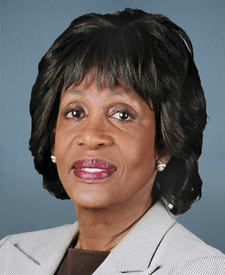

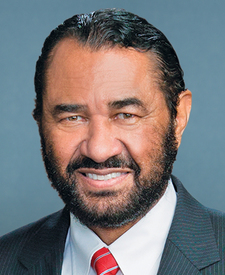
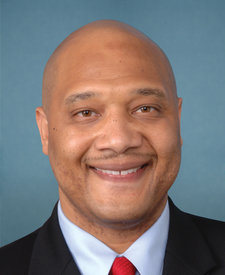

Legislative Progress
In CommitteeMs. Waters (for herself, Mr. Green of Texas, Ms. Pressley, …
Referred to the House Committee on Financial Services.
Introduced in House
Stakeholder Effects
cui bono?How this legislation distributes effects. Mention counts reflect frequency, not effect magnitude.
Disabled homebuyers, First-time mortgage borrowers, HUD-approved counseling agencies
Department of Housing and Urban Development, State housing agencies
Bill Structure & Actor Mappings
Who is "The Secretary" in each section?
We use a combination of our own taxonomy and classification in addition to large language models to assess meaning and potential beneficiaries. High confidence means strong textual evidence. Always verify with the original bill text.
Learn more about our methodology