Countering White Supremacist Extremism Act
Summary
What This Bill Does
The Countering White Supremacist Extremism Act directs the Department of Homeland Security's Under Secretary for Intelligence and Analysis to produce a terrorism threat assessment and reference aid on threats associated with foreign violent white supremacist extremist organizations. The product must incorporate appropriate elements of the State Department strategy for countering white identity terrorism globally, be developed with DHS Civil Rights and Civil Liberties and other federal agencies, include symbols, flags, and references used by adherents, and be shared, consistent with classification limits, with State, local, and Tribal law enforcement and fusion centers. The bill is about actionable intelligence sharing and safeguards, not a new criminal offense.
Who Benefits and How
State law enforcement intelligence units benefit from a DHS threat assessment they can use to recognize foreign white supremacist extremist indicators. Local fusion centers benefit from a reference aid on symbols, flags, and other identifiers used by foreign extremist adherents. Tribal law enforcement officials benefit because the sharing requirement explicitly includes them. Communities targeted by white supremacist violence benefit if better intelligence sharing improves prevention and response.
Who Bears the Burden and How
DHS Intelligence and Analysis must coordinate the threat assessment with federal partners and distribute it to nonfederal law enforcement. DHS Civil Rights and Civil Liberties staff must help ensure the product respects civil-rights protections. State Department counterterrorism staff must provide strategy elements relevant to foreign white identity terrorism. Law enforcement recipients must handle classified or confidential unclassified information appropriately.
Key Provisions
- Requires DHS Intelligence and Analysis to develop a terrorism threat assessment and reference aid.
- Provides coverage of foreign violent white supremacist extremist organizations and their symbols, flags, or references.
- Requires coordination with DHS civil-rights officials and appropriate federal agencies.
- Requires sharing with State, local, Tribal, and fusion-center law enforcement officials subject to information protections.
Evidence Chain:
This summary is generated from the full bill text using AI analysis. Expand "Detailed Analysis" below for identified beneficiaries/burden bearers with clause-level evidence links.
At a Glance
What This Bill Does
Requires DHS Intelligence and Analysis, with federal partners and civil-rights review, to develop and share a terrorism threat assessment and reference aid on foreign violent white supremacist extremist organizations.
Key Policy Areas
Homeland Security, Counterterrorism, Civil Rights
Primary Purpose
Requires DHS Intelligence and Analysis, with federal partners and civil-rights review, to develop and share a terrorism threat assessment and reference aid on foreign violent white supremacist extremist organizations.
Policy Domains
Resolution provisions
Identified Gains
- State law enforcement intelligence units
- Local fusion centers
- Tribal law enforcement officials
- Targeted communities
Identified Costs
- DHS Intelligence and Analysis
- DHS civil rights staff
- State Department counterterrorism staff
- Law enforcement recipients
Legislative Progress
In CommitteeReferred to the Subcommittee on Counterterrorism and Intelligence.
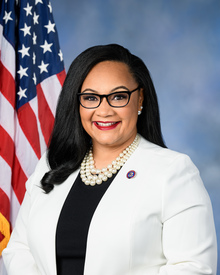
Ms. Williams of Georgia introduced the following bill; which was …
Referred to the House Committee on Homeland Security.
Introduced in House
Stakeholder Effects
cui bono?How this legislation distributes effects. Mention counts reflect frequency, not effect magnitude.
DHS Intelligence and Analysis, DHS civil rights staff, Tribal law enforcement officials
Bill Structure & Actor Mappings
Who is "The Secretary" in each section?
We use a combination of our own taxonomy and classification in addition to large language models to assess meaning and potential beneficiaries. High confidence means strong textual evidence. Always verify with the original bill text.
Learn more about our methodology