To enhance predisaster mitigation to prevent future natural disasters, and for other purposes.
Analysis under review: This bill has generated analysis that may be too generic or incomplete. Clause-level evidence remains available below.
Summary
The Preventing Our Next Natural Disaster Act amends the Stafford Act to strengthen FEMA predisaster mitigation programs. It adds new definitions for high hazard risk areas, environmental justice communities, and small impoverished communities. The bill directs FEMA to develop guidance on incorporating climate change into risk assessments, cost-benefit analyses, and building standards. It requires prioritizing assistance to communities that face high hazard risk, environmental injustice, low tax revenue, or poor infrastructure maintenance. The federal cost share for small impoverished and environmental justice communities increases to 90%. The bill raises the Disaster Relief Fund set-aside for predisaster mitigation from 6% to 15% and adds a 2% set-aside for community planning. It also mandates community outreach to underserved areas and creation of a centralized federal database tracking all disaster spending.
Evidence Chain:
This summary is generated from the full bill text using AI analysis. Expand "Detailed Analysis" below for identified beneficiaries/burden bearers.
At a Glance
What This Bill Does
Enhances FEMA predisaster mitigation programs under the Stafford Act by adding climate-change considerations, prioritizing vulnerable communities (environmental justice, high hazard risk, low tax base), increasing federal cost-share to 90% for impoverished communities, raising set-aside from 6% to 15%, and establishing a centralized federal disaster spending database.
Who Benefits
- Environmental justice communities
- Small impoverished communities
- Communities facing high natural hazard risk
Who Bears Costs
- FEMA (expanded administrative and data responsibilities)
- Federal agencies required to share data for centralized database
Key Policy Areas
{'domain': 'Emergency Management', 'evidence': 'Amends Robert T. Stafford Disaster Relief and Emergency Assistance Act Section 203'}, {'domain': 'Environment', 'evidence': 'Adds climate change guidance for risk assessment and building standards'}, {'domain': 'Housing', 'evidence': 'Focuses on community infrastructure resilience and hazard mitigation projects'}
Primary Purpose
Enhances FEMA predisaster mitigation programs under the Stafford Act by adding climate-change considerations, prioritizing vulnerable communities (environmental justice, high hazard risk, low tax base), increasing federal cost-share to 90% for impoverished communities, raising set-aside from 6% to 15%, and establishing a centralized federal disaster spending database.
Policy Domains
Legislative Strategy
"Redirect existing federal disaster funds toward proactive climate-informed mitigation in underserved communities rather than reactive disaster spending"
Sponsors
Legislative Progress
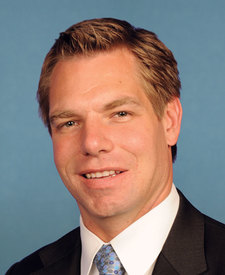
IntroducedMr. Swalwell introduced the following bill; which was referred to …
Stakeholder Effects
cui bono?How this legislation distributes effects. Mention counts reflect frequency, not effect magnitude.
Disaster Relief Fund, FEMA, Federal agencies involved in disaster response
Disadvantaged and high-risk communities, Underserved communities
Climate resilience firms, Environmental justice communities
Bill Structure & Actor Mappings
Who is "The Secretary" in each section?
- "the_president"
- → President of the United States
- "the_administrator"
- → Administrator of FEMA
Key Definitions
Terms defined in this bill
High rating of a natural hazard risk according to a tool such as the National Risk Index or another tool developed by FEMA
Community primarily composed of communities of color, low-income communities, or Tribal and indigenous communities that experiences or is at risk of experiencing higher or more adverse human health or environmental effects
Community of 50,000 or fewer individuals that is economically disadvantaged
We use a combination of our own taxonomy and classification in addition to large language models to assess meaning and potential beneficiaries. High confidence means strong textual evidence. Always verify with the original bill text.
Learn more about our methodology