American Royalties Too Act of 2025
Summary
What This Bill Does
The American Royalties Too Act creates a federal resale royalty for works of visual art. For a commercial resale of a resale copy by or with an art market professional, after the first sale, at a price of $5,000 or more, the author of the work is entitled to a royalty separate from ordinary copyright exclusive rights. The royalty lasts for the copyright term and is the lesser of 5 percent of the resale price or $50,000, with the dollar cap indexed for inflation using the C-CPI-U. The right can pass to an author's successor after death. The bill defines art market professionals, resale copies, commercial resales, price, successors, and visual artists collecting societies. Collecting societies administer royalties and the system is designed to capture value when artworks appreciate in secondary markets. Section 401 copyright notice requirements do not apply to works of visual art. The Register of Copyrights must study implementation and report to House and Senate Judiciary within five years with legislative recommendations. The Act takes effect one year after enactment.
Who Benefits and How
Visual art workers benefit from a new royalty when covered works resell commercially for $5,000 or more. Artist heirs benefit because the resale royalty can continue after the artist's death during the copyright term. Collecting society administrators benefit from a statutory role administering resale royalties. Copyright Office staff benefit from a defined implementation study and reporting mandate.
Who Bears the Burden and How
Art market professionals must account for resale royalties in covered commercial resales. Auction house employees must handle royalty obligations when they intervene in qualifying resales. Art collectors may face higher transaction costs if royalties are reflected in sale prices. Art dealers receive less net resale revenue when a royalty must be paid. The Register of Copyrights must conduct a five-year implementation study.
Key Provisions
- Creates a resale royalty for visual-art commercial resales priced at $5,000 or more.
- Provides a royalty equal to the lesser of 5 percent of price or $50,000 indexed for inflation.
- Extends the royalty for the copyright term and allows successors to hold the right.
- Uses visual artists collecting societies to administer royalties.
- Exempts works of visual art from copyright notice provisions.
- Requires a Copyright Office implementation study within five years.
- Provides a one-year delayed effective date.
Evidence Chain:
This summary is generated from the full bill text using AI analysis. Expand "Detailed Analysis" below for identified beneficiaries/burden bearers with clause-level evidence links.
At a Glance
What This Bill Does
Creates a visual-art resale royalty right for commercial resales of resale copies priced at $5,000 or more, equal to 5 percent of the resale price or $50,000 indexed for inflation, whichever is less; lets the right run for the copyright term and pass to successors; uses designated visual artists collecting societies to administer royalties; adds notice, collection, distribution, waiver, and study provisions; exempts works of visual art from copyright notice rules; requires the Register of Copyrights to study implementation within five years; and delays effectiveness for one year after enactment.
Key Policy Areas
Copyright, Visual Art, Arts Markets
Primary Purpose
Creates a visual-art resale royalty right for commercial resales of resale copies priced at $5,000 or more, equal to 5 percent of the resale price or $50,000 indexed for inflation, whichever is less; lets the right run for the copyright term and pass to successors; uses designated visual artists collecting societies to administer royalties; adds notice, collection, distribution, waiver, and study provisions; exempts works of visual art from copyright notice rules; requires the Register of Copyrights to study implementation within five years; and delays effectiveness for one year after enactment.
Policy Domains
Resolution provisions
Identified Gains
- Visual art workers
- Artist heirs
- Collecting society administrators
- Copyright Office staff
Identified Costs
- Art market professionals
- Auction house employees
- Art collectors
- Art dealers
- Register of Copyrights
Sponsors


Legislative Progress
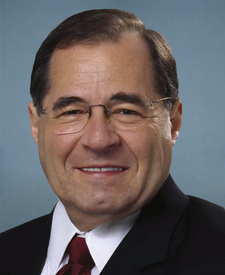
In CommitteeMr. Nadler (for himself and Ms. Chu) introduced the following …
Referred to the House Committee on the Judiciary.
Introduced in House
Stakeholder Effects
cui bono?How this legislation distributes effects. Mention counts reflect frequency, not effect magnitude.
Art collectors, Art dealers, Art market professionals
Artist heirs, Collecting society administrators, Visual art workers
Copyright Office staff, Register of Copyrights
Bill Structure & Actor Mappings
Who is "The Secretary" in each section?
We use a combination of our own taxonomy and classification in addition to large language models to assess meaning and potential beneficiaries. High confidence means strong textual evidence. Always verify with the original bill text.
Learn more about our methodology