Patient Access to Higher Quality Health Care Act of 2025
Summary
What This Bill Does
The Patient Access to Higher Quality Health Care Act repeals three provisions from the Affordable Care Act and Health Care and Education Reconciliation Act that narrowed Medicare exceptions to the physician self-referral, or Stark Law, prohibition for hospitals. By restoring the amended provisions as if those sections had never been enacted, the bill would loosen federal limits on physician-owned hospitals, including restrictions on expansion and use of the whole-hospital or rural-provider exceptions that were tightened in 2010. Supporters generally view this as expanding patient access and competition; opponents generally see risk of self-referral, cherry-picking profitable patients, and higher Medicare spending. The text itself is a repeal-and-restoration bill rather than a new grant or coverage program.
Who Benefits and How
Physician-owned hospitals benefit because ACA limits on Medicare self-referral exceptions would be repealed. Physician investors benefit if restored Stark Law exceptions allow more ownership or expansion opportunities. Medicare patients seeking specialty hospitals benefit if more physician-owned facilities can operate or expand. Healthcare competition advocates benefit from removing federal barriers to physician-owned hospital growth.
Who Bears the Burden and How
Competing community hospitals face more competition from physician-owned hospitals. CMS Stark Law staff must administer restored rules as if the ACA restrictions had not been enacted. Federal taxpayers may bear higher Medicare spending if physician ownership increases referral-driven utilization. Hospital watchdog organizations may lose restrictions intended to limit conflicts of interest.
Key Provisions
- Repeals ACA section 6001 physician-owned hospital restrictions.
- Repeals ACA section 10601 related amendments.
- Repeals reconciliation-law section 1106 related amendments.
- Restores the affected Medicare self-referral provisions as if those sections had never been enacted.
Evidence Chain:
This summary is generated from the full bill text using AI analysis. Expand "Detailed Analysis" below for identified beneficiaries/burden bearers.
At a Glance
What This Bill Does
Repeals ACA and reconciliation-law provisions that limited Medicare exceptions to the physician self-referral prohibition for hospitals, restoring the affected Stark Law provisions as if those ACA amendments had never been enacted.
Key Policy Areas
Medicare, Hospitals, Physician Ownership
Primary Purpose
Repeals ACA and reconciliation-law provisions that limited Medicare exceptions to the physician self-referral prohibition for hospitals, restoring the affected Stark Law provisions as if those ACA amendments had never been enacted.
Policy Domains
Resolution provisions
Identified Gains
Contextual inference, no direct clause citation- Physician-owned hospitals
- Physician investors
- Medicare patients seeking specialty hospitals
- Healthcare competition advocates
Contextual inference, no direct clause citation
Identified Costs
Contextual inference, no direct clause citation- Competing community hospitals
- CMS Stark Law staff
- Federal taxpayers
- Hospital watchdog organizations
Contextual inference, no direct clause citation
Sponsors


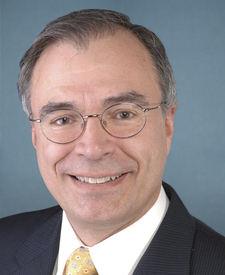
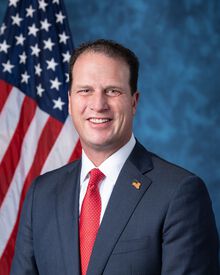

Legislative Progress
In CommitteeIntroduced in House
Ms. Van Duyne (for herself, Mr. Cuellar, Mr. Hern of …
Referred to the Committee on Energy and Commerce, and in …
Bill Structure & Actor Mappings
Who is "The Secretary" in each section?
We use a combination of our own taxonomy and classification in addition to large language models to assess meaning and potential beneficiaries. High confidence means strong textual evidence. Always verify with the original bill text.
Learn more about our methodology