State Public Option Act
Summary
What This Bill Does
The State Public Option Act gives states a new way to offer public coverage through Medicaid. Beginning January 1, 2026, a state may cover residents who are not concurrently enrolled in another health insurance plan even if they do not qualify under other Medicaid categories, subject to premiums or cost sharing except for ordinary Medicaid protections. The federal government would pay 90 percent of reasonable administrative expenses for running the buy-in. HHS must update Medicaid quality measures by January 1, 2030 for the buy-in population, update state reporting by 2032, and may use a $50 million fiscal year 2026 appropriation to help states implement those metrics. The bill also renews Medicaid primary-care payment floors at 100 percent of Medicare rates, or a 2009 conversion-factor floor if greater, and expands eligible providers beyond primary care physicians to board-certified obstetrics and gynecology physicians, advanced practice clinicians supervised by qualifying clinicians, nurse practitioners, physician assistants, certified nurse-midwives, rural health clinics, federally qualified health centers, and other reimbursed clinics. It changes ACA expansion FMAP timing so states that newly cover expansion adults receive the first three 12-month periods at the 2014-2016 level and phase down over later periods. Finally, Medicaid coverage must include comprehensive sexual and reproductive health care, including abortion services and abortion-related services, and benchmark coverage cannot omit those services for care furnished on or after January 1, 2026.
Who Benefits and How
State Medicaid buy-in enrollees benefit from a public coverage option if they are state residents without another health plan. State Medicaid agencies benefit from 90 percent federal matching for reasonable buy-in administrative expenses. Primary care physicians benefit from renewed Medicaid payment floors tied to Medicare rates. Obstetrics physicians benefit because the payment floor is expanded to board-certified obstetrics and gynecology services. Advanced practice clinicians benefit when supervised services qualify for higher Medicaid primary care payment. Medicaid abortion patients benefit because comprehensive sexual and reproductive health care must include abortion services.
Who Bears the Burden and How
HHS Medicaid staff must update quality measures by 2030 and state reporting requirements by 2032. State Medicaid agencies must administer premiums, cost sharing, eligibility, quality metrics, and reproductive coverage for buy-in programs. Federal taxpayers bear costs for the 90 percent administrative match, $50 million quality-measure funding, higher provider rates, expansion FMAP, and reproductive coverage. States opposing abortion coverage must include abortion and abortion-related services in Medicaid benchmark coverage if they participate. Medicaid managed care plans must incorporate buy-in coverage and comprehensive sexual or reproductive health services.
Key Provisions
- Creates a state Medicaid buy-in option for residents without other health coverage beginning January 1, 2026.
- Provides 90 percent federal matching for reasonable Medicaid buy-in administrative expenses.
- Appropriates $50 million for Medicaid quality-measure and reporting updates.
- Extends Medicaid primary-care Medicare-rate floors and expands eligible provider types.
- Restarts ACA newly eligible FMAP phase-in timing for states newly covering expansion adults.
- Requires Medicaid coverage of comprehensive sexual and reproductive health care, including abortion services, for care after January 1, 2026.
Evidence Chain:
This summary is generated from the full bill text using AI analysis. Expand "Detailed Analysis" below for identified beneficiaries/burden bearers with clause-level evidence links.
At a Glance
What This Bill Does
Lets states create a Medicaid buy-in option beginning January 1, 2026 for residents not concurrently enrolled in another health plan, with premiums or cost sharing allowed for people who do not otherwise qualify for Medicaid; provides 90 percent federal matching for reasonable administrative expenses; appropriates $50 million in fiscal year 2026 for Medicaid quality-measure updates by 2030 and state reporting updates by 2032; renews Medicare-rate floors for Medicaid primary care services and expands eligible clinicians to obstetrics and gynecology physicians, advanced practice clinicians, nurse practitioners, physician assistants, certified nurse-midwives, rural health clinics, federally qualified health centers, and other reimbursed clinics; restarts ACA newly eligible FMAP phase-in timing for states that newly cover expansion adults; and requires Medicaid benchmark coverage to include comprehensive sexual and reproductive health care, including abortion services, for care furnished on or after January 1, 2026.
Key Policy Areas
Medicaid, Health Insurance, Reproductive Health
Primary Purpose
Lets states create a Medicaid buy-in option beginning January 1, 2026 for residents not concurrently enrolled in another health plan, with premiums or cost sharing allowed for people who do not otherwise qualify for Medicaid; provides 90 percent federal matching for reasonable administrative expenses; appropriates $50 million in fiscal year 2026 for Medicaid quality-measure updates by 2030 and state reporting updates by 2032; renews Medicare-rate floors for Medicaid primary care services and expands eligible clinicians to obstetrics and gynecology physicians, advanced practice clinicians, nurse practitioners, physician assistants, certified nurse-midwives, rural health clinics, federally qualified health centers, and other reimbursed clinics; restarts ACA newly eligible FMAP phase-in timing for states that newly cover expansion adults; and requires Medicaid benchmark coverage to include comprehensive sexual and reproductive health care, including abortion services, for care furnished on or after January 1, 2026.
Policy Domains
Resolution provisions
Identified Gains
- State Medicaid buy-in enrollees
- State Medicaid agencies
- Primary care physicians
- Obstetrics physicians
- Advanced practice clinicians
- Medicaid abortion patients
Identified Costs
- HHS Medicaid staff
- State Medicaid agencies
- Federal taxpayers
- States opposing abortion coverage
- Medicaid managed care plans
Sponsors
Legislative Progress
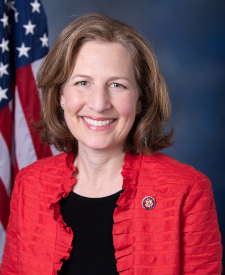
In CommitteeMs. Schrier introduced the following bill; which was referred to …
Referred to the Committee on Energy and Commerce, and in …
Introduced in House
Stakeholder Effects
cui bono?How this legislation distributes effects. Mention counts reflect frequency, not effect magnitude.
Advanced practice clinicians, Obstetrics physicians, Primary care physicians
Medicaid abortion patients, State Medicaid buy-in enrollees
State Medicaid agencies, States opposing abortion coverage
Bill Structure & Actor Mappings
Who is "The Secretary" in each section?
We use a combination of our own taxonomy and classification in addition to large language models to assess meaning and potential beneficiaries. High confidence means strong textual evidence. Always verify with the original bill text.
Learn more about our methodology