To require Members of Congress and their spouses and dependent children to place certain assets into blind trusts, and for other purposes.
Sponsors
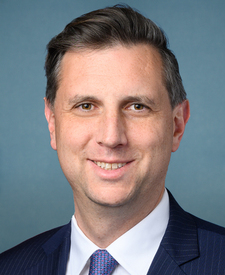
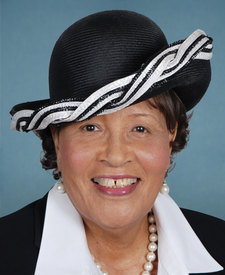

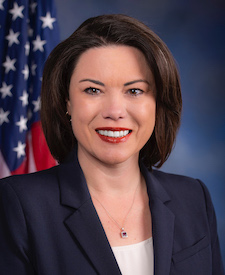
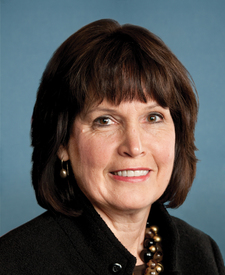
Legislative Progress
IntroducedMr. Magaziner (for himself, Mr. Roy, Ms. Adams, Mr. Beyer, …
Summary
What This Bill Does
The TRUST in Congress Act requires all Members of Congress and their spouses and dependent children to place individual investments like stocks, commodities, and derivatives into "qualified blind trusts" where they cannot control or see what's happening with these assets. The bill allows Members to keep widely-held mutual funds and U.S. Treasury bonds outside the trust. Members must comply within 180 days of the bill's passage (or 90 days after taking office if they're elected later), and they can't dissolve these trusts until 180 days after leaving Congress.
Who Benefits and How
The general public benefits through reduced conflicts of interest - when Members can't see or control their individual stock holdings, they're less likely to pass laws that directly benefit their personal portfolios. Government ethics watchdog groups benefit by having a clearer standard to point to when evaluating congressional ethics. Trust management firms and financial advisors benefit financially, as they'll gain hundreds of new clients who are legally required to establish and maintain qualified blind trusts, generating ongoing management fees. Members who own businesses that provide their family's income get an exemption, so they benefit by avoiding the blind trust requirement.
Who Bears the Burden and How
Members of Congress and their families face the primary burden - they must give up control of their individual investments, pay fees to establish and maintain blind trusts (potentially thousands of dollars per year), and lose the ability to make their own investment decisions until 6 months after leaving office. Members who currently trade stocks based on their own research or preferences face the highest burden. The House Clerk's office and Senate Secretary's office must track compliance and publicly post certifications, creating new administrative work. Taxpayers may indirectly bear costs if congressional offices need additional staff or resources to manage compliance.
Key Provisions
- All covered investments (stocks, bonds, commodities, futures, and derivatives) must be placed in qualified blind trusts within 180 days, with narrower exemptions for widely-held funds, Treasury securities, and business income
- Members cannot dissolve blind trusts or regain investment control until 180 days after ceasing to be a Member of Congress
- Members must certify compliance to the House Clerk or Senate Secretary within 15 days of establishing the trust, and these certifications must be posted publicly on official websites
- Spouses and dependent children who receive compensation from their primary occupation through a covered investment are exempt from the blind trust requirement
- The bill applies to all current Members retroactively (180-day deadline from enactment) and to all future Members (90-day deadline after taking office)
Evidence Chain:
This summary is derived from the structured analysis below. See "Detailed Analysis" for per-title beneficiaries/burden bearers with clause-level evidence links.
Primary Purpose
Requires Members of Congress and their families to place covered investments into qualified blind trusts to prevent conflicts of interest
Policy Domains
Legislative Strategy
"Restore public trust in Congress by eliminating potential conflicts of interest arising from Members' personal investments"
Likely Beneficiaries
- General public (reduced conflicts of interest)
- Trust management industry (new business from mandatory trusts)
- Good-government advocacy groups
Likely Burden Bearers
- Members of Congress (loss of investment control, compliance costs)
- Spouses and dependent children of Members (investment restrictions)
- Members who own businesses (potential forced divestiture)
Bill Structure & Actor Mappings
Who is "The Secretary" in each section?
- "the_clerk"
- → Clerk of the House of Representatives
- "the_secretary"
- → Secretary of the Senate
- "member_of_congress"
- → Any individual serving in the U.S. House of Representatives or Senate
Key Definitions
Terms defined in this bill
Has the meaning given in section 1a of the Commodity Exchange Act (7 U.S.C. 1a)
Investment in a security, a commodity, or a future, or any comparable economic interest acquired through synthetic means such as derivatives, EXCLUDING widely held investment funds (as defined in 5 USC 13104(f)(8)) and U.S. Treasury bills, notes, or bonds
Has the meaning given in section 13101 of title 5, United States Code
Has the meaning given in section 13101 of title 5, United States Code
Has the meaning given in section 13104(f)(3) of title 5, United States Code
We use a combination of our own taxonomy and classification in addition to large language models to assess meaning and potential beneficiaries. High confidence means strong textual evidence. Always verify with the original bill text.
Learn more about our methodology