Wildfire Risk Evaluation Act
Summary
What This Bill Does
The Wildfire Risk Evaluation Act states that wildfire management requires a whole-of-government, multi-jurisdictional approach before, during, and after fires. Its operative section requires the Agriculture and Interior Secretaries, acting jointly through qualified agencies, to conduct a quadrennial review of the comprehensive wildfire environment in the United States. The review must quantitatively analyze changes to built and natural environments and how those changes affect pre-fire mitigation, wildfire response, and recovery. It must also analyze the intersection of wildfire and public health in coordination with the Environmental Protection Agency Administrator and the Health and Human Services Secretary acting through the Centers for Disease Control and Prevention. Within 12 months and every four years for 20 years, the Secretaries must report to Congress with review results, expected 20-year challenges, long-term wildland fire management challenges, recommended legislation or administrative actions, and progress toward resilient landscapes, fire-adapted communities, and safe and effective wildfire response.
Who Benefits and How
Wildfire incident commanders benefit from a recurring national review of response conditions and long-term challenges. Fire-adapted communities benefit if the review supports better pre-fire mitigation and recovery planning. State wildfire agencies benefit from Federal analysis that includes cross-boundary and multi-jurisdictional planning. Tribal wildfire offices benefit because the bill's sense of Congress says Tribal governments should be included in planning, decision-making, and response activities. Public health agencies benefit from required analysis of wildfire smoke and health impacts with EPA and CDC involvement.
Who Bears the Burden and How
The Agriculture Department and Interior Department must conduct the quadrennial reviews and submit reports every four years for 20 years. Forest Service wildfire offices and Interior wildfire agencies must provide data, analysis, and recommendations. The Environmental Protection Agency and CDC public health offices must coordinate on wildfire-health analysis. Federal wildfire policy staff must evaluate progress toward the National Cohesive Wildland Fire Management Strategy goals. Congressional committees must review the reports and consider recommended legislation or administrative actions.
Key Provisions
- States congressional findings supporting whole-of-government wildfire planning and cross-boundary response.
- Requires a quadrennial review of the comprehensive wildfire environment in the United States.
- Requires quantitative analysis of built and natural environment changes affecting mitigation, response, and recovery.
- Requires public-health analysis coordinated with EPA and CDC/HHS.
- Directs recurring reports for 20 years with challenges, recommendations, and progress toward national wildfire strategy goals.
Evidence Chain:
This summary is generated from the full bill text using AI analysis. Expand "Detailed Analysis" below for identified beneficiaries/burden bearers with clause-level evidence links.
At a Glance
What This Bill Does
Requires Agriculture and Interior, acting through qualified wildfire agencies and coordinating with EPA and CDC/HHS on public health, to conduct a quadrennial review of the comprehensive wildfire environment, report every four years for 20 years, evaluate the National Cohesive Wildland Fire Management Strategy goals, and recommend Federal legislation or administrative actions.
Key Policy Areas
Wildfire, Public Health, Public Lands
Primary Purpose
Requires Agriculture and Interior, acting through qualified wildfire agencies and coordinating with EPA and CDC/HHS on public health, to conduct a quadrennial review of the comprehensive wildfire environment, report every four years for 20 years, evaluate the National Cohesive Wildland Fire Management Strategy goals, and recommend Federal legislation or administrative actions.
Policy Domains
House resolution provisions
Identified Gains
- Wildfire incident commanders
- Fire-adapted communities
- State wildfire agencies
- Tribal wildfire offices
- Public health agencies
Identified Costs
- Department of Agriculture
- Department of the Interior
- Forest Service wildfire offices
- Environmental Protection Agency
- CDC public health offices
- Congressional committees
Sponsors


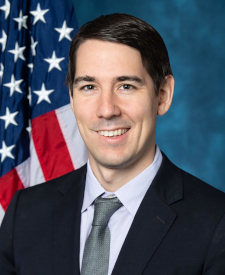
Legislative Progress
ReportedOrdered to be Reported in the Nature of a Substitute …
Committee Consideration and Mark-up Session Held
Subcommittee on Federal Lands Discharged
Subcommittee Hearings Held
Referred to the Subcommittee on Federal Lands.
Referred to the Subcommittee on Economic Development, Public Buildings, and …
Mr. Neguse (for himself and Mr. Harder of California) introduced …
Referred to the Committee on Natural Resources, and in addition …
Introduced in House
Stakeholder Effects
cui bono?How this legislation distributes effects. Mention counts reflect frequency, not effect magnitude.
CDC public health offices, Department of Agriculture, Department of the Interior
Positive-direction: State wildfire agencies, Tribal wildfire offices
Negative-direction: CDC public health offices, Department of Agriculture, Department of the Interior, Environmental Protection Agency
Fire-adapted communities, Wildfire incident commanders
Bill Structure & Actor Mappings
Who is "The Secretary" in each section?
- "cdc"
- → Centers for Disease Control and Prevention
- "epa"
- → Environmental Protection Agency
- "secretaries"
- → Secretaries of Agriculture and the Interior
We use a combination of our own taxonomy and classification in addition to large language models to assess meaning and potential beneficiaries. High confidence means strong textual evidence. Always verify with the original bill text.
Learn more about our methodology