To direct the Secretary of the Interior to establish the Wildfire Science and Technology Advisory Board, and for other purposes.
Analysis under review: This bill has generated analysis that may be too generic or incomplete. Clause-level evidence remains available below.
Summary
What This Bill Does
This bill creates a permanent federal advisory board called the Wildfire Science and Technology Advisory Board to help translate wildfire research into practical tools and strategies that federal agencies can actually use. The board will bring together 18 federal agencies (including the Forest Service, FEMA, NOAA, NASA, and CDC) with state, local, and tribal governments, fire departments, researchers, and private sector experts to coordinate wildfire response efforts.
Who Benefits and How
Wildfire researchers and universities benefit by gaining a direct pathway to have their work adopted by federal agencies, potentially leading to more research funding and partnerships. Private companies developing wildfire technology, risk assessment tools, and safety standards gain guaranteed seats on the board and partnership opportunities with federal agencies. State and local fire departments, along with tribal governments, get better access to cutting-edge research, best practices, and potentially federal resources. Public health experts, meteorologists, and predictive modeling specialists benefit from new consulting and research opportunities as their expertise is now formally recognized as essential to wildfire policy.
Who Bears the Burden and How
Taxpayers will fund the board with a $10 million appropriation. Federal agencies participating on the board face new time commitments, as staff must attend meetings, prepare reports, and work to implement research findings into their operations. The board must submit a detailed progress report to Congress within 2 years.
Key Provisions
- Establishes a permanent 36-member advisory board (18 federal officials + up to 18 non-federal members)
- Requires the board to coordinate wildfire research operationalization across the federal government
- Mandates inclusion of public health, meteorology, and predictive modeling perspectives in wildfire planning
- Creates information dissemination mechanisms (newsletters, webinars, workshops) for wildfire stakeholders
- Authorizes $10 million in funding, plus allows federal agencies to use existing appropriations to support board activities
- Requires a comprehensive report to Congress within 2 years on progress and barriers
Evidence Chain:
This summary is generated from the full bill text using AI analysis. Expand "Detailed Analysis" below for identified beneficiaries/burden bearers.
At a Glance
What This Bill Does
Establishes the Wildfire Science and Technology Advisory Board to coordinate federal wildfire research and translate it into operational applications
Who Benefits
- Federal wildfire management agencies (Forest Service, BLM, NPS)
- State and local fire departments
- Wildfire researchers and research institutions
Who Bears Costs
- Federal taxpayers (via $10M appropriation)
- Federal agencies providing staff time and resources to support the Board
Key Policy Areas
Wildfire Management, Emergency Management, Public Health, Environmental Science, Federal Research Coordination
Primary Purpose
Establishes the Wildfire Science and Technology Advisory Board to coordinate federal wildfire research and translate it into operational applications
Policy Domains
Legislative Strategy
"Create interagency coordination mechanism to bridge the gap between wildfire research and operational implementation"
Identified Gains
- Federal wildfire management agencies (Forest Service, BLM, NPS)
- State and local fire departments
- Wildfire researchers and research institutions
- Private sector wildfire technology companies
- Codes and standards-setting organizations
- Prescribed fire associations
Identified Costs
- Federal taxpayers (via $10M appropriation)
- Federal agencies providing staff time and resources to support the Board
Sponsors
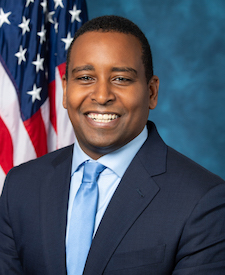
Joe Neguse
D-CO | Primary Sponsor
Legislative Progress
IntroducedMr. Neguse (for himself and Mr. Harder of California) introduced …
Stakeholder Effects
cui bono?How this legislation distributes effects. Mention counts reflect frequency, not effect magnitude.
Federal emergency management agencies (FEMA, USFA), Federal public health agencies, Federal research agencies (NOAA, NIST, USGS, NSF, NASA, OSTP)
Meteorological scientists with wildfire expertise, Wildfire research institutions and universities
Private sector wildfire technology and risk mitigation companies, Public health experts specializing in wildfire smoke/air quality
State and local fire departments, Taxpayers
Positive-direction: State and local fire departments
Negative-direction: Taxpayers
Codes and standards-setting organizations (wildfire-related)
Prescribed fire associations and practitioners
Predictive modeling experts (wildfire behavior/spread)
Bill Structure & Actor Mappings
Who is "The Secretary" in each section?
- "the_board"
- → Wildfire Science and Technology Advisory Board
- "the_secretary"
- → Secretary of the Interior
Note: No significant conflicts - 'The Secretary' consistently refers to Secretary of the Interior throughout this bill
Key Definitions
Terms defined in this bill
The Committees on Agriculture; Natural Resources; Science, Space, and Technology; and Transportation and Infrastructure of the House of Representatives; and the Committees on Agriculture, Nutrition, and Forestry; Commerce, Science, and Transportation; Energy and Natural Resources; Environment and Public Works; and Homeland Security and Governmental Affairs of the Senate
We use a combination of our own taxonomy and classification in addition to large language models to assess meaning and potential beneficiaries. High confidence means strong textual evidence. Always verify with the original bill text.
Learn more about our methodology