Medical Research for Our Troops Act
Summary
What This Bill Does
The Medical Research for Our Troops Act is an appropriations restoration bill for Defense Health Agency research. It amends the Full-Year Continuing Appropriations and Extensions Act, 2025 by replacing $40,395,072,000 with $41,576,684,000, a $1,181,612,000 increase, and makes the change effective as if it had been included in that Act. The bill then directs that funds made available for Congressionally Directed Medical Research Programs be implemented at levels and in a manner consistent with the Consolidated Appropriations Act, 2024. The Defense Secretary must ensure the funds support all research programs, peer-reviewed initiatives, and projects identified in the explanatory statement accompanying the 2024 law, and must obligate and spend funds in a way that preserves program continuity and follows the specified allocations and research priorities on pages 311 through 314 of the explanatory statement.
Who Benefits and How
Congressionally Directed Medical Research Programs benefit from restored funding and continuity requirements. Military medical researchers benefit because peer-reviewed initiatives and projects identified in the 2024 explanatory statement must be supported. Service members with medical conditions benefit indirectly from preserved research programs relevant to military health. Disease research advocates benefit if specified program allocations and priorities continue rather than being reduced under the continuing appropriation.
Who Bears the Burden and How
Defense Health Agency budget staff must implement the higher funding amount and align obligations with the 2024 explanatory statement. The Secretary of Defense must ensure all specified research programs, initiatives, and projects receive support. Federal taxpayers bear the restored $1.181 billion funding level. Defense appropriations staff must track continuity and allocation compliance under the amended continuing appropriation.
Key Provisions
- Increases Defense Health Agency research funding from $40.395 billion to $41.577 billion.
- Provides retroactive effect as if the change were included in the 2025 continuing appropriations law.
- Requires Congressionally Directed Medical Research Programs to follow fiscal year 2024 levels and priorities.
- Directs the Secretary of Defense to preserve program continuity and specified funding allocations.
Evidence Chain:
This summary is generated from the full bill text using AI analysis. Expand "Detailed Analysis" below for identified beneficiaries/burden bearers with clause-level evidence links.
At a Glance
What This Bill Does
Restores Defense Health Agency research, development, test, and evaluation funding in the Full-Year Continuing Appropriations and Extensions Act, 2025 from $40,395,072,000 to $41,576,684,000, makes the change effective as if enacted in that law, and directs the Secretary of Defense to implement Congressionally Directed Medical Research Programs at fiscal year 2024 levels and priorities with preserved program continuity.
Key Policy Areas
Defense Health, Medical Research, Appropriations
Primary Purpose
Restores Defense Health Agency research, development, test, and evaluation funding in the Full-Year Continuing Appropriations and Extensions Act, 2025 from $40,395,072,000 to $41,576,684,000, makes the change effective as if enacted in that law, and directs the Secretary of Defense to implement Congressionally Directed Medical Research Programs at fiscal year 2024 levels and priorities with preserved program continuity.
Policy Domains
Resolution provisions
Identified Gains
- Congressionally Directed Medical Research Programs
- Military medical researchers
- Service members with medical conditions
- Disease research advocates
Identified Costs
- Defense Health Agency budget staff
- Secretary of Defense
- Federal taxpayers
- Defense appropriations staff
Sponsors
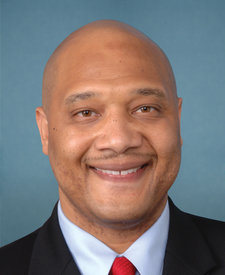




Legislative Progress
In CommitteeMr. Carson (for himself, Mr. Auchincloss, Ms. Barragán, Ms. Budzinski, …
Referred to the House Committee on Appropriations.
Introduced in House
Sponsor introductory remarks on measure. (CR E561)
Stakeholder Effects
cui bono?How this legislation distributes effects. Mention counts reflect frequency, not effect magnitude.
Disease research advocates, Military medical researchers
Defense Health Agency budget staff, Secretary of Defense
Bill Structure & Actor Mappings
Who is "The Secretary" in each section?
We use a combination of our own taxonomy and classification in addition to large language models to assess meaning and potential beneficiaries. High confidence means strong textual evidence. Always verify with the original bill text.
Learn more about our methodology