National Prescribed Fire Act of 2025
Summary
What This Bill Does
The National Prescribed Fire Act tries to move federal wildfire policy from mainly suppression toward planned burning before fires become catastrophic. Agriculture and Interior could use up to 15 percent of annual hazardous-fuels or wildland-fire money for prescribed-fire contracts, cooperative agreements, state, Tribal, local, council, prescribed-burn association, and nonprofit grants, environmental review, site preparation, surveys, outreach, and burns on non-federal land that benefit federal resources. The Secretaries must increase federal prescribed-fire acreage by 10 percent each year for 10 fiscal years and prepare regional strategies that identify fire deficits plus staffing and funding needs. A Collaborative Prescribed Fire Program would fund projects tied to landscape restoration strategies covering at least 50,000 acres and a 10-year treatment plan. States, Tribes, counties, fire districts, nonprofits, and private entities could enter agreements or contracts for up to 10 years to plan or conduct burns on federal land. Federal fuels employees would receive a pay differential for ignition, management, and control work, and each Geographic Area Coordination Center would have multiparty task forces plus a dedicated federal employee for partnership administration. Covered non-federal entities working under federal supervision would be treated as federal employees for Federal Tort Claims Act purposes, while federal employees get liability training. EPA and land managers must help air-quality agencies with exceptional-event demonstrations, modeling, archives, decision tools, and smoke guidance. The bill also creates a national education program, supports state acreage reporting, cuts off Act funding for states that miss annual database reports, and requires annual reports to Congress.
Who Benefits and How
Forest Service regions benefit from dedicated funding authority, annual acreage targets, landscape-scale planning, and task forces that make prescribed fire easier to schedule across ownership boundaries. Bureau of Land Management districts benefit from the same funding flexibility, cooperative agreements, and regional strategies for reducing wildfire fuel loads. State forestry agencies benefit from grants, technical coordination, and potential financial assistance for reporting prescribed-fire accomplishments. Tribal fire programs benefit because they are eligible for grants, cooperative work, outreach, and cross-boundary task-force participation. Prescribed burn associations benefit because the bill explicitly allows grants and agreements for planning, preparation, and implementation work.
Who Bears the Burden and How
Federal land managers must increase prescribed-fire acreage by 10 percent per year, prepare regional fire-deficit strategies, run a collaborative program, and report annually. EPA smoke staff must support exceptional-event demonstrations, archives, modeling, decision tools, templates, and best-practice guidance for air agencies. State air-quality agencies must evaluate smoke impacts and may need to use new federal data when prescribed-fire activity expands. Adjacent landowners bear smoke, access, and planning burdens when more burns occur near private property. States that fail to report annual prescribed-fire accomplishments to the national database lose eligibility for Act funding for the prior fiscal year.
Key Provisions
- Authorizes Agriculture and Interior to use up to 15 percent of hazardous-fuels or wildland-fire funds for prescribed-fire activities.
- Requires prescribed-fire acreage on federal land to rise by 10 percent each year for 10 fiscal years.
- Creates a Collaborative Prescribed Fire Program for landscape-scale projects of at least 50,000 acres.
- Authorizes long-term cooperative agreements and contracts with states, Tribes, counties, nonprofits, fire districts, and private entities.
- Provides pay differentials, task forces, liability training, and Federal Tort Claims Act treatment for covered prescribed-fire work.
- Directs EPA and land managers to support air-quality agencies with smoke modeling, exceptional-event tools, and technical assistance.
- Requires state reporting to the National Fire Planning and Operations Database and annual implementation reports to Congress.
Evidence Chain:
This summary is generated from the full bill text using AI analysis. Expand "Detailed Analysis" below for identified beneficiaries/burden bearers with clause-level evidence links.
At a Glance
What This Bill Does
Builds a national prescribed-fire framework by allowing up to 15 percent of federal hazardous-fuels and Interior wildland-fire funds to support prescribed burns, requiring annual acreage increases on federal land, creating a Collaborative Prescribed Fire Program, expanding cooperative agreements, improving prescribed-fire workforce pay and liability coverage, coordinating smoke-related air-quality tools, funding state reporting to the National Fire Planning and Operations Database, and requiring annual implementation reports.
Key Policy Areas
Wildfire, Federal Lands, Forestry
Primary Purpose
Builds a national prescribed-fire framework by allowing up to 15 percent of federal hazardous-fuels and Interior wildland-fire funds to support prescribed burns, requiring annual acreage increases on federal land, creating a Collaborative Prescribed Fire Program, expanding cooperative agreements, improving prescribed-fire workforce pay and liability coverage, coordinating smoke-related air-quality tools, funding state reporting to the National Fire Planning and Operations Database, and requiring annual implementation reports.
Policy Domains
Resolution provisions
Identified Gains
- Forest Service regions
- Bureau of Land Management districts
- State forestry agencies
- Tribal fire programs
- Prescribed burn associations
Identified Costs
- Federal land managers
- EPA smoke staff
- State air-quality agencies
- Adjacent landowners
- Nonreporting states
Sponsors
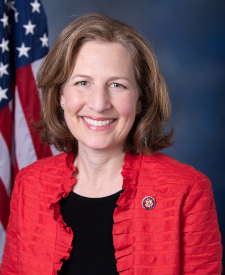
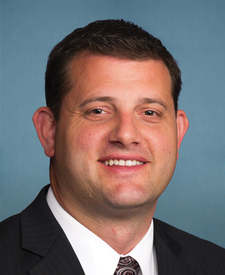

Legislative Progress
In CommitteeMs. Schrier (for herself and Mr. Valadao) introduced the following …
Referred to the Committee on Natural Resources, and in addition …
Introduced in House
Stakeholder Effects
cui bono?How this legislation distributes effects. Mention counts reflect frequency, not effect magnitude.
Nonreporting states, State air-quality agencies, State forestry agencies
Positive-direction: State forestry agencies
Negative-direction: Nonreporting states, State air-quality agencies
EPA smoke staff, Federal land managers, Tribal fire programs
Positive-direction: Tribal fire programs
Negative-direction: EPA smoke staff, Federal land managers
Bureau of Land Management districts, Forest Service regions
Bill Structure & Actor Mappings
Who is "The Secretary" in each section?
We use a combination of our own taxonomy and classification in addition to large language models to assess meaning and potential beneficiaries. High confidence means strong textual evidence. Always verify with the original bill text.
Learn more about our methodology