Broadcast VOICES Act
Analysis under review: This bill has generated analysis that may be too generic or incomplete. Clause-level evidence remains available below.
Summary
What This Bill Does
The bill creates congressional findings on the lack of diversity in broadcast station ownership: less than 6% of TV stations owned by women, less than 4% minority-owned; and the history of the 1978-1995 minority tax certificate, requires biennial FCC reporting requirement to Congress on the number of broadcast stations owned by socially disadvantaged individuals and recommendations for increasing diversity of ownership, and requires amendment to the Communications Act to establish a tax certificate program for broadcast station sales to socially disadvantaged individuals, with FCC rules on value limits (up to M), minimum holding periods. It relies on exemptions, reporting requirements, compliance mandates, and tax credits. The main policy areas are Technology.
Who Benefits and How
Socially disadvantaged buyers of broadcast stations could face fewer barriers, Sellers of broadcast stations to socially disadvantaged buyers could see lower costs, and Minority and women broadcast station buyers could face fewer barriers.
Who Bears the Burden and How
Federal tax revenue could lose revenue opportunities, Federal Communications Commission would take on compliance duties, and Buyers who fail to maintain compliance could face increased risk.
Key Provisions
- Creates congressional findings on the lack of diversity in broadcast station ownership: less than 6% of TV stations owned by women, less than 4% minority-owned; and the history of the 1978-1995 minority tax certificate...
- Requires biennial FCC reporting requirement to Congress on the number of broadcast stations owned by socially disadvantaged individuals and recommendations for increasing diversity of ownership.
- Requires amendment to the Communications Act to establish a tax certificate program for broadcast station sales to socially disadvantaged individuals, with FCC rules on value limits (up to M), minimum holding periods...
- Requires new Section 346 of the Communications Act establishing the FCC tax certificate program for broadcast station transactions, with definitions of socially disadvantaged individuals and ownership requirements, FCC...
- Exempts new IRC Section 1071 providing nonrecognition of gain or loss from FCC-certified sales of broadcast station interests, allowing treatment as involuntary conversion under Section 1033 or basis reduction election...
Evidence Chain:
This summary is generated from the full bill text using AI analysis. Expand "Detailed Analysis" below for identified beneficiaries/burden bearers with clause-level evidence links.
At a Glance
What This Bill Does
The bill creates congressional findings on the lack of diversity in broadcast station ownership: less than 6% of TV stations owned by women, less than 4% minority-owned; and the history of the 1978-1995 minority tax certificate, requires biennial FCC reporting requirement to Congress on the number of broadcast stations owned by socially disadvantaged individuals and recommendations for increasing diversity of ownership, and requires amendment to the Communications Act to establish a tax certificate program for broadcast station sales to socially disadvantaged individuals, with FCC rules on value limits (up to M), minimum holding periods.
Key Policy Areas
Technology
Primary Purpose
The bill creates congressional findings on the lack of diversity in broadcast station ownership: less than 6% of TV stations owned by women, less than 4% minority-owned; and the history of the 1978-1995 minority tax certificate, requires biennial FCC reporting requirement to Congress on the number of broadcast stations owned by socially disadvantaged individuals and recommendations for increasing diversity of ownership, and requires amendment to the Communications Act to establish a tax certificate program for broadcast station sales to socially disadvantaged individuals, with FCC rules on value limits (up to M), minimum holding periods.
Policy Domains
Sections 3-4 - Findings and FCC Reports
Identified Gains
- Socially disadvantaged buyers of broadcast stations
- Sellers of broadcast stations to socially disadvantaged buyers
- Minority and women broadcast station buyers
- Contributors of broadcast stations to qualifying nonprofits
- Broadcast station donors to qualifying nonprofits
Identified Costs
- Federal tax revenue
- Federal Communications Commission
- Buyers who fail to maintain compliance
Sponsors
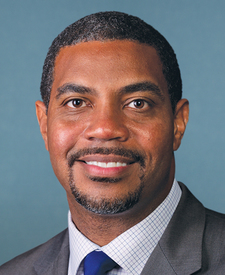
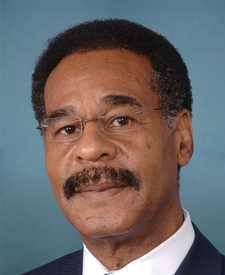
Legislative Progress
In CommitteeMr. Horsford (for himself and Mr. Cleaver) introduced the following …
Referred to the Committee on Ways and Means, and in …
Introduced in House
Stakeholder Effects
cui bono?How this legislation distributes effects. Mention counts reflect frequency, not effect magnitude.
Broadcast station donors to qualifying nonprofits, Broadcast station sellers to socially disadvantaged buyers, Buyers who fail to maintain compliance
Positive-direction: Broadcast station donors to qualifying nonprofits, Broadcast station sellers to socially disadvantaged buyers, Capital investors in minority/women-owned stations, Contributors of broadcast stations to qualifying nonprofits, Minority and women broadcast station buyers, Minority and women broadcast station owners, Sellers of broadcast stations to minority/women buyers, Sellers of broadcast stations to socially disadvantaged buyers, Socially disadvantaged buyers of broadcast stations
Negative-direction: Buyers who fail to maintain compliance
Federal Communications Commission, Federal tax revenue
Nonprofits training socially disadvantaged individuals, Nonprofits training socially disadvantaged individuals in broadcasting
Bill Structure & Actor Mappings
Who is "The Secretary" in each section?
- "the_commission"
- → Federal Communications Commission
- "the_commission"
- → Federal Communications Commission
Key Definitions
Terms defined in this bill
More than 50% owned by one or more socially disadvantaged individuals with management and daily operations controlled by such individuals
A contribution to an entity described in section 170(c)(2) whose charitable purpose includes training socially disadvantaged individuals in broadcast station management, with a 2-year holding requirement
A woman; or an individual subjected to racial or ethnic prejudice or cultural bias because of group identity
We use a combination of our own taxonomy and classification in addition to large language models to assess meaning and potential beneficiaries. High confidence means strong textual evidence. Always verify with the original bill text.
Learn more about our methodology