Protecting Health Care for All Patients Act of 2025
Summary
What This Bill Does
The Protecting Health Care for All Patients Act expands restrictions on quality-adjusted life years and similar measures. Current Social Security Act language limits certain QALY use under Medicare; the bill extends the prohibition to any federal agency, including CMMI, and to states under federal health care programs, including Medicare, Medicaid, CHIP, Federal Employees Health Benefits, Medicare Advantage, Part D, Medicaid managed care, prepaid inpatient health plans, and prepaid ambulatory health plans. It bars measures that discount the value of extending the life of an elderly, disabled, or terminally ill individual compared with a younger, nondisabled, or non-terminally ill person. It also bars waiving the prohibition through section 1115, section 1115A, or other demonstration or waiver authority. The amendments apply beginning January 1, 2027. The bill also changes Prevention and Public Health Fund amounts to $1.102 billion for fiscal years 2026 and 2027, $1.327 billion for 2028 and 2029, and $1.526 billion for 2030 and 2031. GAO must report within one year and annually afterward on how QALYs negatively affect individuals with intellectual and developmental disabilities and access to care.
Who Benefits and How
People with disabilities benefit from broader federal limits on value measures that devalue life extension. Elderly patients benefit if coverage and payment decisions cannot treat their life extension as lower value. Terminally ill patients benefit from restrictions on QALY-like measures in federal health programs. Disability rights organizations benefit from GAO annual reporting on QALY effects on access to care.
Who Bears the Burden and How
Federal health agencies must avoid QALY and similar measures across coverage, payment, reimbursement, and incentive decisions. State Medicaid agencies must comply with the expanded prohibition and cannot waive it through demonstration authority. Medicare Advantage plans and Part D plans must stop using covered QALY-like measures in applicable decisions. CMMI staff lose flexibility to test models that use prohibited value measures. GAO staff must produce annual reports on QALY impacts on people with intellectual and developmental disabilities.
Key Provisions
- Expands QALY and similar-measure prohibitions across federal health care programs.
- Protects elderly, disabled, and terminally ill individuals from lower-valued life-extension measures.
- Applies the prohibition to federal agencies, CMMI, states, Medicaid managed care, CHIP, Medicare Advantage, and Part D.
- Prohibits waivers of the QALY ban through demonstration or waiver authority.
- Applies the amendments beginning January 1, 2027.
- Changes Prevention and Public Health Fund amounts for fiscal years 2026 through 2031.
- Requires annual GAO reports on QALY effects on people with intellectual and developmental disabilities.
Evidence Chain:
This summary is generated from the full bill text using AI analysis. Expand "Detailed Analysis" below for identified beneficiaries/burden bearers with clause-level evidence links.
At a Glance
What This Bill Does
Broadens federal bans on quality-adjusted life year and similar value measures so federal agencies, CMMI, states, Medicaid managed care plans, CHIP, Medicare Advantage plans, and Part D plans may not use measures that devalue life extension for elderly, disabled, or terminally ill people in coverage, payment, reimbursement, incentive, demonstration, or waiver decisions; applies the amendments beginning January 1, 2027; changes Prevention and Public Health Fund amounts for fiscal years 2026 through 2031; and requires annual GAO reports on QALY effects on people with intellectual and developmental disabilities.
Key Policy Areas
Health Care, Disability, Medicare
Primary Purpose
Broadens federal bans on quality-adjusted life year and similar value measures so federal agencies, CMMI, states, Medicaid managed care plans, CHIP, Medicare Advantage plans, and Part D plans may not use measures that devalue life extension for elderly, disabled, or terminally ill people in coverage, payment, reimbursement, incentive, demonstration, or waiver decisions; applies the amendments beginning January 1, 2027; changes Prevention and Public Health Fund amounts for fiscal years 2026 through 2031; and requires annual GAO reports on QALY effects on people with intellectual and developmental disabilities.
Policy Domains
Resolution provisions
Identified Gains
- People with disabilities
- Elderly patients
- Terminally ill patients
- Disability rights organizations
Identified Costs
- Federal health agencies
- State Medicaid agencies
- Medicare Advantage plans
- Part D plans
- GAO staff
Sponsors

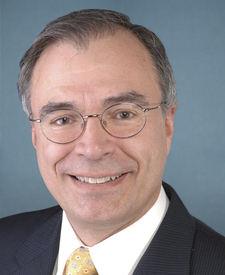
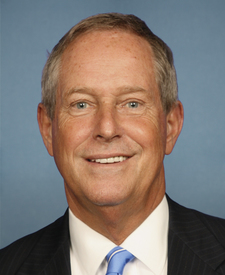

Legislative Progress
In CommitteeMrs. Cammack (for herself and Mr. Hern of Oklahoma) introduced …
Referred to the Committee on Energy and Commerce, and in …
Introduced in House
Stakeholder Effects
cui bono?How this legislation distributes effects. Mention counts reflect frequency, not effect magnitude.
Elderly patients, Terminally ill patients
Bill Structure & Actor Mappings
Who is "The Secretary" in each section?
We use a combination of our own taxonomy and classification in addition to large language models to assess meaning and potential beneficiaries. High confidence means strong textual evidence. Always verify with the original bill text.
Learn more about our methodology