Mobilizing Against Sanctuary Cities Act
Summary
What This Bill Does
The Mobilizing Against Sanctuary Cities Act conditions federal financial assistance on immigration cooperation. Each year, the Attorney General must identify every state or local jurisdiction that is not complying with 8 U.S.C. 1373, which restricts limits on sharing immigration-status information, and must report those determinations to Congress by March 1. The Attorney General must also identify jurisdictions that do not comply with lawful DHS requests under INA sections 236 or 287 to honor detainers or provide release notification for individuals. A jurisdiction found out of compliance becomes ineligible for federal financial assistance for a minimum of one year and can become eligible again only after the Attorney General certifies compliance. The Attorney General must issue a report on the compliance of any particular jurisdiction when any Member of Congress requests one.
Who Benefits and How
DHS immigration enforcement benefits from stronger incentives for jurisdictions to honor detainer and release-notification requests. Members of Congress benefit from the ability to request jurisdiction-specific compliance reports. Federal immigration policy advocates benefit from a grant penalty for jurisdictions that limit immigration information sharing. Jurisdictions that already comply benefit from avoiding the funding penalty and certification process.
Who Bears the Burden and How
State governments found noncompliant lose federal financial assistance for at least one year. Local jurisdictions with sanctuary policies face loss of federal financial assistance until Attorney General certification. Attorney General staff must annually identify noncompliant jurisdictions, report to Congress, and answer member requests. Residents of noncompliant jurisdictions may lose federally assisted services if funding is cut off.
Key Provisions
- Requires annual Attorney General identification of jurisdictions violating 8 U.S.C. 1373.
- Requires annual March 1 reports to Congress on noncompliant jurisdictions.
- Requires identification of jurisdictions that fail to honor lawful DHS detainer or release-notification requests.
- Bars noncompliant jurisdictions from federal financial assistance for at least one year.
- Restores eligibility only after Attorney General certification of compliance.
- Requires compliance reports for particular jurisdictions at any Member of Congress's request.
Evidence Chain:
This summary is generated from the full bill text using AI analysis. Expand "Detailed Analysis" below for identified beneficiaries/burden bearers with clause-level evidence links.
At a Glance
What This Bill Does
Requires the Attorney General to annually identify and report by March 1 each state or local jurisdiction that violates 8 U.S.C. 1373 or fails to honor lawful DHS detainer or release-notification requests, makes noncompliant jurisdictions ineligible for federal financial assistance for at least one year, restores eligibility only after Attorney General certification of compliance, and requires jurisdiction-specific compliance reports at any Member of Congress's request.
Key Policy Areas
Immigration, Federal Grants, Local Government
Primary Purpose
Requires the Attorney General to annually identify and report by March 1 each state or local jurisdiction that violates 8 U.S.C. 1373 or fails to honor lawful DHS detainer or release-notification requests, makes noncompliant jurisdictions ineligible for federal financial assistance for at least one year, restores eligibility only after Attorney General certification of compliance, and requires jurisdiction-specific compliance reports at any Member of Congress's request.
Policy Domains
Resolution provisions
Identified Gains
- DHS immigration enforcement
- Members of Congress
- Federal immigration policy advocates
- Compliant jurisdictions
Identified Costs
- Noncompliant State governments
- Sanctuary local jurisdictions
- Attorney General staff
- Residents of noncompliant jurisdictions
Sponsors


Legislative Progress
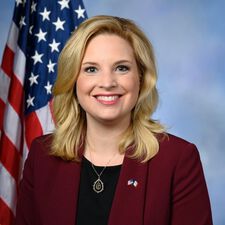
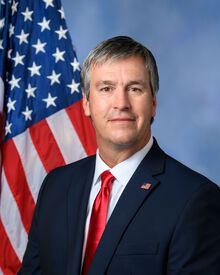
In CommitteeMrs. Biggs of South Carolina (for herself, Mr. Gill of …
Referred to the Committee on the Judiciary, and in addition …
Introduced in House
Stakeholder Effects
cui bono?How this legislation distributes effects. Mention counts reflect frequency, not effect magnitude.
Compliant jurisdictions, Noncompliant State governments, Sanctuary local jurisdictions
Positive-direction: Compliant jurisdictions
Negative-direction: Noncompliant State governments, Sanctuary local jurisdictions
DHS immigration enforcement, Federal immigration policy advocates
Bill Structure & Actor Mappings
Who is "The Secretary" in each section?
We use a combination of our own taxonomy and classification in addition to large language models to assess meaning and potential beneficiaries. High confidence means strong textual evidence. Always verify with the original bill text.
Learn more about our methodology